Tidepools - those cracks, crevices and abberations in the shoreline that stay full when the tide recedes, they are where the simmering stew of the marine intervertebrate world becomes alive to us. These oddly shaped animals bless our imagination both with color and a sense of danger. They fill our nighttime thoughts with the absurd and wicked.
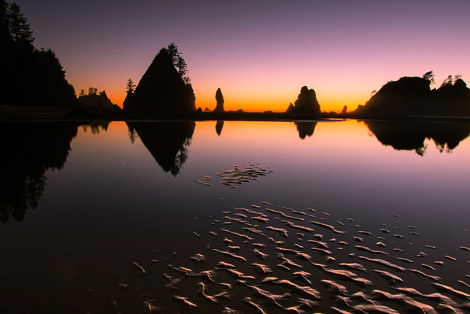
Jane and I have come to the western shore of Washington’s Olympic peninsula to fill our seashore guidebook with checkmarks. These beaches – the beaches of Kalaloch - contain one of the world’s highest densities of strange beasts. The beaches themselves are uninterrupted lines of brown sand and tall seastacks; they are framed by towering pines, and more inland, mossy woods.
But we are particularly interested in the one beast that seems most populous, and least noticed. The barnacles – those encrusted beings that seem like eternal fixtures on the low-tide rocks. But what are they, why are they, and why should we care?
There is one thing that barnacles are not – mollusks. We seem to assume they are grouped with the clams and chitons, mussels and snails, sea-slugs, octopus and squid. This is probably because they look like shells – like the volcano-shaped chitons that likewise cling to the intertidal zones of the temperate world.
Rather, barnacles are crustaceans – so they are related to crabs, lobsters, krill and shrimp. They are related, even, to sea monkeys – those tiny fairy shrimps which inhabit salty lakes and gullible comic-readers desktop aquariums. And if you see a barnacle in its larval stage, before it has attached its heads to a rock, it rather looks like a shrimp. More even, like a sea monkey.
To confound matters even more, crustaceans are arthropods, so barnacles are related even more closely to spiders and ticks than chitons and clams.
So if barnacles are crustaceans, isn’t it odd that they screw their heads on a piece of rock?