
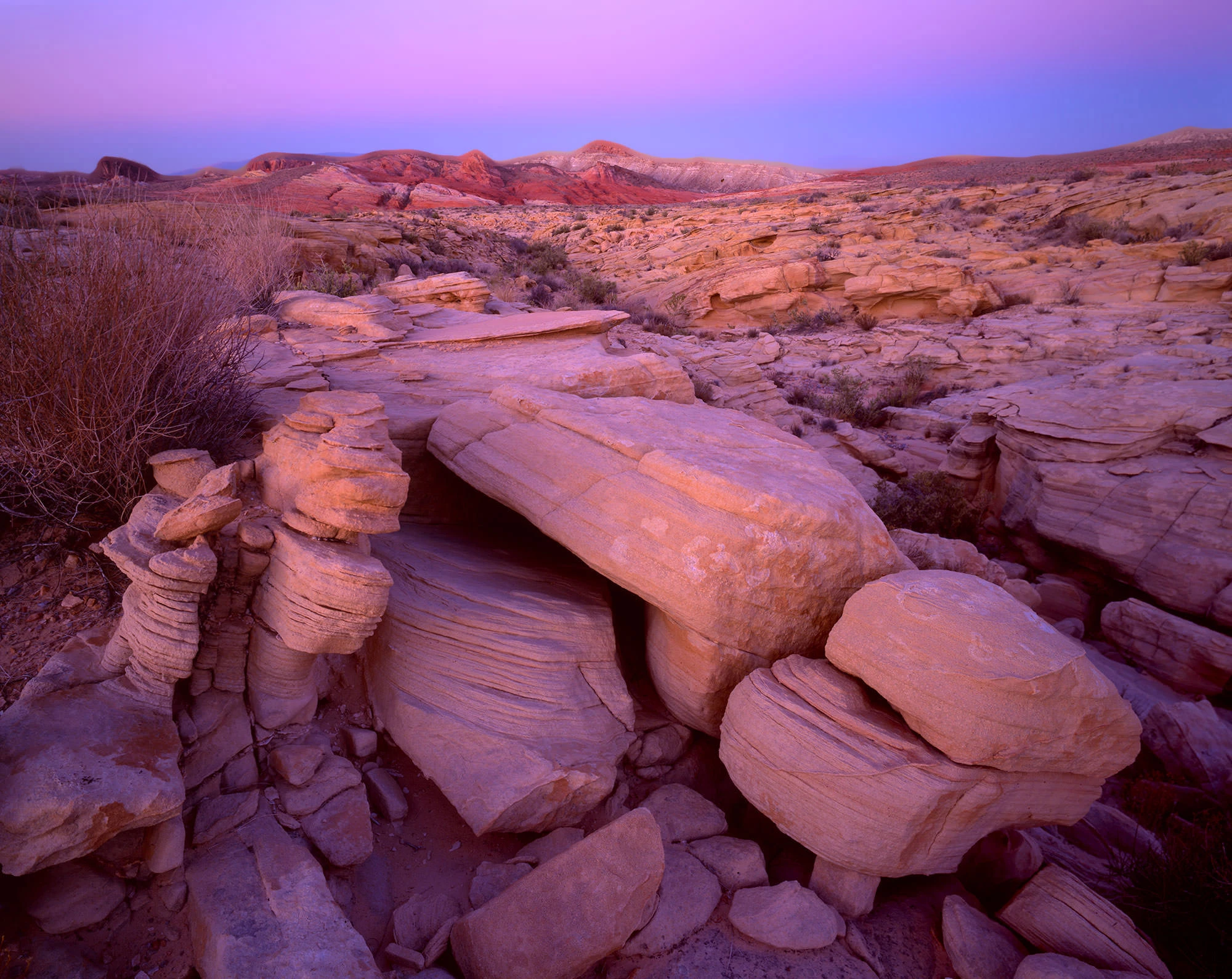
Valley of Fire & Thorns
A desert without winter, a four-year-old’s first real thorn, and why every trip needs a little danger.
Updated October 2, 2026
I am on a walk with my four-year-old son at the Springs Preserve, a 180-acre cultural park in Las Vegas. We are crossing hard, sandy ground when he lets out the most terrified shriek I have ever heard. I turn and drop to his level. What’s wrong? But I can already see: he has stepped on a dried branch armed with inch-long thorns, and all six have gone straight through the thick sole of his hiking shoe. He is crying so hard the tears practically shoot out of his eyes. I tell him I have to take the shoe off very carefully, and he needs to stay very still.
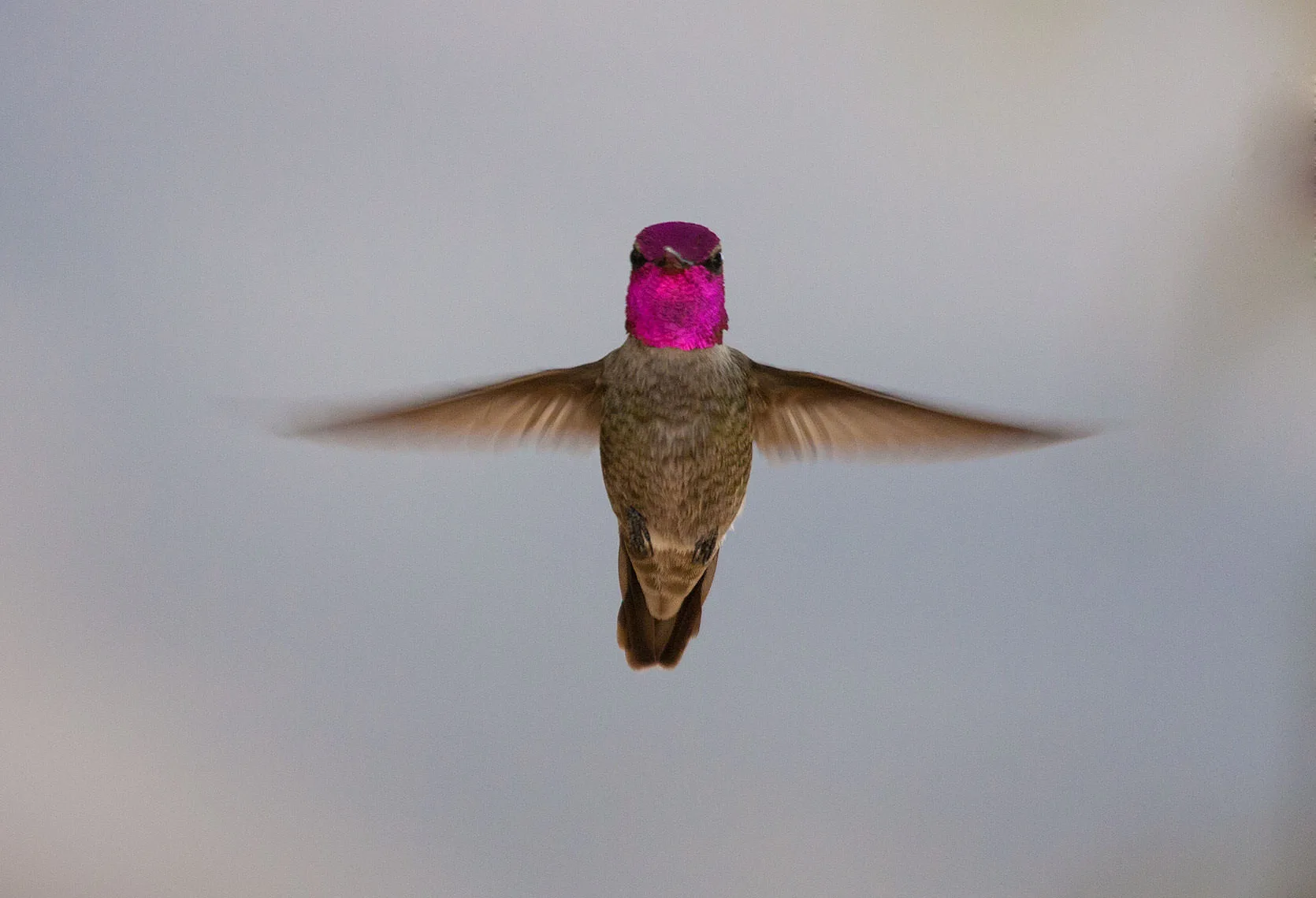
Male Anna's Hummingbird, in breeding plumage at the preserve ponds near the water treatment facility, in Henderson, Nevada.
Slowly, I ease off the shoe. The thorns have barely broken his skin; somehow the rubber sole absorbed almost a full inch of them. It isn’t the pain, I realize, so much as the shock of something so unexpected. Luckily I have a cold grape drink in my backpack, and after a few sips his tears turn to contemplation. Did Bear Grylls, he wants to know, ever get thorns in his feet when he was a boy?
I think about it for a minute. “Of course he did,” I tell him. “But if he’d ever stepped on spikes that big, he might have grown up to be as tough as you.”
A Place Without Seasons
While the rest of the United States and Canada retreat into the cold colors of winter, the desert here is bright, even in the dead of the season.
People knock the desert Southwest for its lack of real seasons. They say the same about the Pacific Northwest, where I live, where it drizzles under gray skies for months at a time. Walking in Valley of Fire State Park, northeast of Las Vegas, I think about the winter dweller’s wistful question, put best by the actress Anna Neagle: “What, I sometimes wonder, would it be like if I lived in a country where winter is a matter of a few chilly days and a few weeks’ rain; where the sun is never far away, and the flowers bloom all year long?”
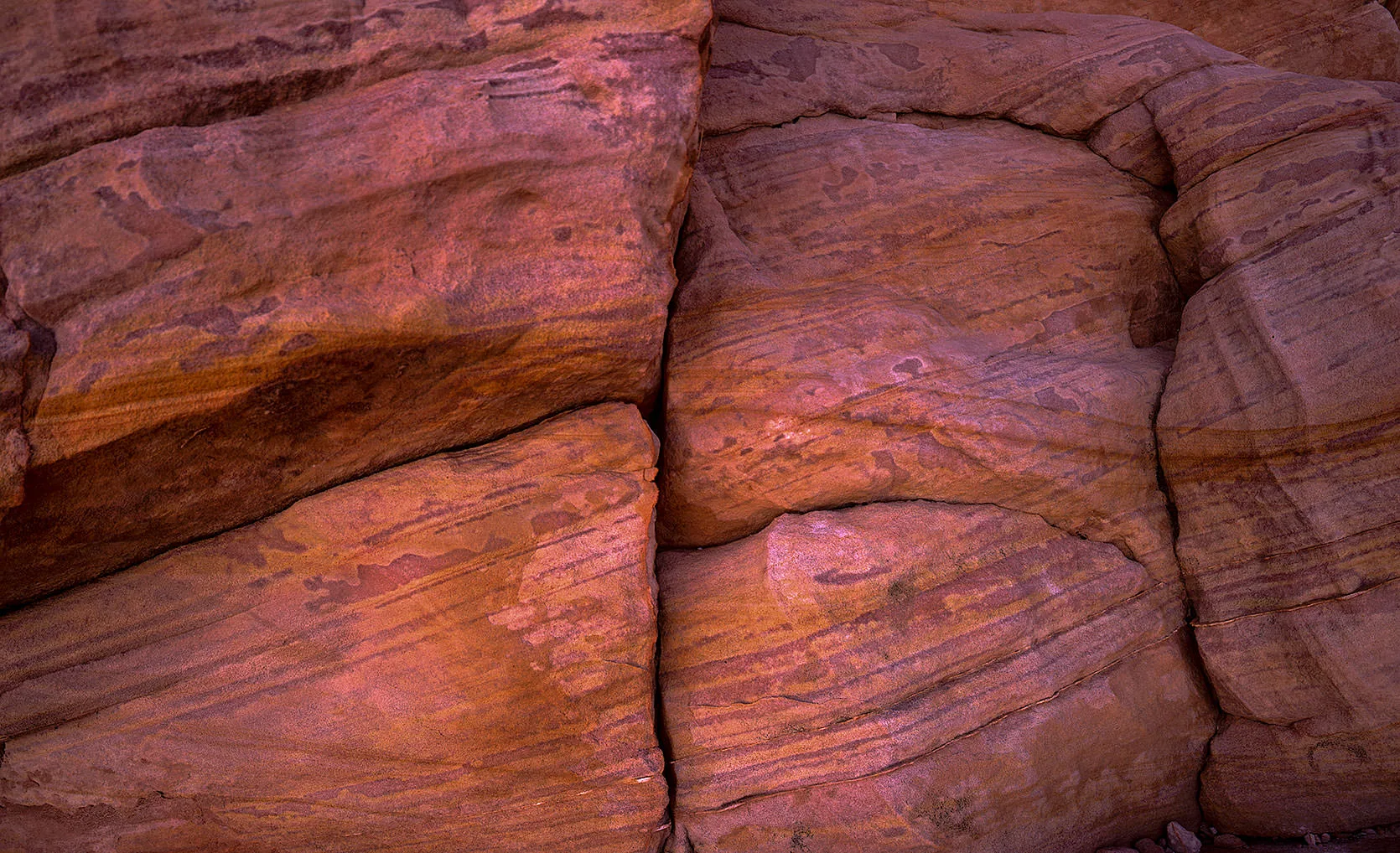
Sandstone details in Valley of Fire State Park, northeast of Las Vegas. The desert is bright even in the dead of winter.
Valley of Fire is Nevada’s oldest state park, set aside in the 1930s, and in winter it is easy to see why anybody would want to keep it. The red rock is Aztec Sandstone, the cemented remains of a sea of sand dunes that blew across this part of the continent in the age of the early dinosaurs, some 180 to 190 million years ago. The slanting layers of the old dunes are still there in the stone, swirls of red and orange and pink and white, as if the wind had only just stopped.
People have been coming here in the cool months for a very long time. At Atlatl Rock, and along the narrow wash that leads to Mouse’s Tank, the Ancestral Puebloans and later the Southern Paiute pecked petroglyphs into the dark varnish on the rock: bighorn sheep, spirals, human figures, and the spear-thrower that gives Atlatl Rock its name. Mouse’s Tank is a natural basin that holds rainwater, named for a Southern Paiute man called Mouse who hid out here in the 1890s. Summer is another story. The heat here regularly passes 110 degrees, and the park now closes some of its trails in the hottest months, after hikers have died in the heat.
Do we need the change of seasons? Or is it all right for a place to be eternally agreeable, always more or less the same? I think back to my son’s thorns a few days earlier.
What Cruise Ships Teach Us
Lately the news has been full of horror stories from cruise ships: outbreaks of illness, ships adrift and under tow, drunk passengers lost overboard, and worse, whole ships capsizing. Part of the appeal of a cruise is that it promises to protect you from the ordinary bumps of travel; it is sold as always sunny, with flowers blooming all year long. So when something truly bad happens on one, the passengers’ whole trip is upended. In a strange way, choosing to travel in a bubble makes the trouble, when it comes, all the worse.
In travel, we need a few bad things to happen to us. We need something to hurt now and then, to remind us that travel has its dangers, and to make us feel alive. There is nowhere in the world that truly has no seasons, no change. You can try very hard to be safe and aware on the road. But wall yourself off from it, and you wall yourself off from the pleasure of it too.
Maybe I don’t get four proper seasons back home in the Pacific Northwest. But by traveling, I’m always borrowing other people’s seasons, and that’s good enough for me.