
Fairy Moths, Dancing in a Sunbeam
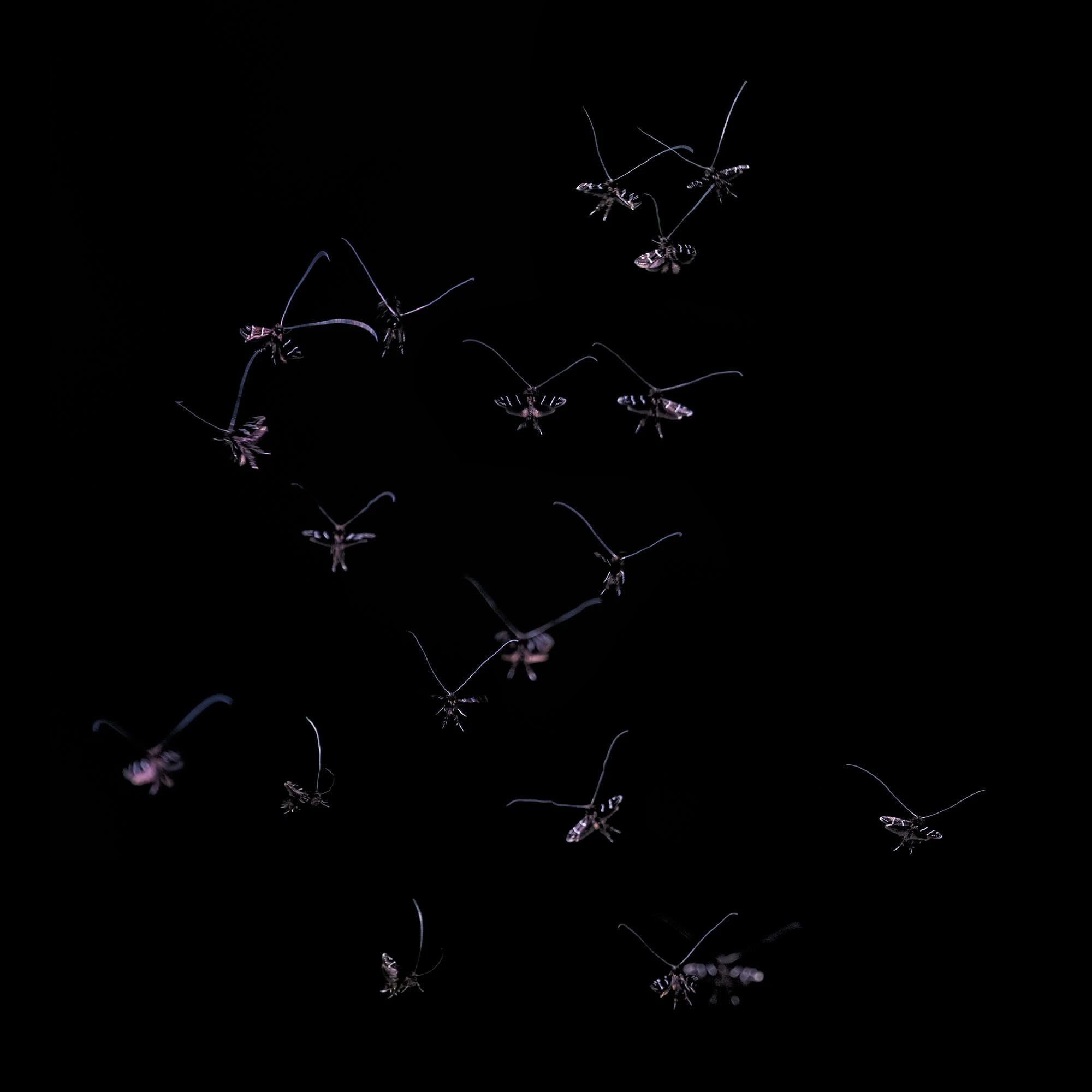
Tiny moths with impossibly long antennae, swarming in the sunlight of an Oregon forest.
I was walking in the doug fir forests east of Odell, Oregon, listening for pygmy owls, when I witnessed something truly strange - fairy moths. In a sunbeam casting down through the woods, I saw dozens of tiny moths with long antennae appearing to dance in the air. At first, I had no idea what I was looking at.
Longwinged Fairy Moths
Longhorned Fairy Moths
It turns out that these are moths from the Adelidae family, known as fairy longhorn moths, and considered by lepidopterists to be ‘primitive micromoths.’ This species is Adela trigrapha, a fairy moth of the forests and meadows of the West Coast, from California into Oregon and Washington. The males, which have absurdly long antennae for such a tiny creature, dance in sunbeams in damp woodlands, possibly as a form of lek ritual.
Fairy moths are found across North America, Europe, Asia and Africa, usually in forests and grasslands that support the flowering plants they depend on. They fly by day, mostly in spring, which is part of why they are so easy to miss. Most of us expect moths at night, around a porch light, not drifting through a patch of sun at midday.
The moths I saw had brilliant purplish, metallic wings and bright white antennae. It was the antennae that first caught my eye. These moths are tiny, not much bigger than mosquitoes, yet those antennae glimmered in the sun, and the whole swarm seemed to rise and fall together inside the beam of light.
Why Such Long Antennae?
In some fairy moths, the antennae of the males are two or three times the length of their wings. Males also tend to have much larger eyes than females, so large that they nearly meet on top of the head. Both features seem built for the same job: finding a mate in a crowd. Males gather in small swarms in sunlit spots in the forest, bobbing up and down in the air, and females fly in to choose among them. A swarm of males displaying in one place like this is called a lek, the same strategy used by sage grouse and manakins. Those shining white antennae, catching the light as the males dance, may be how they show off.
A Life in the Leaf Litter
The rest of a fairy moth’s life is far less glamorous. Females use a sharp, blade-like ovipositor to slip their eggs into the flowers or developing seeds of their host plants. The young caterpillars first feed on those seeds, then drop to the ground, where they build a small, flat, portable case out of bits of dead leaves. They spend the rest of their larval lives hidden in the leaf litter of the forest floor, carrying their cases with them and feeding on fallen leaves, before emerging the next spring to dance in the sun.
The Forgotten Micromoths
Although lepidopterists and naturalists often focus on the large moths, the macromoths, there are far more species of micromoths around the world, and little is known about most of them. Many have never been formally described, and their life histories, host plants and behavior remain a mystery. Fairy moths are a reminder of how much is still hidden in plain sight, even in a familiar Oregon forest, if you happen to be standing in the right beam of light at the right moment.