
Moleskine Journal from Mt. Hood
Pressed flowers, grasses and leaves gathered on Mount Hood and kept in the pages of a Moleskine.
Updated October 1, 2026
Lately I've been using my Moleskine to collect items I find in the field. It's a great way to identify species and collect a bit about the region you are in. I kept my Moleskine under heavy books for a couple weeks to ensure the plants pressed well. Also, I collected most of these along roads, rather than in preserves and natural areas.
These pages are the field journal behind my essay Shades of the Hood River Valley: the draft on the left, the plants on the right.
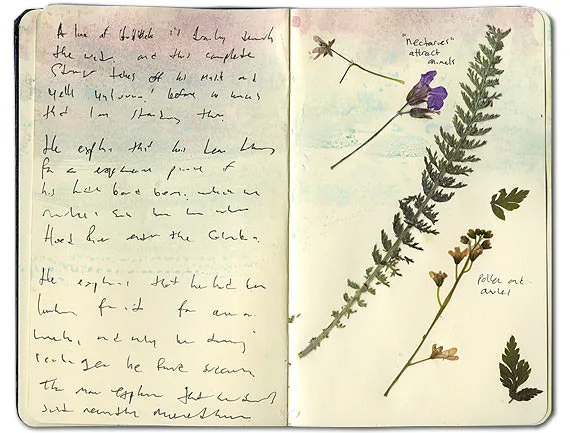
The kiteboarder’s story begins on the left; on the right, a purple wildflower, a long gray-green leaf and small orange blossoms, with notes that nectaries attract animals and on pollen and anthers.
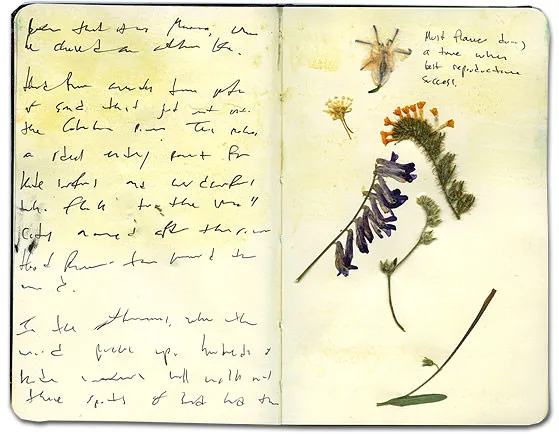
Notes on the sand spits at the mouth of the Hood River and the kiteboarders who launch from them, beside a coiled orange fiddleneck, purple vetch and a note that most plants flower when their chances of reproducing are best.
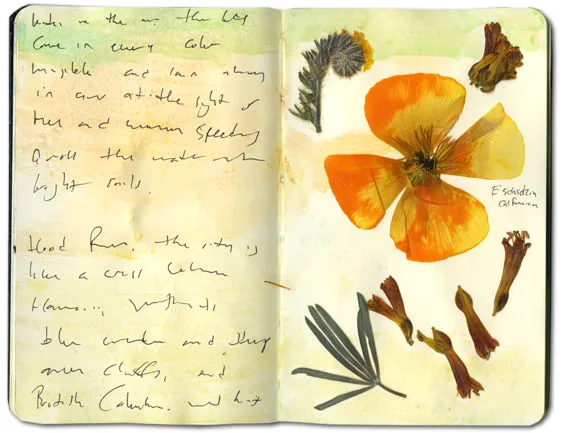
Hood River the town, somewhere between Hawaii and British Columbia, beside a California poppy, Eschscholzia californica, dried tubular flowers and a lupine leaf.
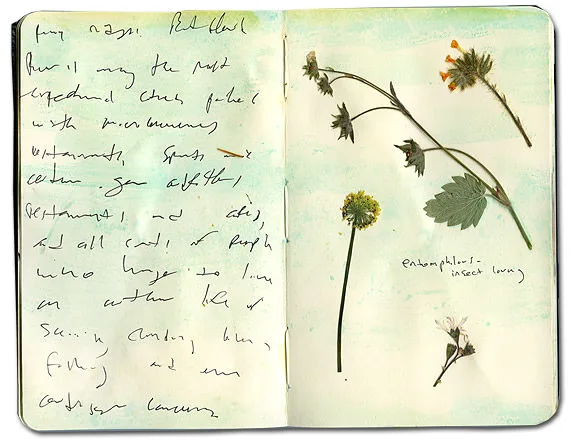
Hood River’s breweries, outfitters and outdoor people, and a spray of small wildflowers under the note “entomophilous, insect loving.”
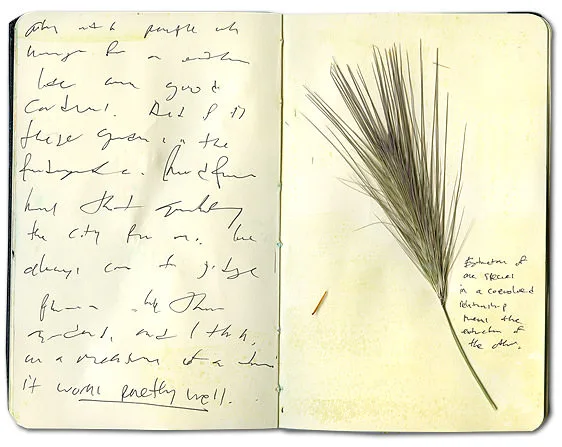
Notes on the people who come here hungry for an outdoor life and the gardens they plant, beside a feathery awned grass and a note that when one partner in a coevolved pair goes extinct, so does the other.
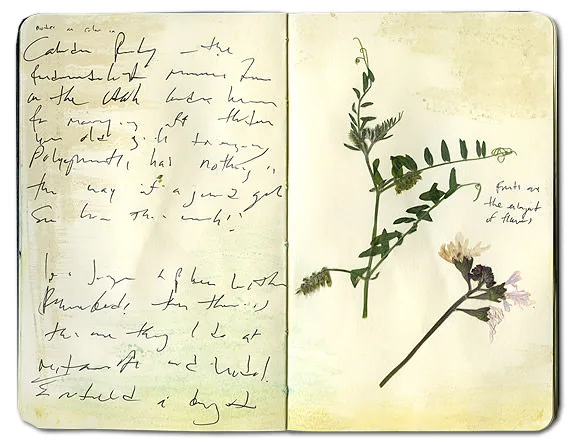
Notes on judging towns by their gardens, beside a pressed vetch with its tendrils and a sprig of pale purple flowers, with a note that fruits are the ovary of the flower.
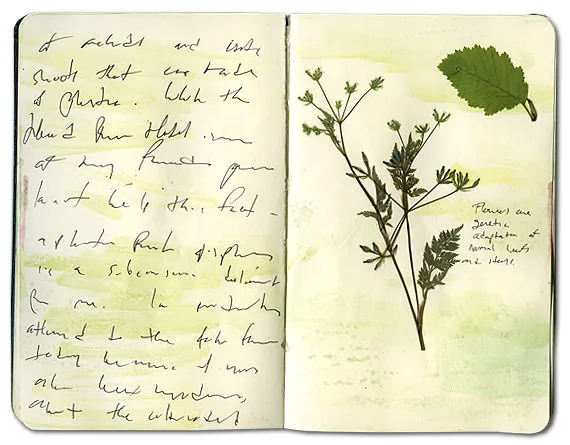
Plastic flowers in the lobby of the Hood River Hotel, beside a pressed umbel and a toothed leaf, with a note that flowers are leaves and stems adapted to a new purpose.
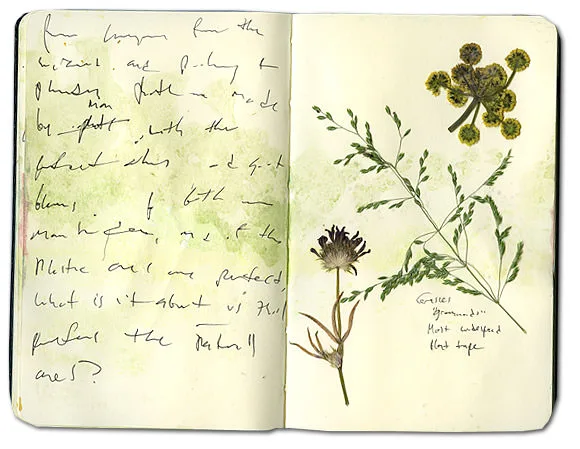
The argument between cultivated and plastic flowers, beside a yellow umbel, a dry purple flower head and a spray of grass, noted as the graminoids, the most widespread type of plant.
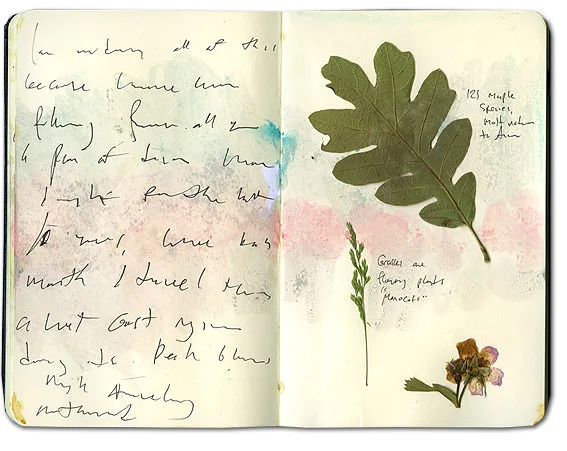
Notes on following the flowers all year, beside a lobed leaf, a sprig of grass noted as a flowering monocot and a faded pink blossom.
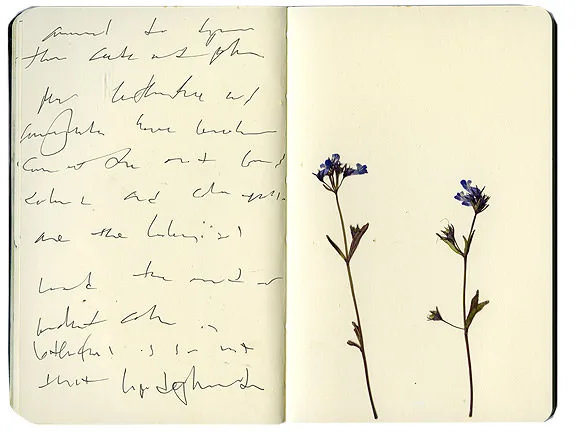
Two stems of small blue wildflowers, pressed whole, beside the draft.
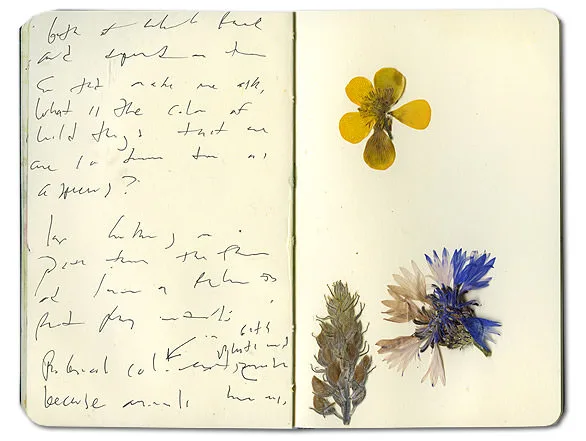
The question of why we are drawn to the color of wild things, beside a pressed buttercup, a blue cornflower and a silvery flower spike.
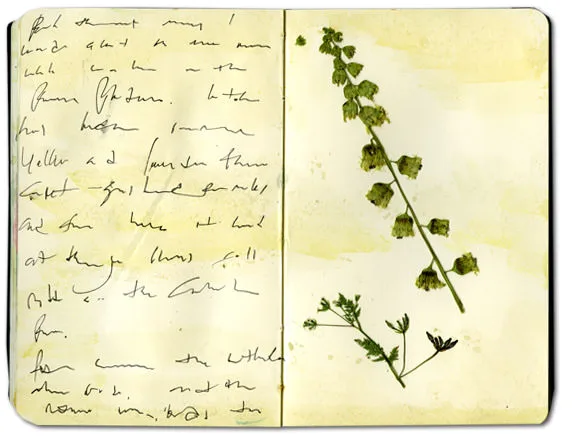
Notes from the Rowena Plateau, where the flowers seem to roll right down into the Columbia, with a stalk of small cup-shaped seed heads and a feathery leaf.
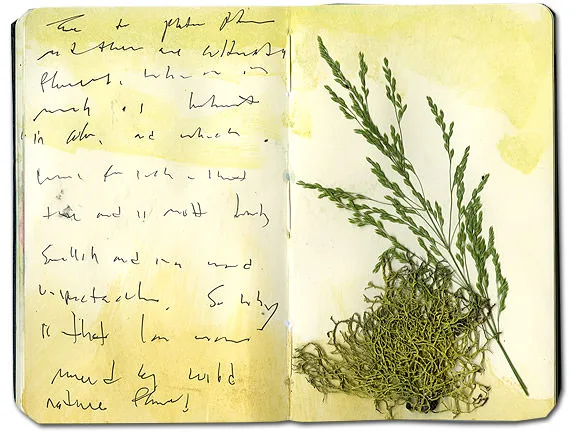
The last page asks why wild, native flowers move us, beside a spray of grass and a tuft of moss.