
Wings to the Storm
Inside the Bahamian Battle to
Save Great Guana Cay's Reef
Written 2010 · Updated September 27, 2026
Great Guana Cay · Part 3 of 3
Life is like a sail. To get the most out of it, you gotta pull it in tight and head straight into the wind.
I just arrived on the island of Great Abaco, in the Northern Bahamas. Jane and our son have dashed off to the grocery store before our bags are unpacked. It’s a small but well-stocked resort grocery which hasn’t changed a lick since I first came here at the age of five. Even the grocery items don’t change much — Ritz Crackers, little cellophane wrapped pork cuts with green jelly mints, Goombay Punch, Conchy Joe’s Hot Sauce, and Bay Rum in plastic bottles.
Technically, my family is about a quarter mile away when I see it in the sky.
It’s noon, and I’ve only been in the Abacos for an hour, when I see a strange bird pass over me. The sky is bright blue, the underbellies of the clouds are turquoise — the effect of the shallow sea illuminating them. Under these clouds is the raptor, black and white, with streamers on its tail, and then it vanishes behind the pines.
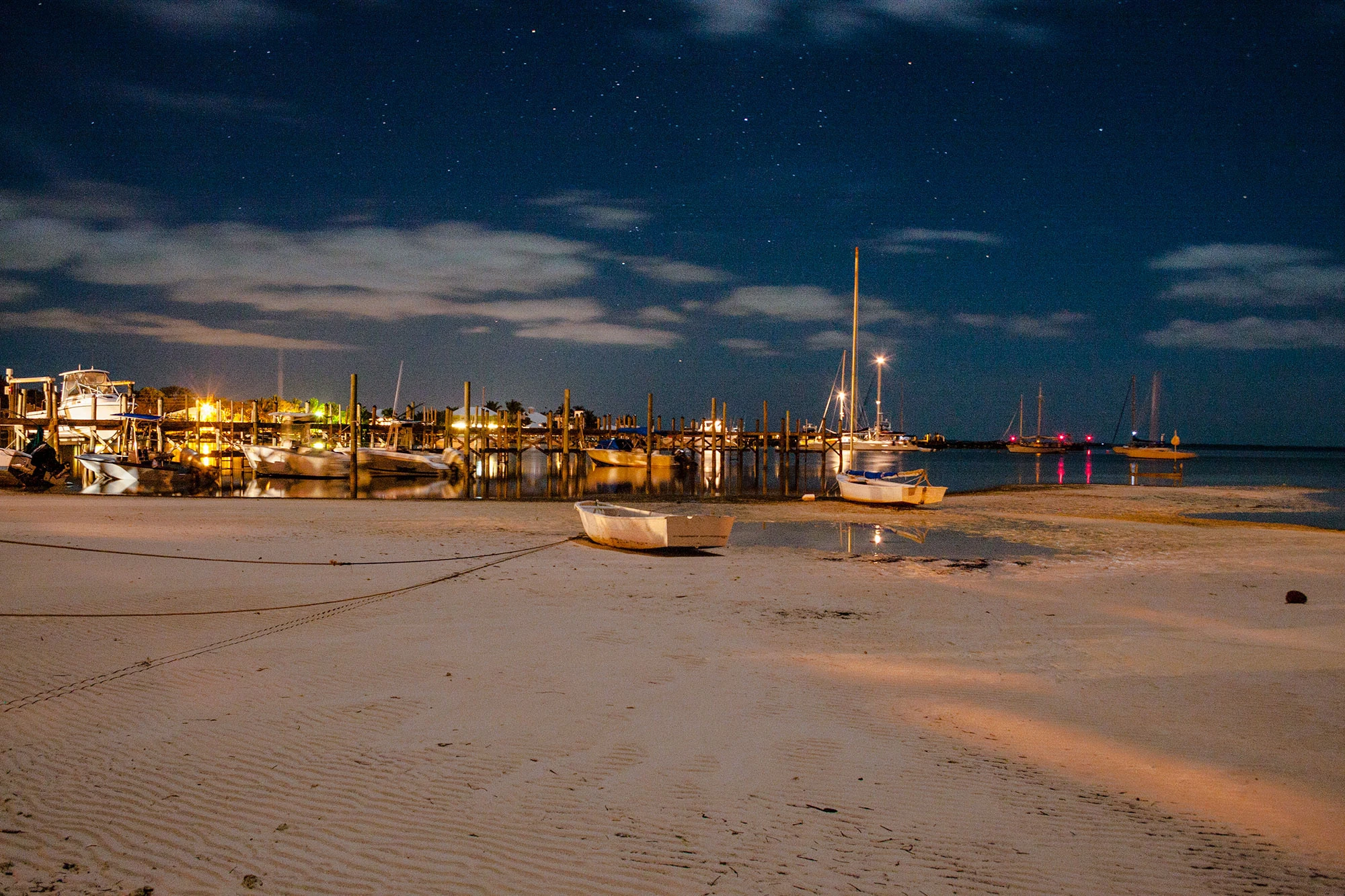
I walk down to the white sand beach, and I look out towards Great Guana Cay.
Two years ago I was there, and I sat on the deck of Docksiders restaurant, where a dozen Great Guana Cay Bahamians and a handful of foreign landowners came to meet me. The evening was the first time I was to meet many of the members of Save Guana Cay Reef in person.
It was a stressful time for members of Save Guana Cay Reef. Their lives were wrapped up in the most unlikely bid to derail the Baker’s Bay Golf & Ocean Club, a radical and rapacious mega-development which was being built on the northwestern end of their tiny island, without their consultation or approval. The development was bankrolled by the biggest names in North American finance, and Bahamian officials stamped approvals left and right. Big names — Tiger Woods, George Clooney, George Strait — had been flown in to play golf or to be pampered. Lance Armstrong, a few years before the doping scandal that ended his career, giddily tweeted about his experience at the unfinished resort.
Save Guana Cay Reef had been opposing the development through the Bahamian legal system, where they hoped to nullify the Heads of Agreement between the Bahamian Central government and Discovery Land Company, the golf developer based in Scottsdale, Arizona, which was granted rights to their island’s public land — threatening their most precious resources — a coral reef, a vanishing culture, and a small island economy.
In the Bahamian Court of Appeal, the locals’ case had been thrown out, and four years of fight had then seemed hopeless. Two heart attacks had come after the Court of Appeal announcement, and, unrelated to the case, a senior member of Save Guana Cay Reef passed away. Although the Bahamas is so often associated with luxury and wealth, native Bahamians on islands like Great Guana Cay live modest lives, often as fishermen or home caretakers. The reef defenders were by no means wealthy, and they relied on small donations from Bahamians and concerned homeowners to keep their resistance moving through the legal system.
A heavy fog had hung over this group of barefoot patriots, who believed that a golf mega-development on an island seven miles long and, in places, only a few hundred yards wide would effectively destroy their way of life. This was, to them, the Bahamian equivalent of Red Dawn, and if they failed, everything they knew and loved would be lost.
That night back in 2008, the eyes of these Bahamians looked heavy, almost fearful of what was to come. But then a cell phone rang, and one man excused himself. When he came back, he announced that he had just received a call from their lawyer.
“That was Fred,” he said.
“We’re going to Privy Council.”
Looking out at Great Guana Cay, I remember that somber night, perched above Guana Cay’s harbor. To go forward with Privy Council, the locals would be turning up the heat on an issue which had already captivated attention around the Caribbean.
My family came back, and Jane, pulling out the peanut butter and pickles, said, “I saw a new bird in the sky. It wasn’t something we’ve ever seen before.”
Jane will never admit it, but she’s developed that same Dewey Decimal system that helps her narrow in on the species. Because we evolved to categorize plants and animals, just a fraction-of-a-second glance at something in the natural world can tell us all sorts of things about what it is we are looking at. And what my glance says is what Jane’s glance says. And that’s the glance that says things need to be investigated further.
Before the Lords in London
On July 7, 2009, barristers representing the Bahamian government, Discovery Land Company and Save Guana Cay Reef assembled at the Privy Council in London. Save Guana Cay Reef had fought their cases through every court in the Bahamas. For a case to make it all the way to Privy Council is the equivalent of a case making it to the U.S. Supreme Court. The difference is that the Privy Council, which sits in London, is the court of final appeal for Britain's overseas territories, its Crown dependencies, and Commonwealth nations, such as the Bahamas, that still send their final appeals there.
The Privy Council has played a role throughout history in the U.K.’s empire. Even Benjamin Franklin had to appear before it. In 1774, in a chamber called the Cockpit, he stood silent for an hour while Britain's solicitor general berated him over the Hutchinson letters, a humiliation that helped turn him toward American independence.
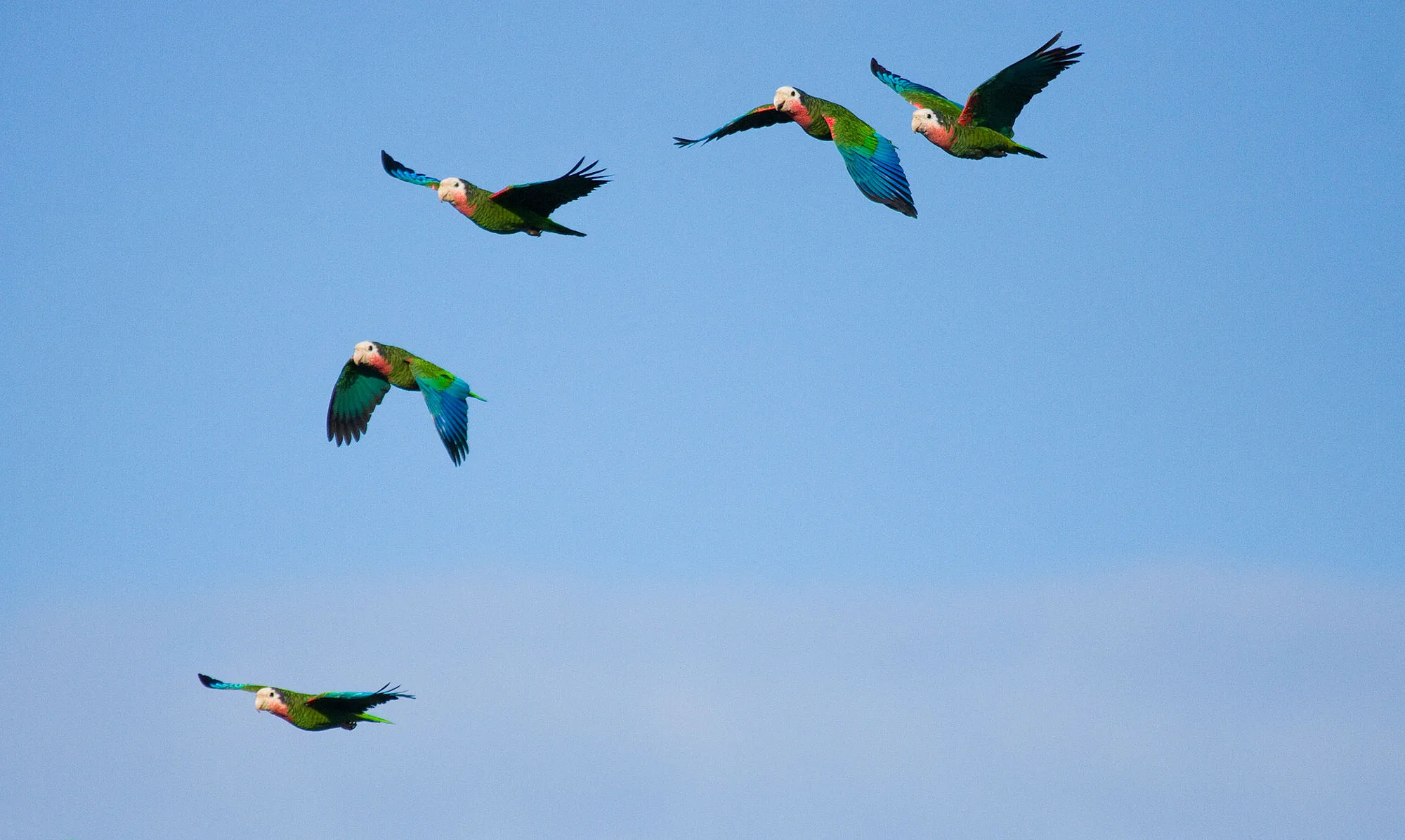
Abaco Parrots, a subspecies of the Cuban Amazon, in flight over the Abaco Islands. They are the only parrots in the world known to nest underground, in limestone holes in the pine forest floor.
For three days, the barristers would argue the merit of Save Guana Cay Reef’s case.
Save Guana Cay Reef was represented by a young lawyer from Muirhead & Burton, a highly respected solicitors firm in London, whose specialties included Privy Council and human rights work. The barrister took the case to a new level. The case, which had been building in complexity and detail for four years, had become a dizzying collection of paperwork. The case was so far-reaching, that it touched on some of the fundamental components of the Bahamian legal system. It was just a development case, but it was more than a development case.
On day one, the five Lords, Lord Hope, Lord Scott, Lord Rodger, Lord Walker and Lord Collins, listened intently to the appellants’ case. Over and over again, the Lords returned to the evidence in the Environmental Impact Statement that the respondents deliberately avoided consultation with the local Bahamians of Great Guana Cay. The hearing became extremely intense. The lords appeared to be, quite simply, disgusted by the Baker’s Bay Golf & Ocean Club. They showed their disgust especially as before-and-after images of the development were shown. The Lords also appeared to be appalled by the deliberate policy by the developers of non-consultation with the locals.
Throughout the days in the court, the developer and Bahamian government were railed on by the Lords on many of the appellants’ points. It was apparent, however, that the Lords were conflicted by the fact that the development had already made so much progress in construction.
All sides waited for months. On November 17, 2009, the Lords announced a ruling, delivered by Lord Walker: they dismissed the appeal, and did not declare the Heads of Agreement between the developer and the government null and void. The consultation had been imperfect, they found, but not so flawed that the courts could undo it. The Lords made it clear that under Bahamian law they had no legal mechanism to protect Great Guana Cay from what they called the “environmental degradation which may result from indiscriminate development of the islands.”
They wrote in the judgment, “The Commonwealth of The Bahamas has no comprehensive legislation for environmental protection, or public consultation on the disposition of public land…”
In a press release, the locals explained that they will continue their fight against the Baker’s Bay Club, “Challenges through the courts have been only one avenue of challenge. SGCRA will continue to bring domestic and international publicity to this abuse and to the injustice to which the people of Guana Cay were subjected by the delays in the judicial process, the collaboration between the Government and the Developers, the financial pressure brought by Baker’s Bay and the destruction of the environment and the ruination of the peaceful Family Island style life which this $500,000,000 mega anchor development project and Central Government’s dictates and abuse have raped the Cay with.”
Again, the news came hard on the Bahamians of Great Guana Cay. The President of Save Guana Cay Reef, however, stated that something about the ruling made him feel good, because now, when Baker’s Bay fails, it will be entirely in their own hands.
How the Fight Changed the Caribbean
But as the loss at Privy Council became clear, something else was beginning to crystallize: the hard fight had literally changed the Bahamas, and even the Caribbean.
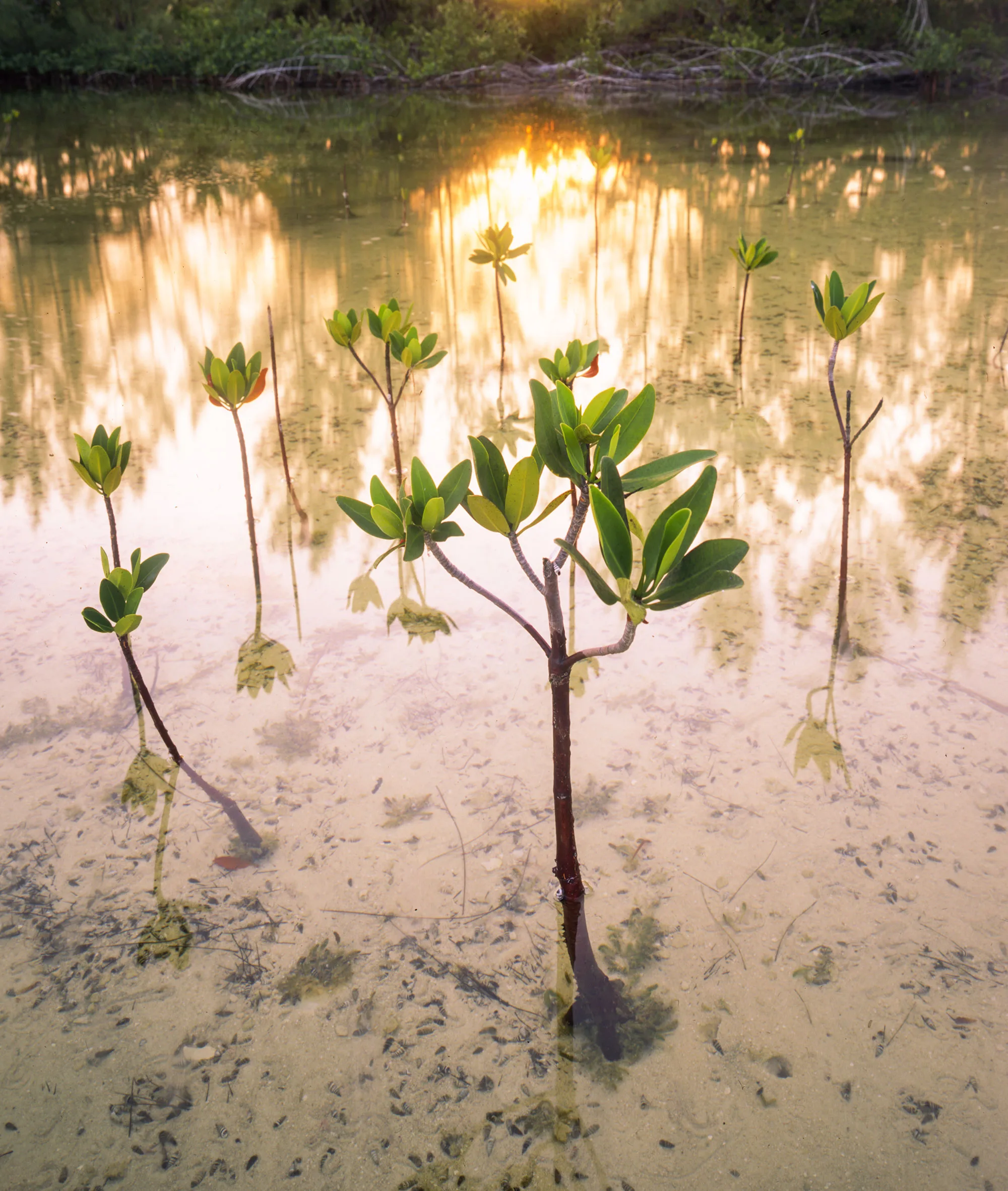
At Beef Island in the British Virgin Islands, a local group had found that a five-star development project would destroy a key natural asset of the island; a salt pond and mangroves area called Hans Creek. Fishermen and local citizens joined forces to protect the area. They had learned about the Great Guana Cay strategy and contacted Save Guana Cay Reef’s attorney, Fred Smith, who started them off on a legal plan to fight the development.
On September 23, 2009, the Virgin Islands Environmental Council won. Justice Indra Hariprashad-Charles of the High Court ruled that the government's approval of the Beef Island project was unlawful, because harmful development could not take place in the protected Hans Creek fisheries area. It was, by some accounts, the first time a Caribbean citizens' group had sued its government for breaking its own environmental laws, and won. The victory would not be the final word. In 2011, the Eastern Caribbean Court of Appeal overturned the ruling, and the developer came back with revised plans, a golf course postponed and wider buffers around Hans Creek. But the precedent had been set: the people of the islands could take their governments to court.
Shannon Gore, a marine biologist in the British Virgin Islands lamented the decision in the Bahamas, explaining, “Sustainable development has a balance between economic, environmental, socio-cultural and governance components but when there is an imbalance, this simple framework for sustainability becomes skewed and the other components become compromised. Alienating a community or breaking down the socio-cultural component is what happened at Guana Cay and will most likely continue to hinder its developments from ever being truly sustainable. The economic side has probably had a drastic effect on everyone involved, just the cost of litigation alone has probably far exceeded what was in the original budget of the development.”
But, as the locals in the British Virgin Islands won their case, Gore explained, “Because the Guana Cay community came together as one and fought the developer and government, they have led the way for other island communities to stand up and fight for what they truly believe to be sustainable. Inspired by and following in the footsteps of Guana Cay, the case of the Beef Island development was the first time a group of concerned citizens in the BVI had ever taken a developer and the government to court, and won. While the Beef Island development may not be entirely shut down, it has empowered the community to fight when they believe something is not sustainable for their environment, their culture or the economic welfare of the community.”
In an article in the BVI News, the director of the group that derailed the developer’s plans explained the larger significance of the ruling: “[It] sets an example for others throughout the Caribbean that they can be heard when challenging these types of ecologically destructive mega-developments.”
But the Guana Cay case was also inspiring groups across the Bahamas. During the government’s ‘anchor project’ phase in the early 2000s, of which the Baker’s Bay golf development is a product, the Bahamian government set out to seed a megadevelopment on island after island across the Family Islands. But groups, inspired by Save Guana Cay Reef, were formed around almost every single one of these megadevelopments. Today, Baker’s Bay is one of the last-standing megadevelopments from the Bahamian government’s megadevelopment policy.
A Swallow-tailed Kite over Abaco
A day later, I am with my wife and son on a beach of mainland Abaco. I see them on the horizon — Jane is picking up shells and handing them to our boy. I look away from them, and up at the sky, and there I see it again, the white bird, circling in the wind.
This time, there is no doubt as to what it is — a swallow-tailed kite — a type of hawk known more for the swamps of Florida and the Gulf Coast, and for the airstreams above the jungles of Latin America, where it spends the winter. In the Bahamas, it is a rare visitor. Why is it here?
As of October 2010, six years after the project began, Baker’s Bay has begun construction on only six homes, even though pundits had claimed only two years ago that over two-hundred units would be sold by now. According to contractors working on the project, there are no more contracts for homes in the works, and some are saying that all six units are for Baker’s Bay investors. This means absolutely no homes are being built for non-investors.
Just last month, the parent company for Baker’s Bay saw one of their flagship golf developments, the Spanish Oaks property in Texas, fall to foreclosure. Some golf analysts are privately saying the industry’s golden era is over, and that perhaps even the model itself, the gated community with hundreds of golf-side megamansions, is over.
Over the next few days, we keep seeing birds we had never seen in the Bahamas before. I ask a well-known birder in the Abacos why I am seeing swallow-tailed kites in the Abacos, why I’m seeing other strange birds, like a goose that is known to live in Greenland, and which has never been seen before in the Bahamas. He says the weather has been weird this year. He says the birds got thrown off course, maybe. That’s one way to put it. But to get here, across those incredible and unlikely distances, those hawks and warblers and geese pointed their wings toward the storm and flew.
Whether the development will fail or succeed is anybody’s guess. But to the people of the Abacos, I ask, why not at least consider what might happen to Great Guana Cay if the development fails?
What a lovely restoration project that land would make. A place for families to plant mangroves, and begin the land anew, to return Great Guana Cay to a place known for the integrity of its coral reef and the beauty of its settlement — not as the place George Clooney visited or where mean, rich golfers swear and honk their golf cart horns. What a lovely place for a national marine park. What a lovely place to remind Bahamians that the destiny of places is better realized by the people who live there. What a great place for the people of the Caribbean to turn to, and to say, this is the place where the people fought to save their coral reef, and who taught us to point our wings to the storm and fly.
Epilogue: What Happened to Great Guana Cay
I’m writing this in September 2026. These three stories were written over most of a decade: the Big Red Boat in 2003, Bakers Bay in March 2008 from a boat full of islanders, and this one as the fight reached London. They are told from the islanders’ side, in the middle of an active legal and political battle. Where I called something “illegal,” I was repeating the case the Save Guana Cay Reef Association was making in court at the time, not a final ruling. Here is what happened next.
The islanders lost. The Privy Council’s judgment of November 17, 2009 did not void the government’s agreement with the developer. It did recognize that the people of Guana Cay had a legitimate expectation of being consulted, and it agreed with what they had said all along: the Bahamas had no comprehensive law to protect its environment. But the deal stood, and Baker’s Bay was built.
In 2010 I asked what might happen to Great Guana Cay if the development failed. It didn’t fail. The Tom Fazio golf course opened in early 2011, the marina filled with yachts, and by 2019 about 185 homes stood on the north end of the island, many of them selling for millions of dollars, for a club of roughly 1,400 members. Its developer, Discovery Land Company, grew right along with it. Its website now lists 38 private communities, from Montana to Mexico, Portugal, Dubai and a castle in the Scottish Highlands. The model I watched arrive on one small Bahamian cay went global.
So did the fight. On Barbuda, a luxury development tied to Discovery Land’s Mike Meldman and John Paul DeJoria was built inside the Codrington Lagoon, a wetland protected under the Ramsar Convention, and a 2022 United Nations report found that mangrove clearing there had harmed protected habitat. In 2024, two Barbudans, John Mussington and Jackie Frank, won the right to challenge the new airport built to serve the island’s luxury developments. They won it at the Privy Council in London, the same court that ruled against Guana Cay.
Then came the real storm. On September 1, 2019, Hurricane Dorian came ashore at Elbow Cay, a few miles south of Guana, as a Category 5 hurricane with winds of 185 miles per hour. The settlement was smashed: Front Street, the church, the grocery, Nippers on its dune. The official death toll in the Bahamas was 74, with 245 missing. The true number is far higher, because so many of the dead were Haitian migrants in the shantytowns of the Mudd and Pigeon Peas on Great Abaco, whose families feared deportation if they came forward to report them.
In the days after the storm, Baker’s Bay’s members flew in helicopters, food and supplies, and the club later built the settlement a new firehouse and medical clinic. Troy Albury, who untied the lines in Part II and had become the island’s fire chief, told CNN he had fought the golf course for ten years. Now, he said, “They have been our savior during this.” I believe him. It’s a complicated thing, to be rescued by the thing you fought.
Great Guana Cay will never be the same. The coppice forest that covered the north end is gone, cleared for fairways and house lots, and the mangroves at Baker’s Bay were dug out long before any hurricane. Dorian then killed somewhere between a fifth and two-fifths of Abaco’s mangroves, depending on whose survey you trust. In January 2012, Troy, Dr. Tom Goreau and Dr. James Cervino found the reef nearest the golf course smothered in algae blooms fed by fertilizer, with new outbreaks of coral disease; that survey is on the coral reef decline page. In the early 2020s, stony coral tissue loss disease reached the reefs of Fowl Cays National Park, just south of Guana.
And on March 26, 2024, a tug hauling a barge loaded with a crane, pea rock and sand for Baker’s Bay ran aground on the reef inside Fowl Cays National Park, near Man-O-War Cay. Four failed attempts to pull it free crushed coral, including critically endangered elkhorn, and the spilled cargo buried more. The Port Department ordered the owners to remove the wreck in May 2024. As far as I can tell, it is still there.
A few things I reported in Part II need updating. In 2008 I wrote that no monitoring report cards had ever been made public. The reports did exist. When they later surfaced, they showed the development’s own environmental monitors, Dr. Sullivan-Sealey’s University of Miami team, on the ground nearly every month from 2007 through 2008, documenting repeated turbidity and buffer-zone violations during construction. But after the first report, they were addressed not to a government regulator but to a single executive inside the project. You can read them on the monitoring reports page.
And the loggerhead I found in Part II, its shell cut away, would be illegal to kill today. The Bahamas banned the harvest of all sea turtles in 2009, the year after I wrote about it.
The whole story starts at the Great Guana Cay overview.
The people of Guana Cay pointed their wings to the storm. They lost the case, and then a real storm took much of what was left. But they were right about the reef.