

Field Notes from Asia’s Pacific Rim
Wander the Tigerlands
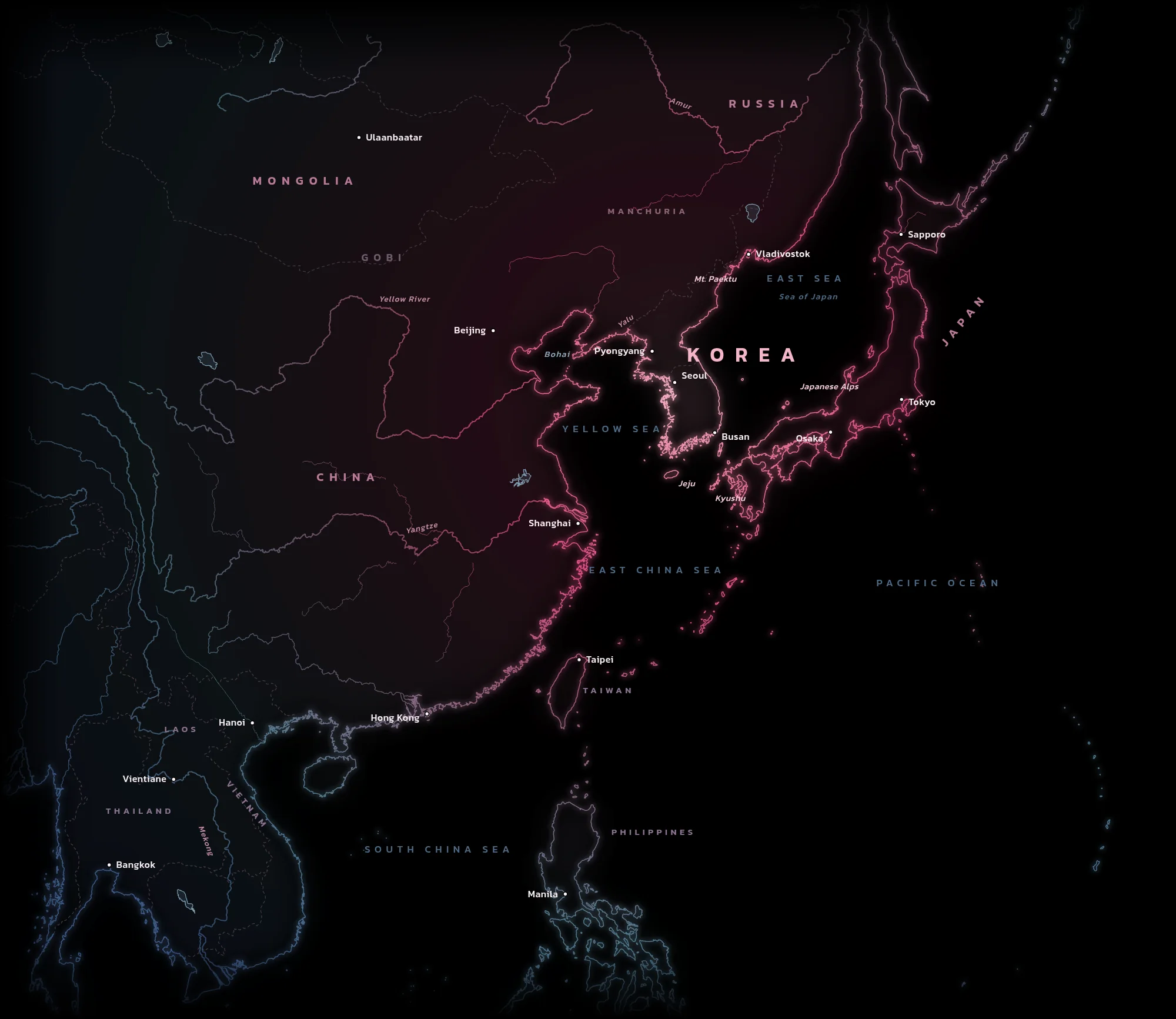
The Tigerlands arc across the Pacific Rim, island nations and interiors once roamed by tigers that shaped the region's iconography — modern and deeply traditional at once. This is my newest travel focus, and where I'm headed in the coming years.

Stories from the Tigerlands

Why the Tigerlands?
Where the Tigers Were
Tigers once ranged from the Russian Far East and Manchuria down through Korea and China to the forests of Southeast Asia. In Korea the tiger is still everywhere: in the founding myth of Dangun, where a tiger and a bear each wish to become human; in folk paintings of a tiger beneath a magpie in a pine; and on the mascots of the Seoul and Pyeongchang Olympics, Hodori in 1988 and Soohorang in 2018.
The name has a second meaning. From the 1960s on, South Korea, Taiwan, Hong Kong and Singapore industrialized so fast that they became known as the Four Asian Tigers. The Tigerlands are both at once: an old wild country of mountains, tidal flats and temple roofs, and some of the most modern cities on earth.
- ~70%of the Korean Peninsula is mountains
- 1920swhen the last known wild tiger was killed in South Korea
- Halfof all South Koreans live in and around Seoul
- 4Asian Tigers: South Korea, Taiwan, Hong Kong and Singapore
Starting in Korea
My stories so far, from the alleys of Seoul to the tidal flats of the Yellow Sea.
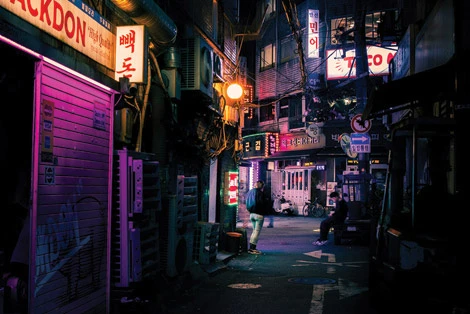
- SeoulEuljiro and the old cityPrinting alleys, hardware stalls and neon in the aging industrial heart of the capital.
- Ganghwa IslandThe Yellow Sea tidelandsA border island at the mouth of the Han River, its tidal flats a refuge for the Black-faced Spoonbill.
- The SketchbookAcross the peninsulaPalace gates, stone guardians, noodle shops and dried pollack, in pen and watercolor.
Illustrating East Asia
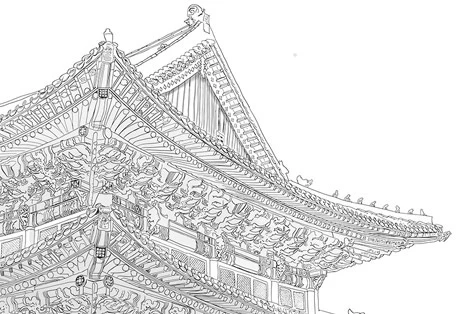
This new section gives me space to experiment with new approaches to travel illustration. In addition to my usual Moleskine sketches, I'm exploring large-format studies—especially of ornate East Asian architecture and densely layered street scenes. The region's visual complexity offers a perfect testing ground for evolving my style.
Why South Korea?
I chose South Korea as the starting point for my East Asian travels because half my family is Korean. With in-house cultural insight and a personal connection to the country, it made for an ideal launch pad—rich in story, history, and access.
Where to Next?
From Japan to Vietnam, Taiwan to Mongolia, East Asia holds a lifetime's worth of wonder. I'd love to hear from readers: what are your favorite places in this part of the world? Where should I take my sketchbook next?