
Yuccas of the World
An illustrated guide to all the yucca plants in the world.
Updated September 25, 2026
The yucca genus is a group of striking, hardy plants native mostly to the arid regions of North and Central America. To me, they are symbolic of the deserts of Mexico and the Desert Southwest.
There are 48 species, ranging from small, ground-huggers to towering giants. They can be found in deserts, grasslands, and even coastal areas. Most are pollinated by different species of yucca moths, and many played significant roles in the indigenous history of the Americas as food, medicine, instruments and even construction material.
I sketched each yucca species with liner pens, Copic markers and watercolor.
Yucca species, A to Z
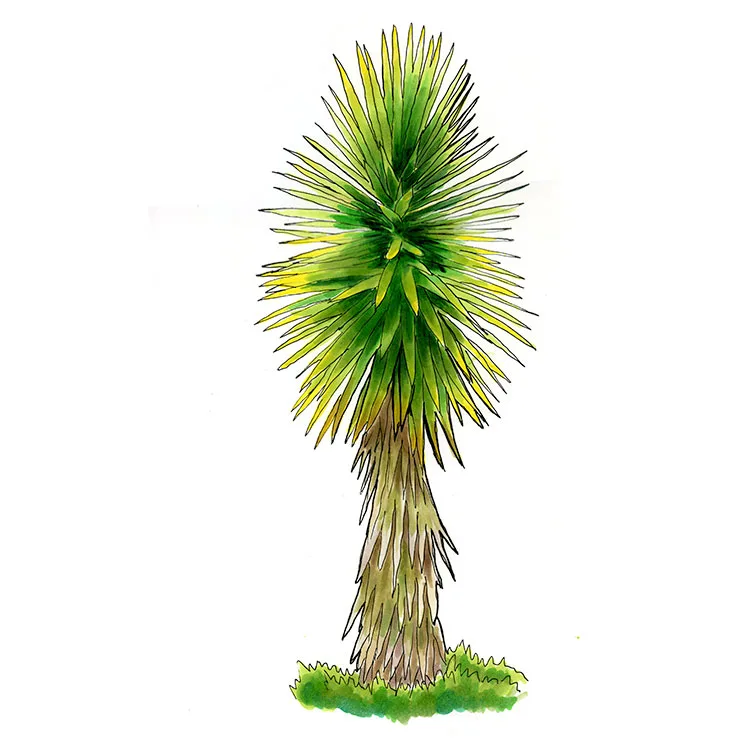
Yucca aloifolia
Spanish Bayonet
A sharp-leaved yucca with stiff, sword-like leaves and a strikingly spiky appearance. Found in coastal regions of the southeastern United States, it thrives in sandy soils and dunes. Its white, bell-shaped flowers bloom in dense clusters. This species has such sharp-tipped leaves that it was often used as a natural barrier to keep intruders and animals away.
Maximum height: Up to about 20 feet.
Pollinator: Yucca moths, which lay their eggs in the flowers while facilitating pollination.
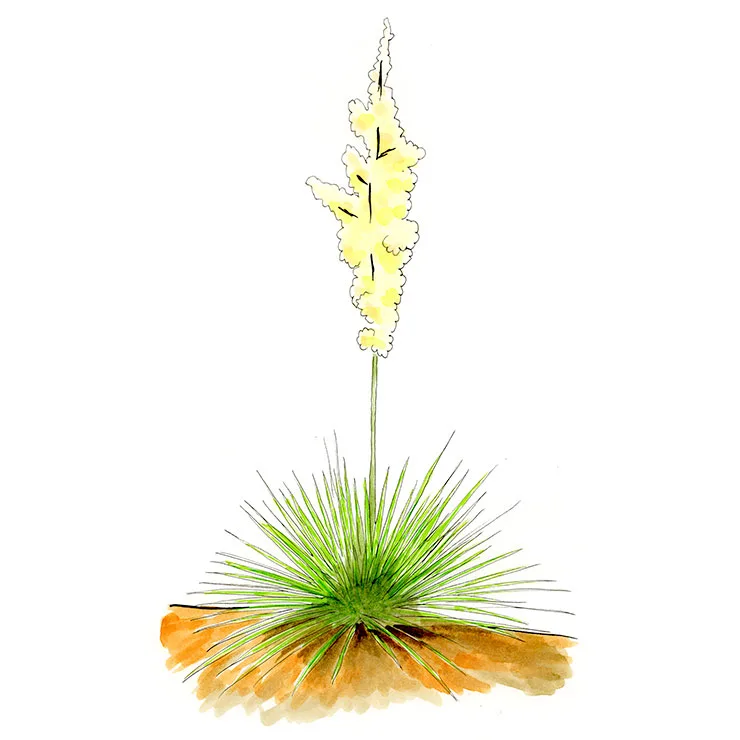
Yucca angustissima
Narrowleaf Yucca
Features long, narrow leaves with a bluish-green hue and thread-like filaments along the edges. Native to the Colorado Plateau of Arizona, New Mexico, Utah and Colorado, it grows on sandy mesas and among piñon and juniper. Its flowering stalk produces cream-colored flowers.
Maximum height: 3-6 feet.
Pollinator: Yucca moths, primarily Tegeticula species.
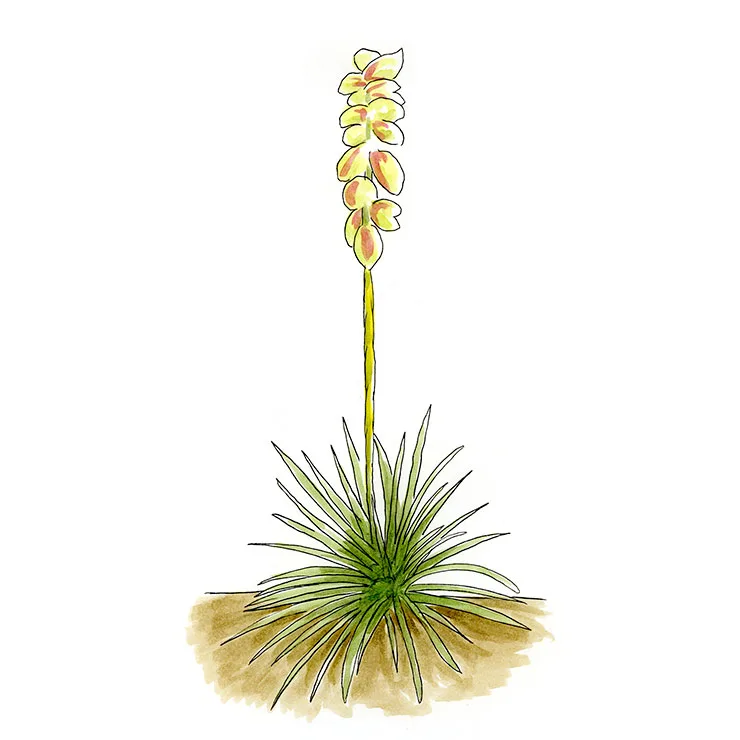
Yucca arkansana
Arkansas Yucca
A compact species with soft, narrow leaves forming a basal rosette. Found in Arkansas, Kansas, Missouri, Oklahoma and Texas, it adapts well to prairies and rocky outcrops. Creamy flowers appear on a short stalk in summer.
Maximum height: 2-3 feet.
Pollinator: Yucca moths, notably Tegeticula intermedia.
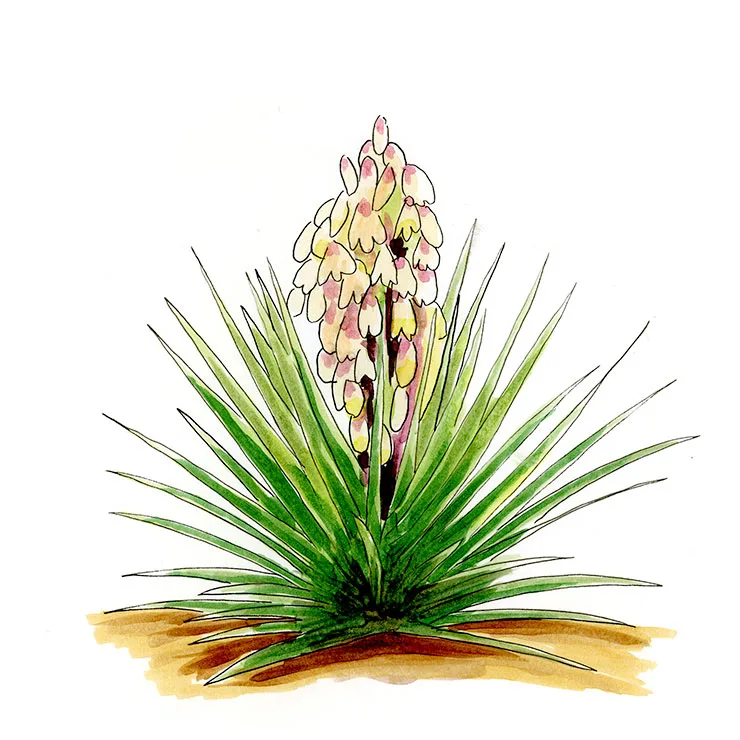
Yucca baccata
Banana Yucca
Named for its banana-shaped fruits, it has thick, rigid leaves with curled fibers at the edges. Native to the southwestern U.S. and northern Mexico, it grows in deserts and semi-arid regions. Its flowers are creamy-white with a hint of purple. Its fruits, which taste something like sweet potatoes, were traditionally roasted and eaten by Native Americans.
Maximum height: 2-5 feet.
Pollinator: Yucca moths, primarily Tegeticula baccatella.
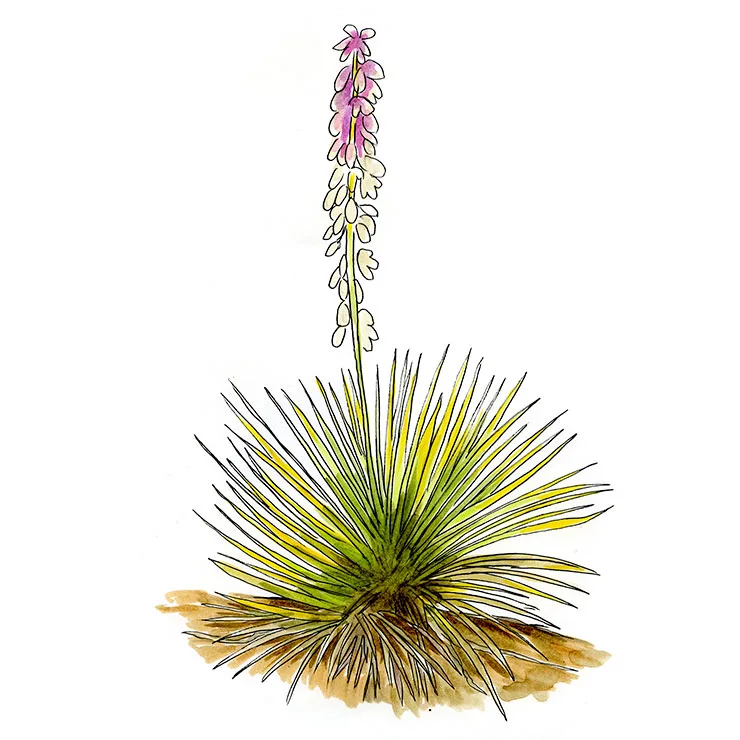
Yucca baileyi
Bailey's Yucca
A small yucca with thin, blue-green leaves and a low-growing habit. Found in New Mexico and Arizona, it prefers rocky slopes and high desert terrain. Its flowers are creamy bells, often tinged with purple, and it's also called Navajo Yucca.
Maximum height: 1-3 feet.
Pollinator: Yucca moths specific to its range.
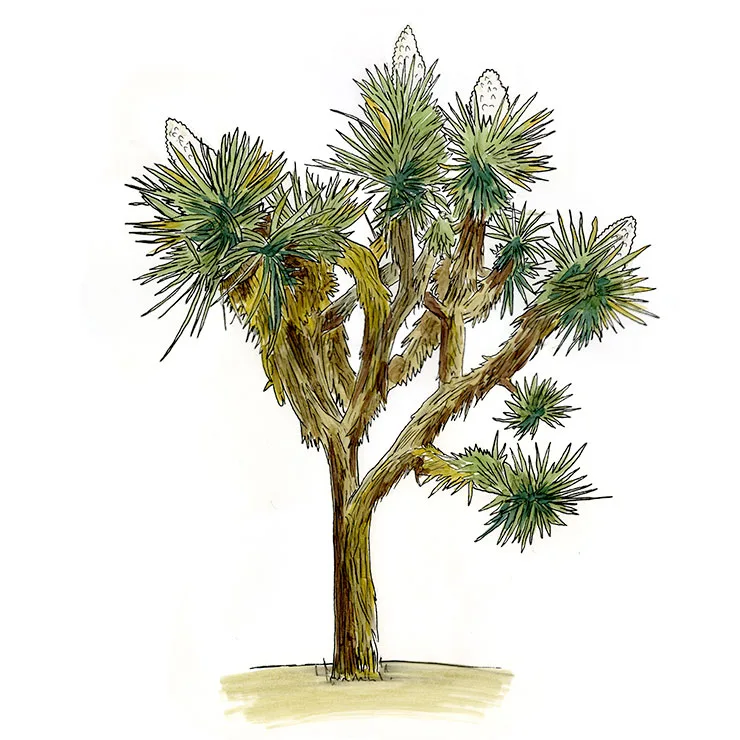
Yucca brevifolia
Joshua Tree
A tall, iconic yucca with branching arms and spiky green leaves. Native to the Mojave Desert, it thrives in arid, sandy soils. It produces greenish-white flowers and supports a diverse desert ecosystem. Legend says Mormon settlers named it for the biblical Joshua raising his arms in prayer, though the story is probably embellished.
Maximum height: 15-50 feet.
Pollinator: The yucca moth Tegeticula synthetica.
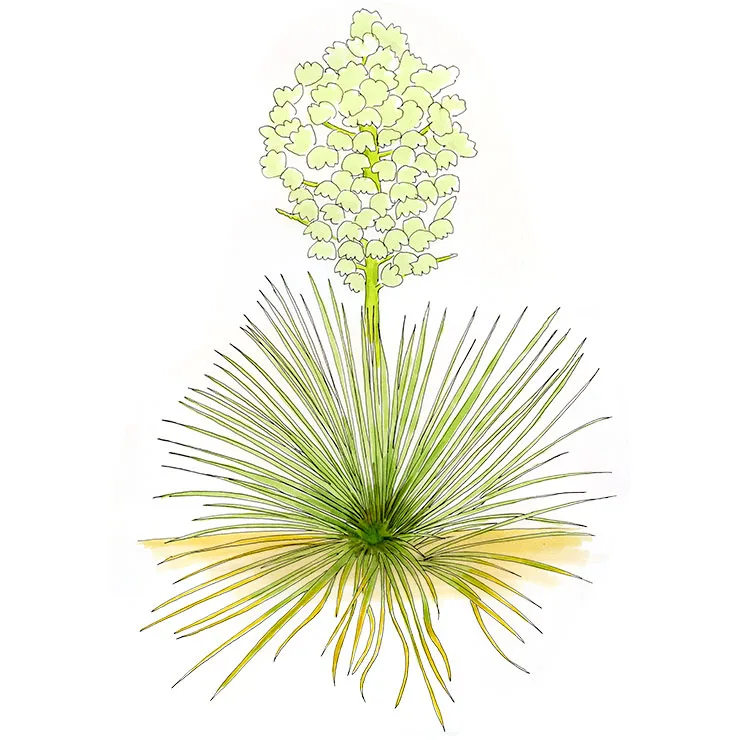
Yucca campestris
Plains Yucca
A rosette-forming species with slender, grass-like leaves. Found in the plains of west Texas, it thrives in sandy, open areas. Its flower stalk bears unusual dull-green, sometimes pinkish flowers, a rare color among yuccas. This species has underground rhizomes that help it spread across sandy grasslands.
Maximum height: 2-4 feet.
Pollinator: Yucca moths in arid grasslands.
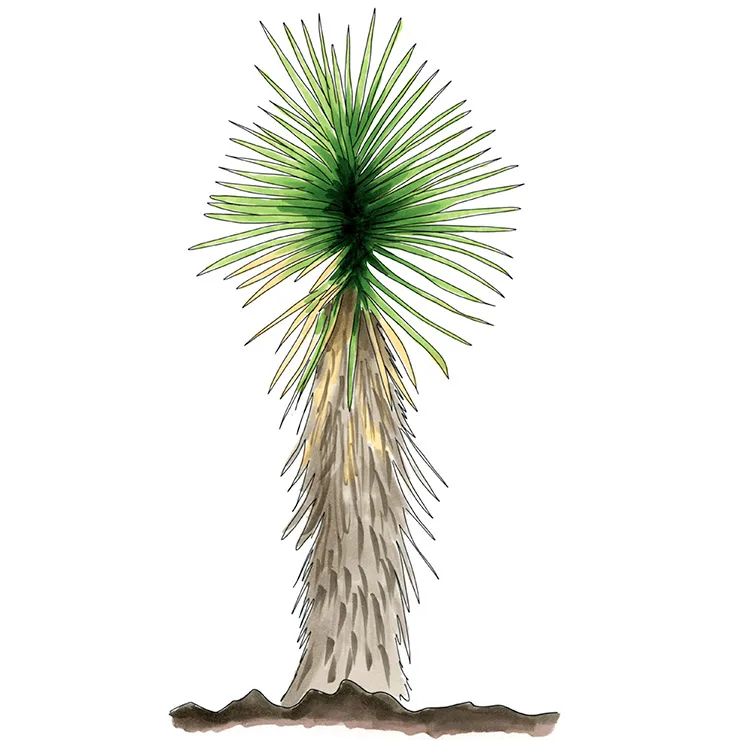
Yucca capensis
Cape Yucca
A rare, sprawling yucca with narrow, sharp leaves and trunks that often lean or half-recline. Native to the Cape Region of Baja California Sur, it grows in the understory of tropical dry forest. Its flowers form dense clusters.
Maximum height: 6-12 feet.
Pollinator: Yucca moths (Tegeticula baja).
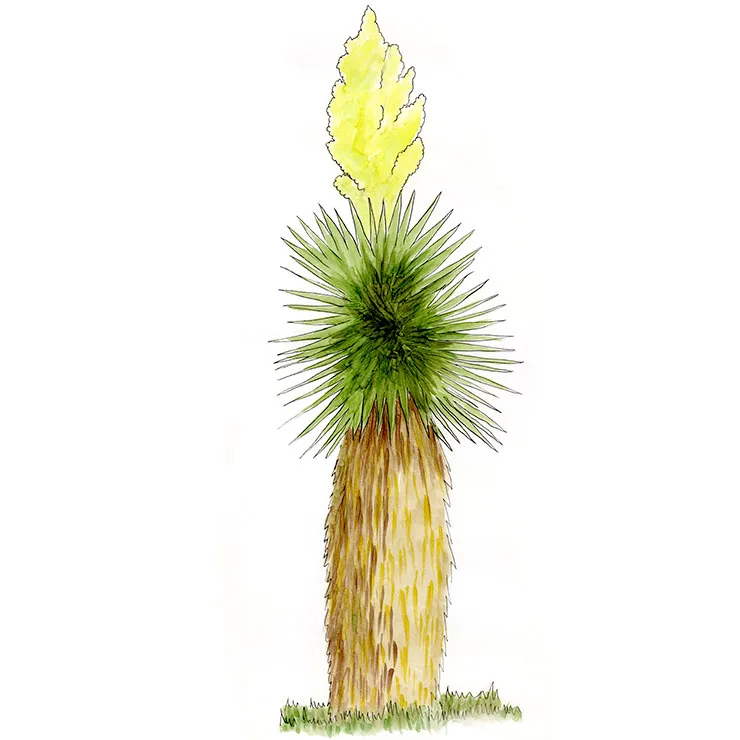
Yucca carnerosana
Giant Spanish Dagger
A tall, robust yucca with stiff, sword-like leaves forming dense rosettes. Native to northern Mexico and the Big Bend of Texas, it grows on rocky hillsides and desert terrain. Its flowers are large, white, and borne on tall stalks. This species produces a dense trunk up to about 20 feet tall, making it one of the larger yuccas.
Maximum height: 10-20 feet.
Pollinator: Yucca moths, Tegeticula carnerosanella.
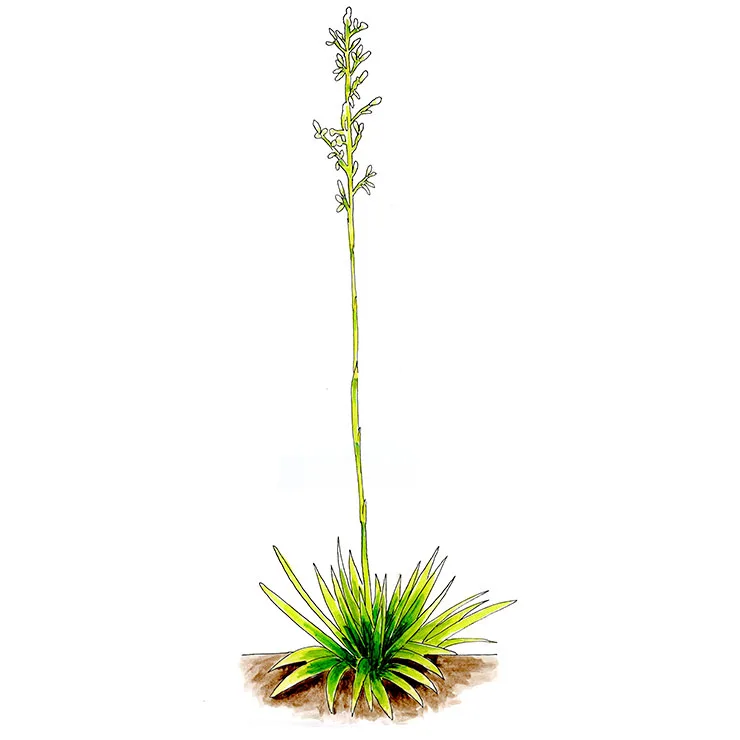
Yucca cernua
Nodding Yucca
A rare species with soft, flexible leaves and distinctive nodding flowers. Native to a few counties of east Texas and western Louisiana, it grows in pine-hardwood forest. Its flowers are large, white and bell-shaped. This rare yucca was only described in 2003.
Maximum height: 2 feet (flower stalk up to 10 feet).
Pollinator: Yucca moths, critical for seed production.
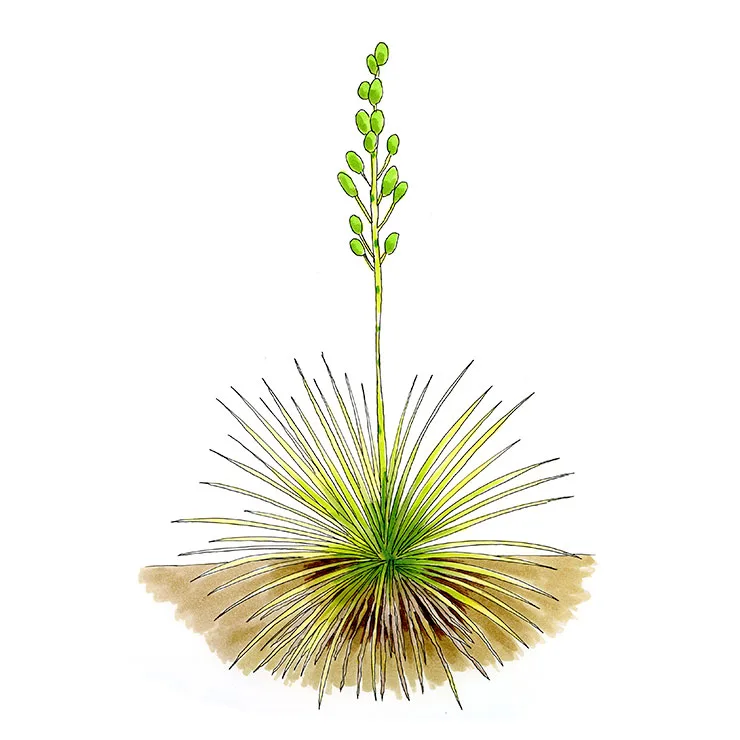
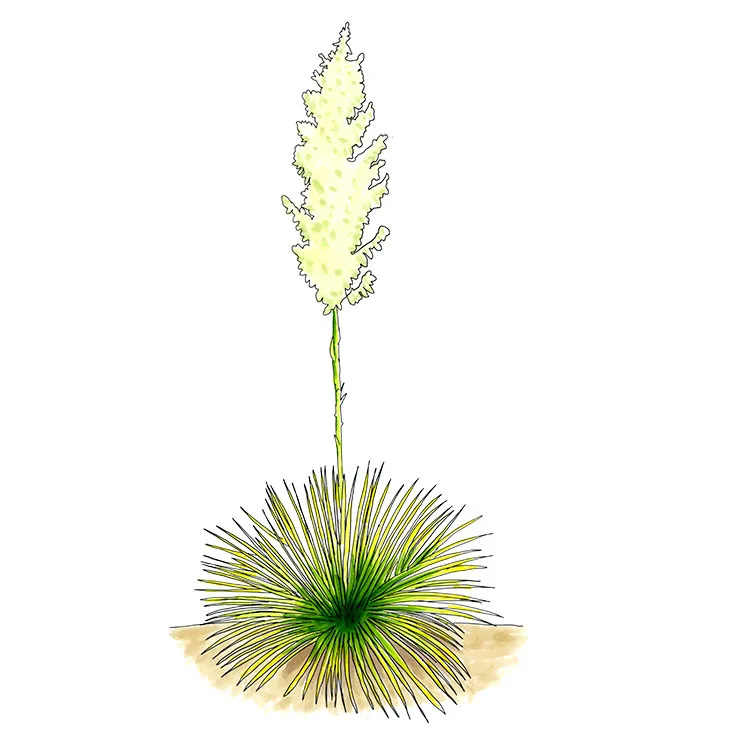
Yucca constricta
Buckley's Yucca
Features thin, rigid leaves with curling filaments along the edges. Found in central Texas, it grows in grasslands and rocky soils. Its flowers are white with a greenish tint. The name "constricta" refers to its seed capsules, which are pinched in the middle like an hourglass.
Maximum height: 3-6 feet.
Pollinator: Yucca moths.
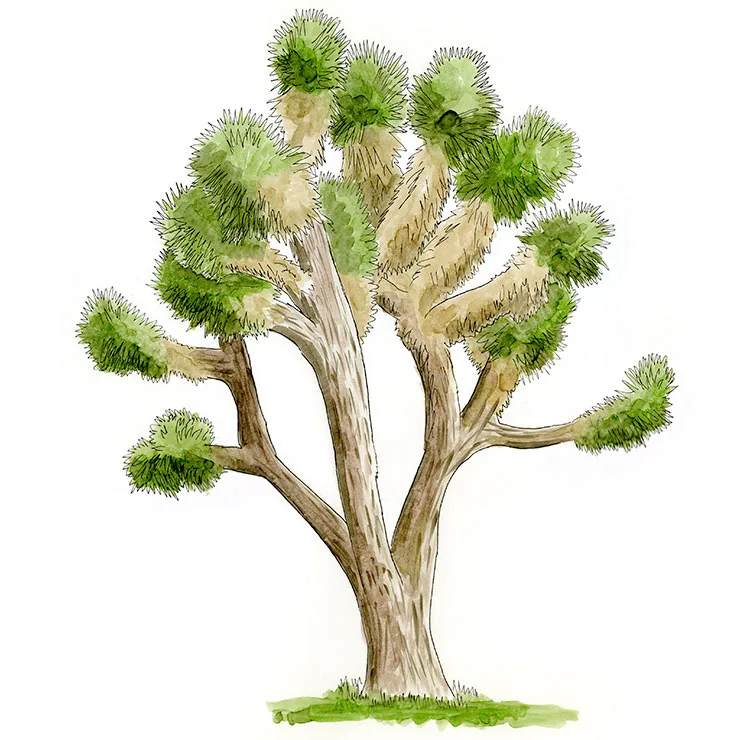
Yucca decipiens
Palmito
A tree-like species with long, slender leaves and a thick, branching trunk. Native to Mexico, it grows in rocky and arid regions. Its flowers are large, creamy-white, and form dense clusters. The name "decipiens" means "deceptive," referring to how easily it's mistaken for Yucca filifera.
Maximum height: 15-30 feet.
Pollinator: Yucca moths.
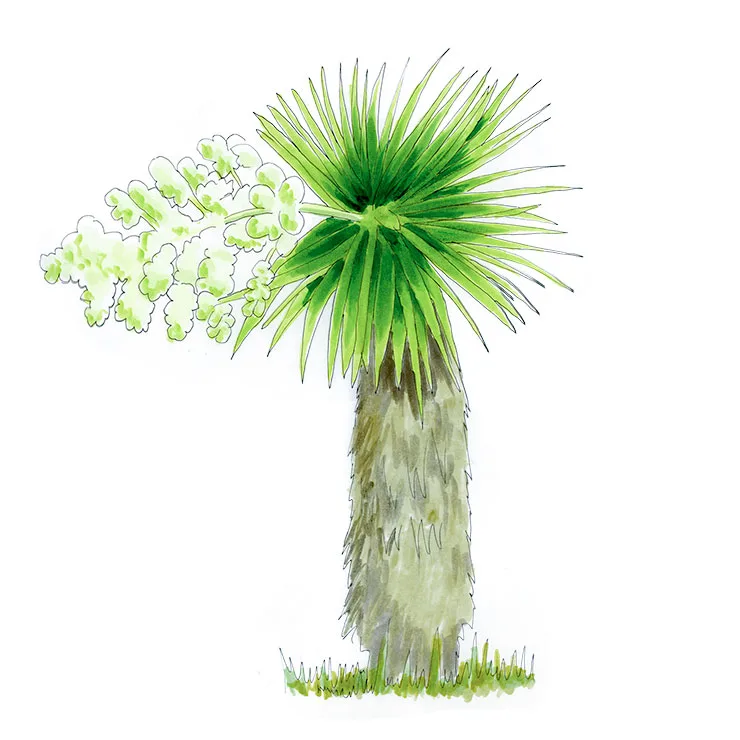
Yucca declinata
Declined Yucca
A tree-like yucca known only from the hills around Bacanora, in the Mexican state of Sonora, where it grows in open woodland and scrub on volcanic and limestone soils. Its long, yellowish-green leaves have smooth, untoothed edges. What sets it apart is the flower stalk, which juts out sideways, nearly horizontal, instead of rising upright. It is the only yucca known to do this, and the reason for its name. The small white flowers are followed by fleshy fruits that stay closed when ripe.
Maximum height: Up to 20 feet.
Pollinator: Yucca moths.
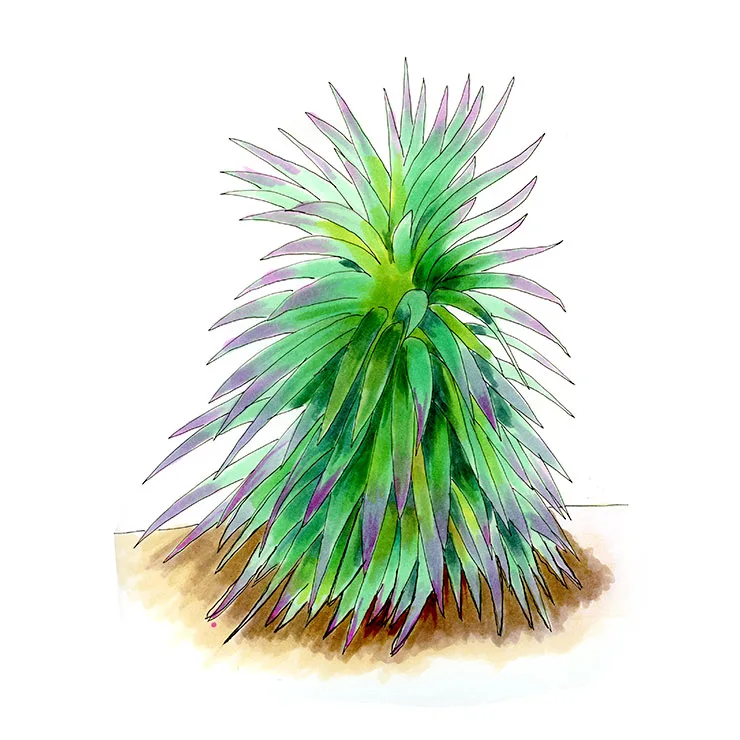
Yucca desmetiana
Desmet's Yucca
Known for its striking purple-tinged leaves, this ornamental yucca forms a compact rosette. Probably native to northern Mexico, though it was described from garden plants and its wild origin is uncertain. It almost never flowers in cultivation, and its purple-tinged leaves make it a favorite for xeriscaping.
Maximum height: 3-6 feet.
Pollinator: Yucca moths.
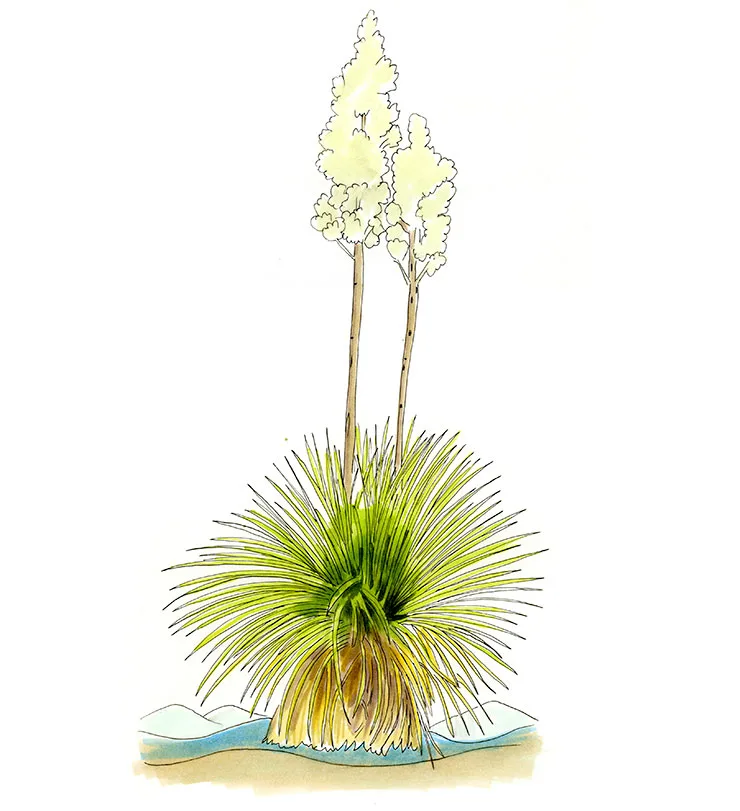
Yucca elata
Soaptree Yucca
This tall species has narrow, flexible leaves and is known for its soap-producing roots. It grows in deserts and grasslands across the southwestern U.S. and northern Mexico. Its creamy-white flowers appear on towering stalks. Its roots contain saponins that were used by Indigenous peoples to make soap and shampoo.
Maximum height: 6-20 feet (including the flower stalk).
Pollinator: Tegeticula elatella yucca moths (and T. altiplanella at higher elevations).
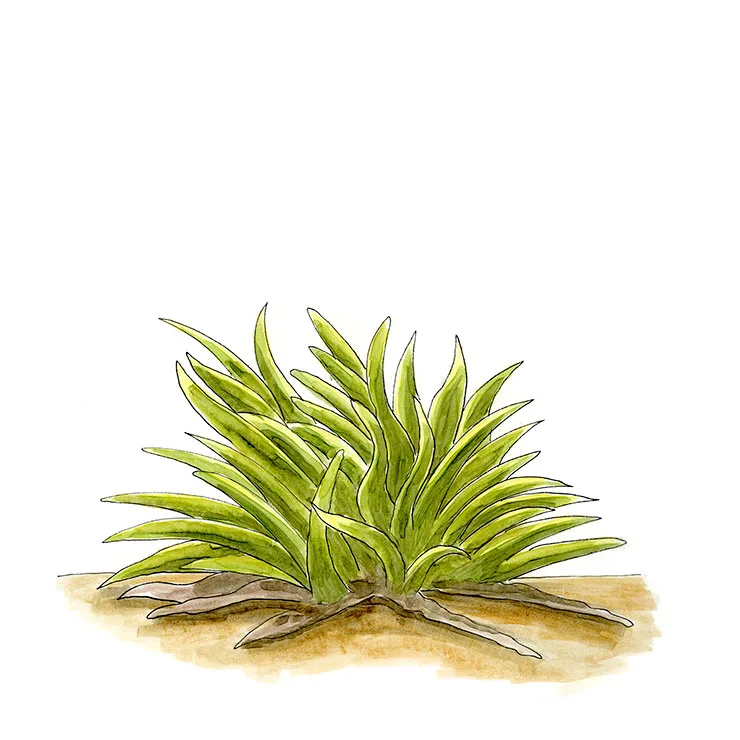
Yucca endlichiana
Endlich's Yucca
A rare, small yucca with short, stiff leaves forming tight rosettes. Endemic to a small range in Coahuila and Nuevo León, Mexico, it grows in arid, rocky environments. Its bell-shaped flowers, often purplish to nearly black, barely rise above the leaves.
Maximum height: About 1 foot.
Pollinator: Yucca moths.
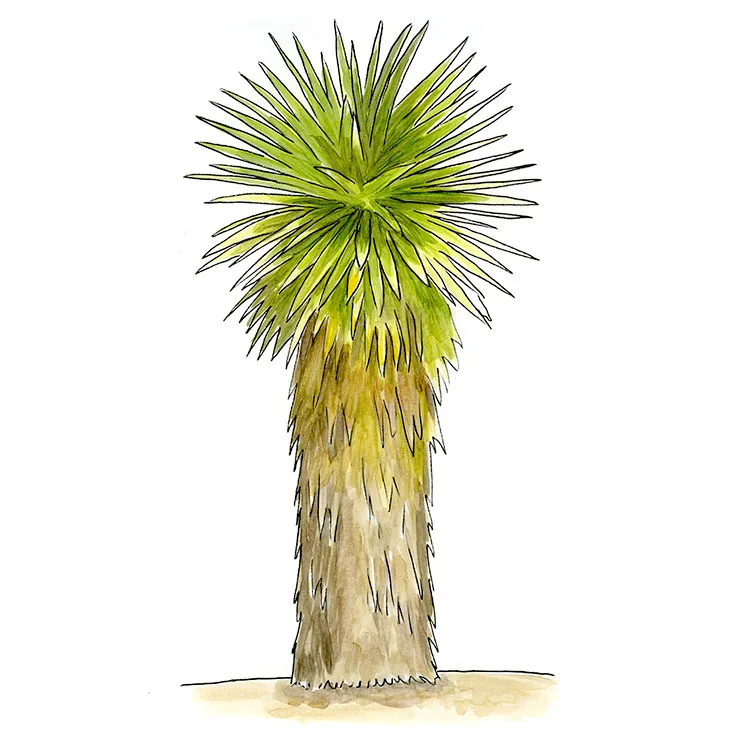
Yucca faxoniana
Faxon Yucca
A tall, tree-like yucca with thick, rigid leaves and a robust trunk. Found in Texas and northern Mexico, it thrives in desert and scrubland habitats. It produces large clusters of creamy-white flowers. Its tall, sword-like leaves were once used to weave baskets and mats by Indigenous peoples.
Maximum height: 10-20 feet.
Pollinator: Yucca moths.
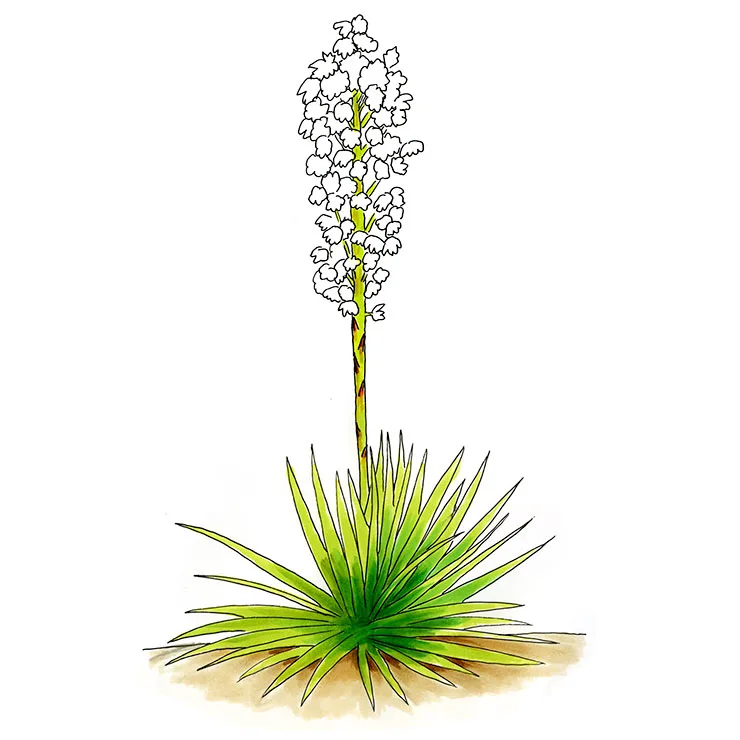
Yucca filamentosa
Adam's Needle
Recognized for its thin, flexible leaves with thread-like filaments, it forms a compact rosette. Native to the southeastern U.S., it grows in sandy and well-drained soils. Its tall flower stalks bear white, bell-shaped blooms. The species name "filamentosa" comes from the thin, thread-like filaments peeling off its leaves, giving it a "hairy" appearance.
Maximum height: 3-6 feet.
Pollinator: Tegeticula yuccasella Yucca moths.
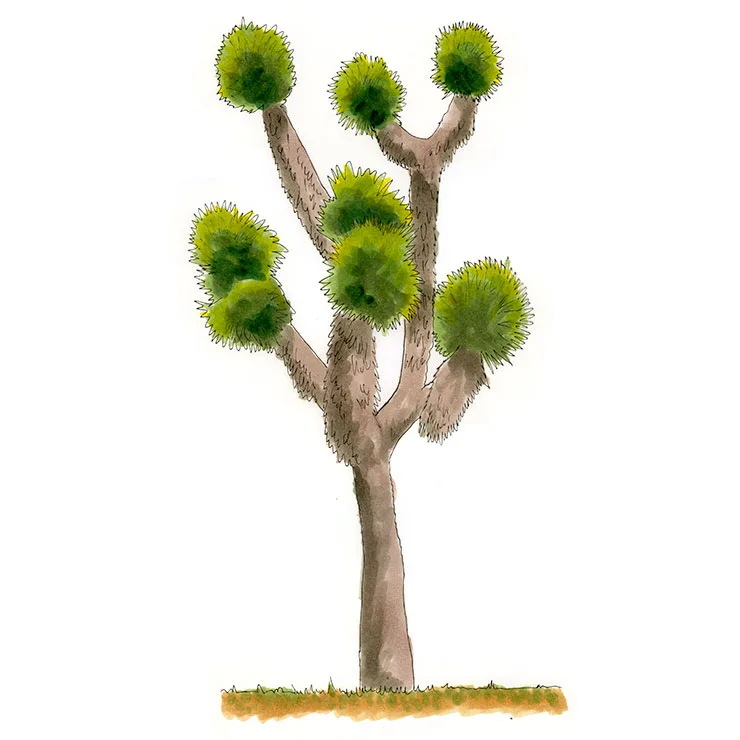
Yucca filifera
Thread-leaf Yucca
A tall, tree-like yucca with dense, sword-like leaves adorned with thread-like fibers. Found in Mexico, it grows in arid and semi-arid regions. Its flower clusters are large and creamy-white. This species can live for hundreds of years. Its huge flower clusters hang downward after blooming, the easiest way to tell it from Yucca decipiens.
Maximum height: 30-40 feet.
Pollinator: Yucca moths (Tegeticula), which pollinate the plant while laying its eggs in the flowers, with the larvae feeding on a portion of the seeds.
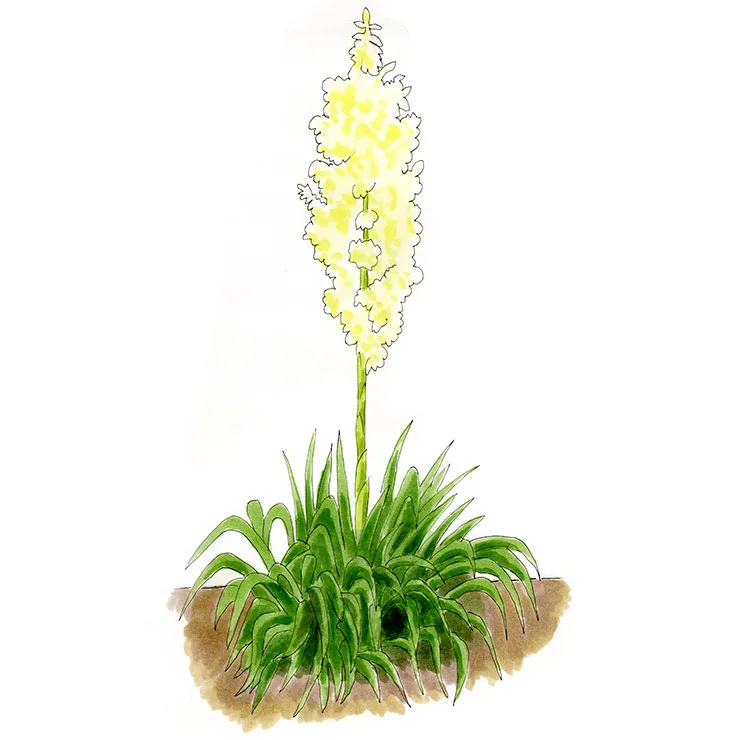
Yucca flaccida
Weak-leaf Yucca
A low-growing species with soft, drooping leaves that have thread-like fibers along their edges. Found across the eastern United States, it thrives in sandy soils and forest clearings. Its flowers are white and fragrant, forming on a tall stalk. Its leaves are remarkably soft and bend under their own weight, unlike many rigid yuccas.
Maximum height: 3-6 feet.
Pollinator: Yucca moths.
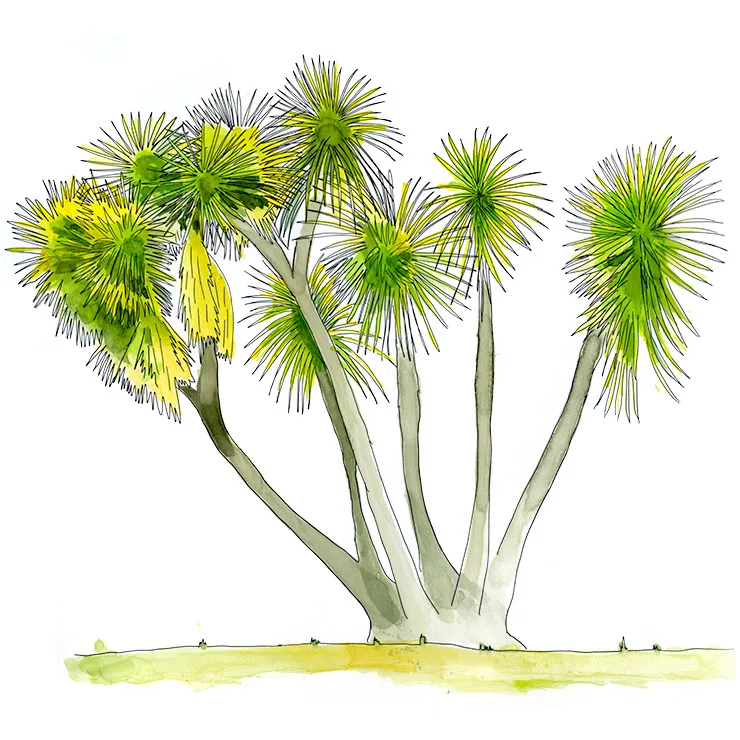
Yucca gigantea
Spineless Yucca
A large, tree-like yucca with smooth, spineless leaves and a thick trunk. Native to Central America, it is often used as an ornamental plant worldwide. Its creamy-white flowers grow in dense, showy clusters. It's often grown indoors as a low-maintenance houseplant that can grow to impressive heights.
Maximum height: 20-30 feet.
Pollinator: The yucca moth Parategeticula elephantipella in its native range; cultivated plants rarely set seed.
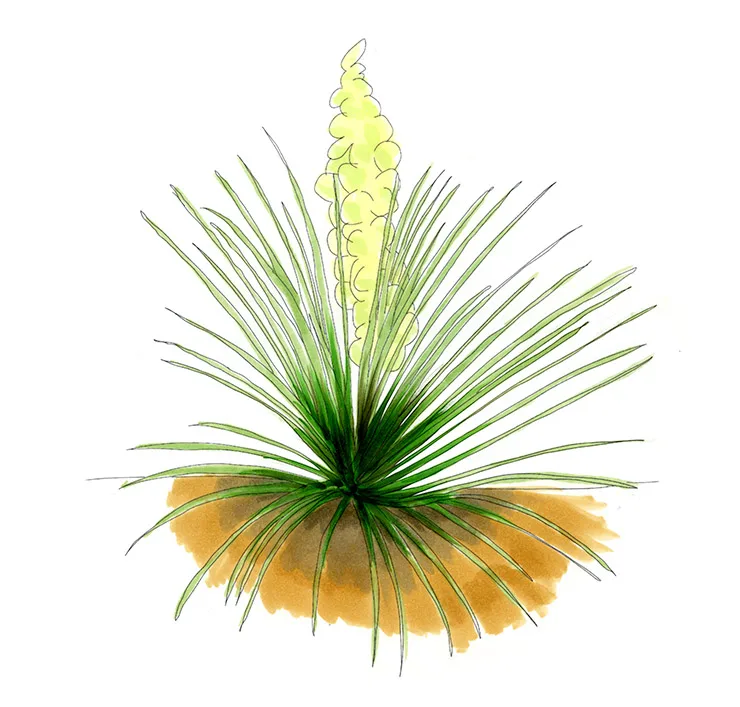
Yucca glauca
Soapweed Yucca
A low-growing yucca with narrow, bluish-green leaves and fibrous edges. Found in the Great Plains of the United States and Canada, it thrives in sandy and rocky soils. Its flowers are white and bell-shaped, often tinged with purple. Its roots were used for soap, and its leaf juice even as a fish poison by Indigenous peoples.
Maximum height: 3-6 feet.
Pollinator: Tegeticula yuccasella yucca moths.
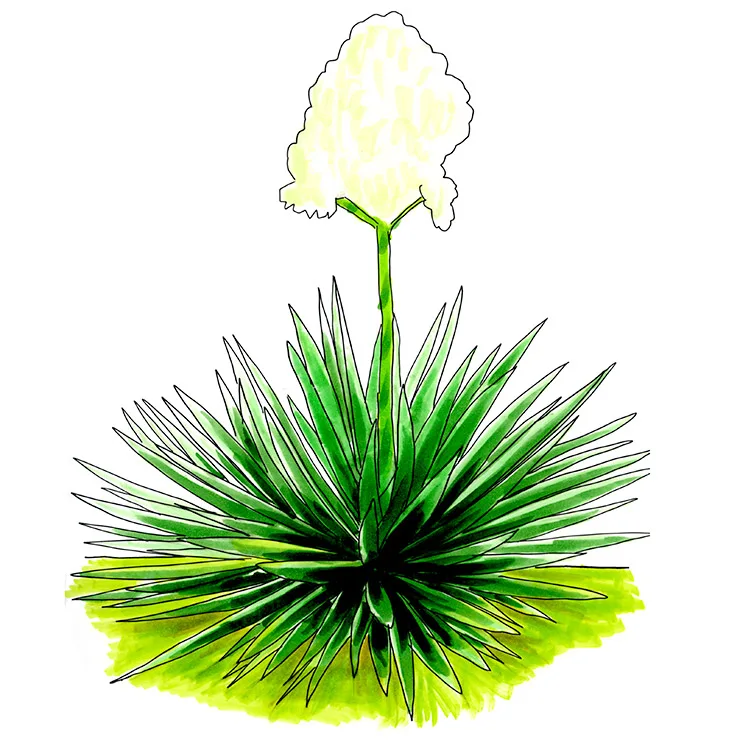
Yucca gloriosa
Spanish Dagger
A striking yucca with stiff, sword-shaped leaves and a dense rosette form. Native to the southeastern U.S., it grows in coastal areas and sandy soils. Its flowers are large, white, and fragrant. This species has a history of cultivation dating back to colonial gardens in the southeastern United States, where it was used as an ornamental focal point.
Maximum height: 6-10 feet.
Pollinator: Yucca moths.
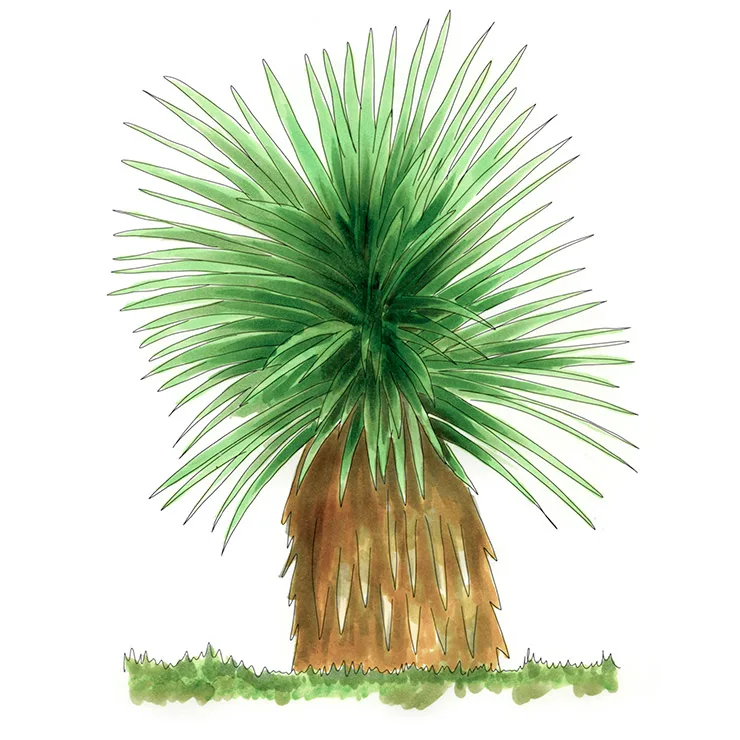
Yucca grandiflora
Sahualiqui (Large-flowered Yucca)
Known for its large, striking white flowers and stiff, green leaves. Native to Mexico, it grows in arid and rocky habitats. It forms a robust rosette with tall flower stalks. The name "grandiflora" means "large flower," which describes its unusually large and showy blooms.
Maximum height: 10-20 feet.
Pollinator: Yucca moths specialized for its flowers.
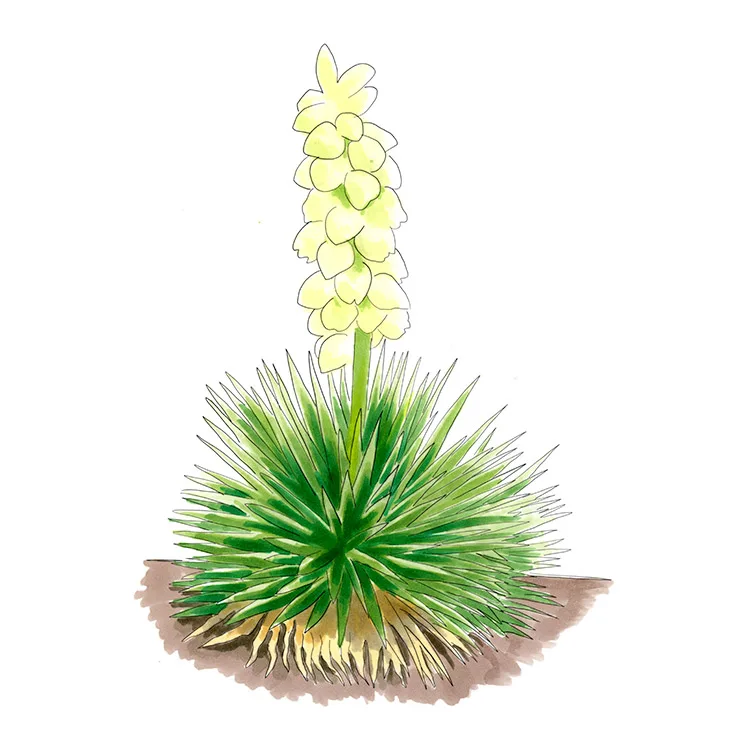
Yucca harrimaniae
Harriman's Yucca
A compact species with narrow, rigid leaves and curling fibers. Found in Utah, Colorado, Nevada, northern Arizona and New Mexico, it thrives in arid, rocky terrain. Its flowers are creamy-white and bloom on short stalks. It's named for the Harrimans, railroad magnate E.H. Harriman and his wife Mary, patrons who funded botanical expeditions.
Maximum height: 1-3 feet.
Pollinator: Yucca moths.
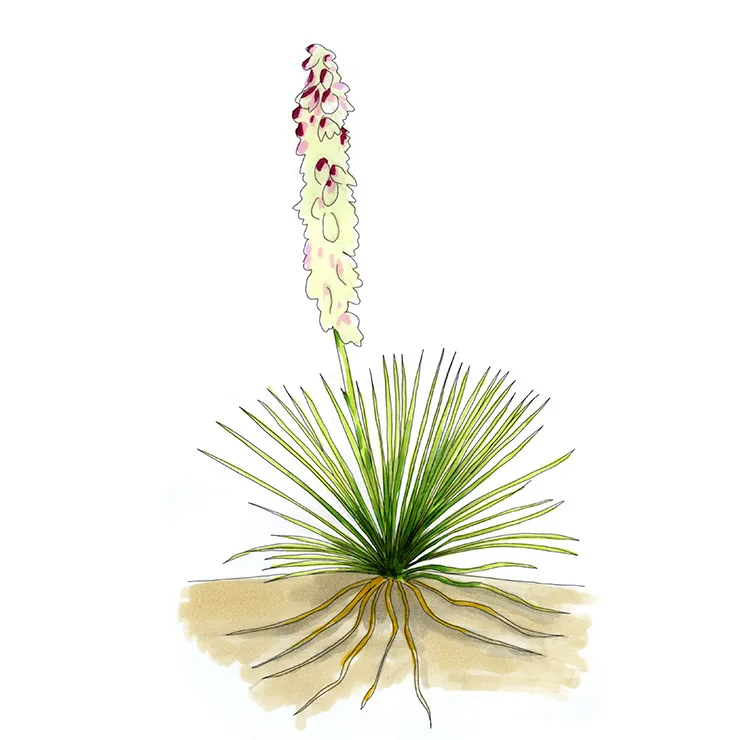
Yucca intermedia
Intermediate Yucca
A yucca with medium-sized leaves that seem to combine traits of other species. Found only in New Mexico, it thrives in rocky and sandy soils. Its flowers are large cream bells tinged with rose, forming on a moderately tall stalk. It may have arisen as a natural hybrid, an example of how yuccas can cross-pollinate in overlapping habitats.
Maximum height: 3-6 feet.
Pollinator: Yucca moths.
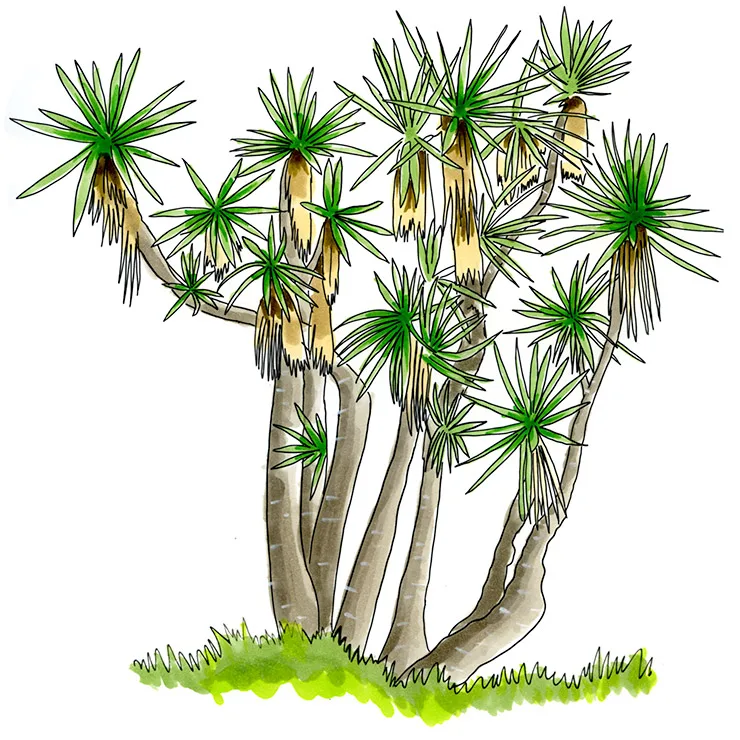
Yucca jaliscensis
Jalisco Yucca
A slender, tree-like yucca with flexible, narrow leaves and a tall trunk. Native to Jalisco and neighboring states in western Mexico, it grows in semi-arid and rocky environments. Its flowers are white and grow in dense, showy clusters. Its leaves are spineless, making it one of the friendlier tree yuccas.
Maximum height: 20-30 feet.
Pollinator: Yucca moths found in its range.
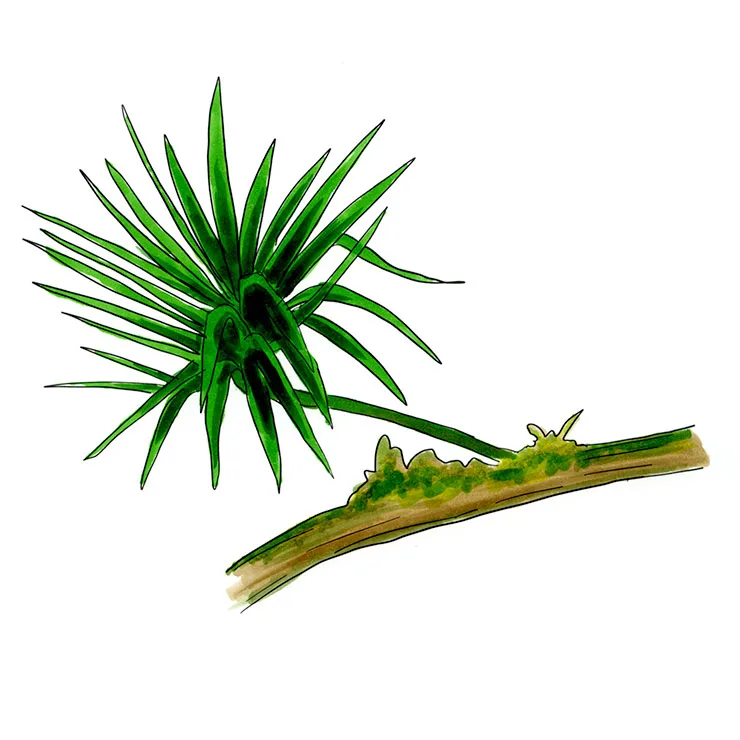
Yucca lacandonica
Lacandon Yucca
A rare species with long, drooping leaves and a graceful appearance. Found in southern Mexico, Guatemala and Belize, it grows in humid forest. Its flowers are white and bell-shaped, appearing on an arching stalk. It's the only yucca that grows as an epiphyte, perched on rainforest trees in places like the Lacandon Jungle, alongside jaguars and howler monkeys.
Maximum height: 10-15 feet.
Pollinator: Yucca moths specific to its locality.
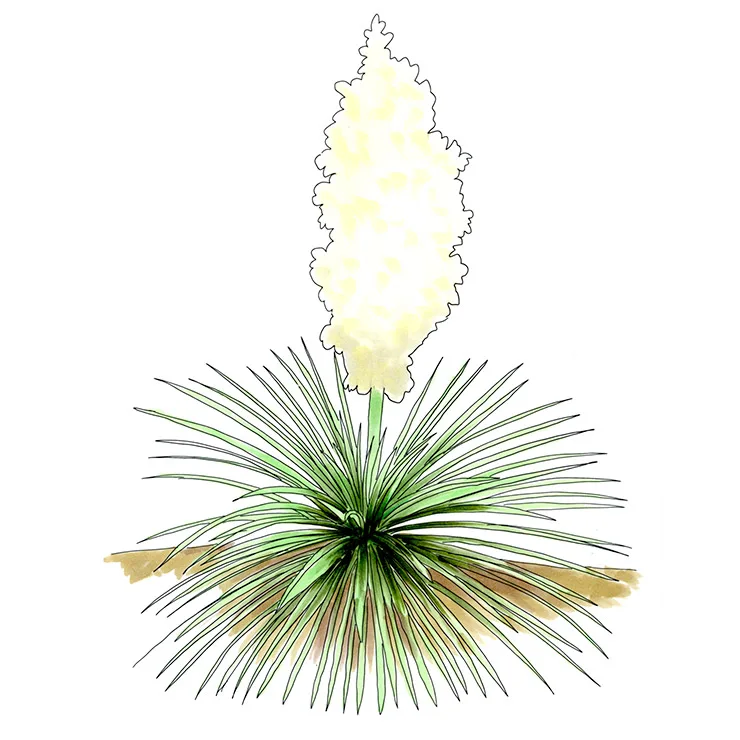
Yucca linearifolia
Linear-leaf Yucca
Known for its narrow, grass-like leaves that form dense, symmetrical rosettes. Native to northeastern Mexico, it thrives in rocky and desert regions. Its flowers are creamy-white and borne on tall stalks. This yucca's leaves are so slender that they resemble grass more than the typical rigid leaves of its relatives.
Maximum height: 4-12 feet.
Pollinator: Yucca moths, key to its lifecycle.
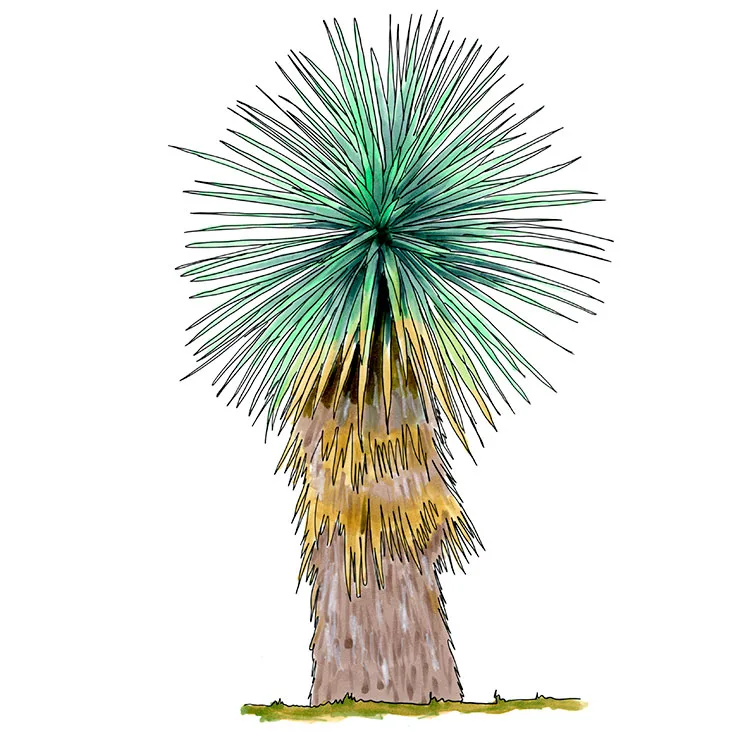
Yucca luminosa
Silver-leaf Yucca
A striking yucca with rigid, powder-blue leaves and a robust trunk, better known in gardens as Yucca rigida. Found in northern Mexico, it thrives in rocky, semi-arid habitats. Its tall flower spikes bear creamy-white blooms. The name "luminosa" refers to its intensely blue leaves, which seem to glow in sunlight.
Maximum height: 10-13 feet.
Pollinator: Yucca moths serve its reproduction.
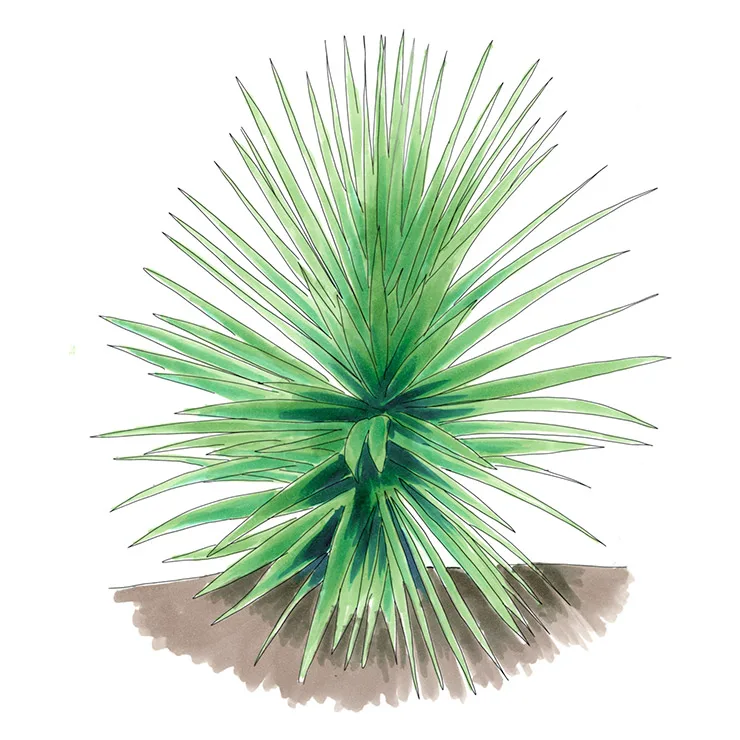
Yucca madrensis
Madrean Yucca
A short-trunked yucca with narrow, finely toothed leaves. Native to the Sierra Madre Occidental of Mexico, it grows on rocky slopes and in oak and pine country. Its flowers are small, round and white, and it's one parent of the hybrid Yucca × schottii.
Maximum height: 2-8 feet.
Pollinator: Yucca moths in its native habitat.
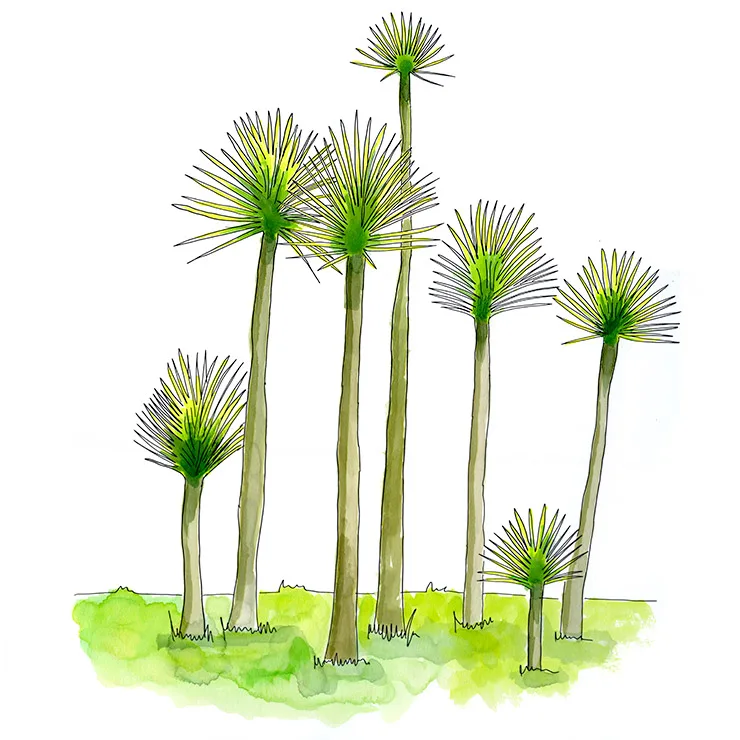
Yucca mixtecana
Mixtec Yucca
A rare species with long, flexible leaves and a slender trunk. Endemic to the Tehuacán Valley of Puebla and Oaxaca, Mexico, it grows in rocky and arid environments. Its flowers are white and form dense clusters on tall stalks. This species is named after the Mixtec people of Oaxaca, who have used it for food and fiber for centuries.
Maximum height: 8-20 feet.
Pollinator: Yucca moths.
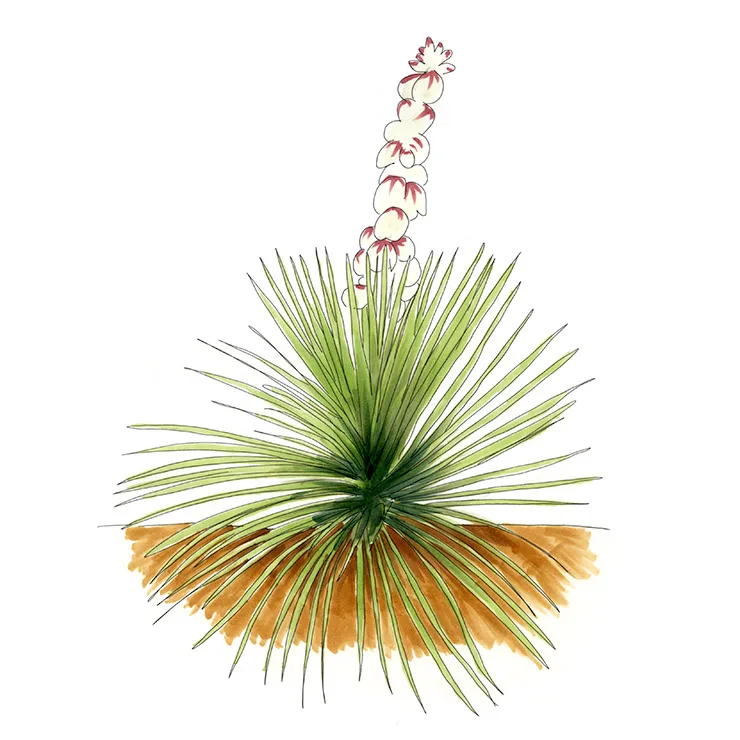
Yucca neomexicana
New Mexico Spanish Bayonet
A compact, trunkless yucca with rigid, spiny leaves. Found in New Mexico, southeastern Colorado and the Oklahoma panhandle, it grows in rocky, arid habitats. Its flowers are creamy-white and appear on a medium-height stalk. This species can survive temperatures as low as -20°F, making it one of the most cold-hardy yuccas.
Maximum height: 2-4 feet.
Pollinator: Yucca moths.
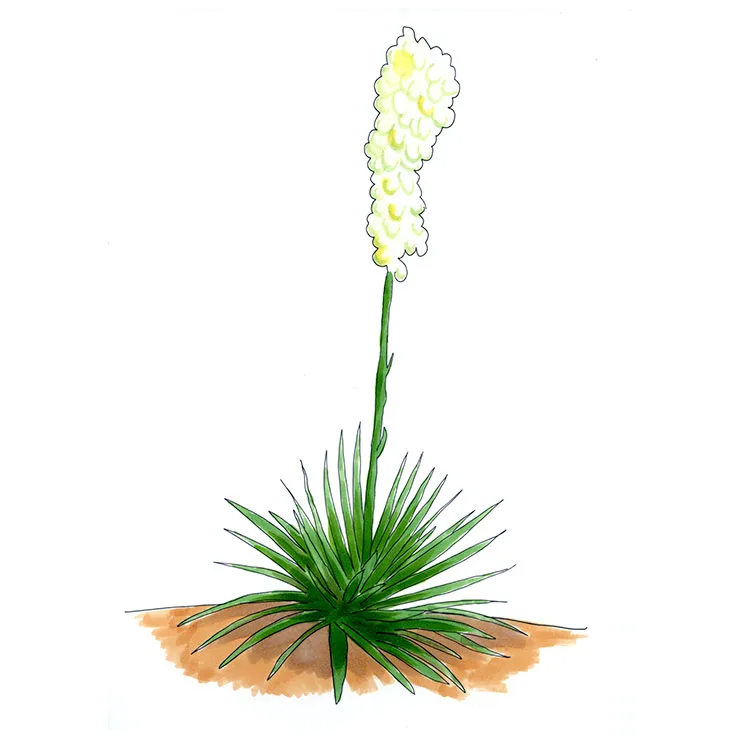
Yucca pallida
Pale-leaf Yucca
Features pale blue-green leaves with thin, finely toothed yellow edges. Native to the Blackland Prairies of Texas, it thrives in limestone soils and rocky outcrops. Its flowers are creamy-white and borne on a short stalk. Its pale blue-green leaves provide a natural camouflage against limestone outcrops where it grows.
Maximum height: 1-2 feet.
Pollinator: Yucca moths in prairie settings.
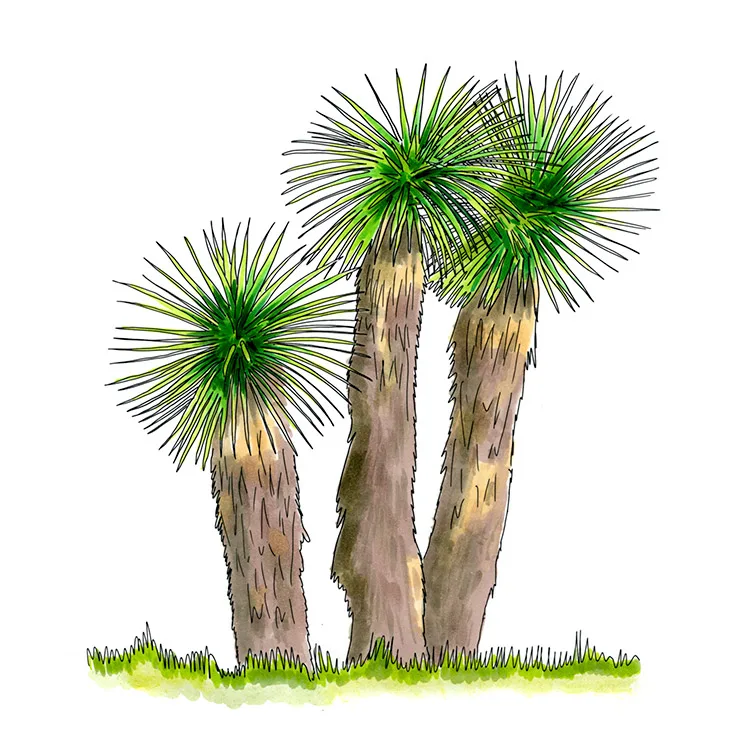
Yucca periculosa
Dangerous Yucca
A tall species with stiff, spiny leaves and a thick trunk. Found in central Mexico, it grows in rocky, arid terrain. Its flowers are white with hints of green or purple. The species' name means "dangerous," a nod to its sharp, dagger-like leaves.
Maximum height: 10-20 feet.
Pollinator: Yucca moths native to Mexican regions.
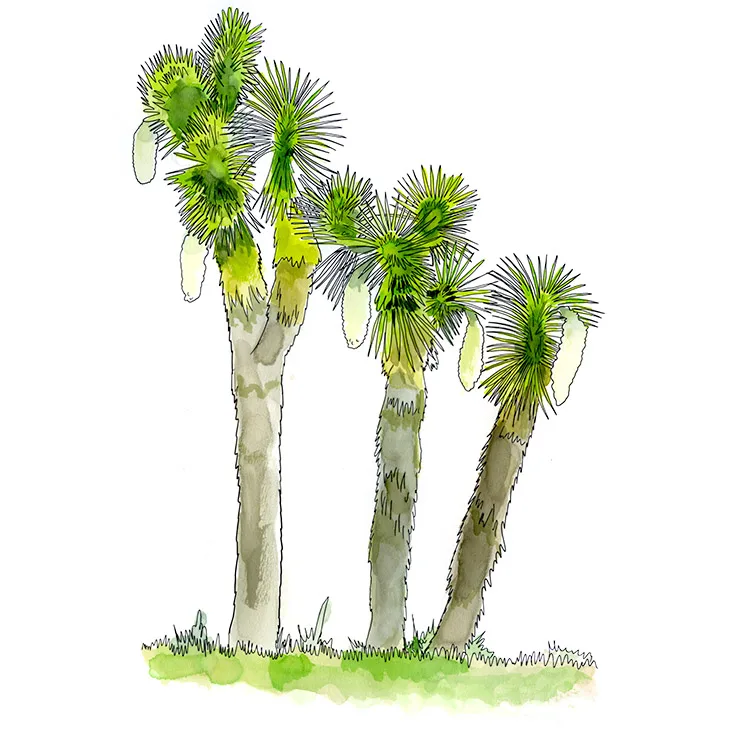
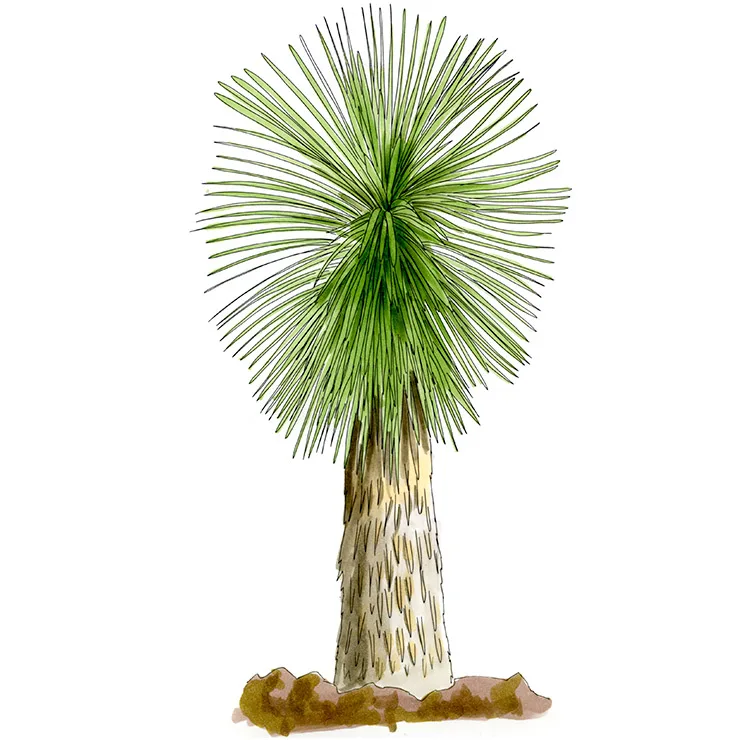
Yucca queretaroensis
Querétaro Yucca
Known for its needle-thin, rigid leaves that form a near-perfect ball. Native to Querétaro, Guanajuato and Hidalgo, Mexico, it grows in rocky and arid areas. Its flowers are creamy-white and form dense clusters on a tall stalk. Its beauty has made it a target of illegal collectors.
Maximum height: 6-12 feet.
Pollinator: Yucca moths.
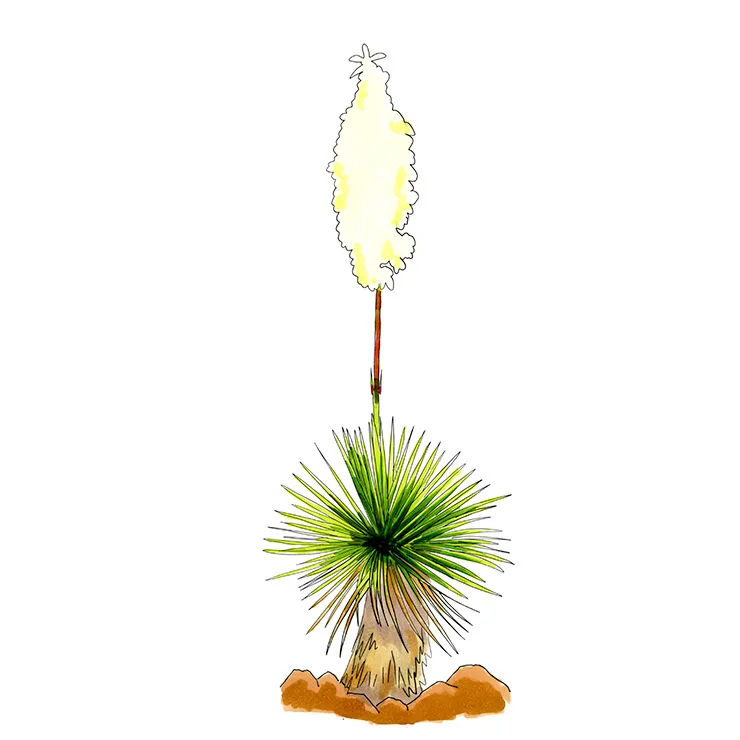
Yucca reverchonii
San Angelo Yucca
A low-growing species with stiff, narrow leaves and curled fibers. Found in Texas, it thrives in rocky hillsides and grasslands. Its flowers are white with greenish hues, appearing on a medium-height stalk. Named after Julien Reverchon, a French botanist who extensively studied Texas flora.
Maximum height: 2-4 feet.
Pollinator: Yucca moths.
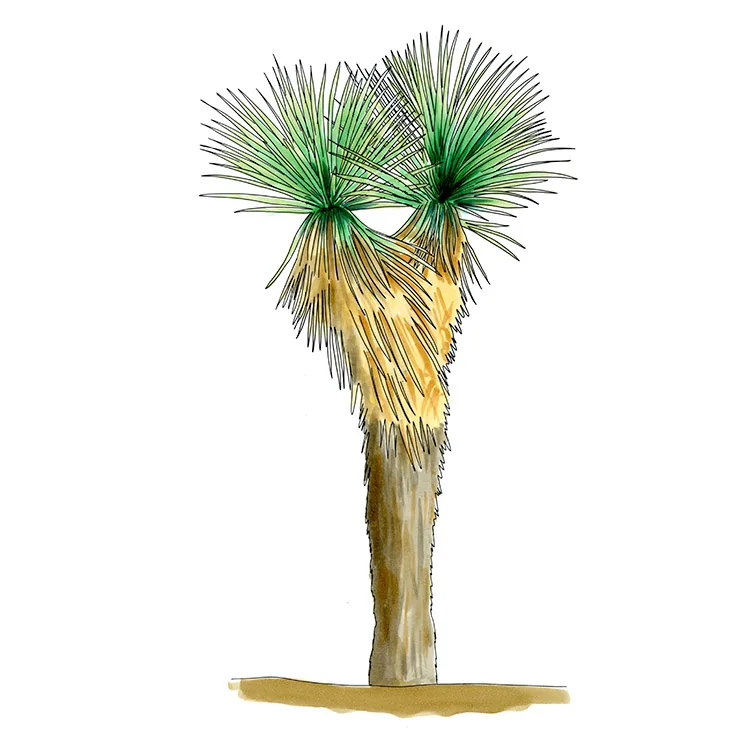
Yucca rostrata
Beaked Yucca
A tall, tree-like yucca with a single trunk and narrow, bluish-green leaves. Found in west Texas and northern Mexico, it grows in rocky, arid regions and is sometimes known as 'Big Bend Yucca'. Its flowers are creamy-white and form dense clusters on a tall stalk. The species is called "Beaked Yucca" because its seedpods resemble a bird's beak.
Maximum height: 10-15 feet.
Pollinator: Yucca moths.
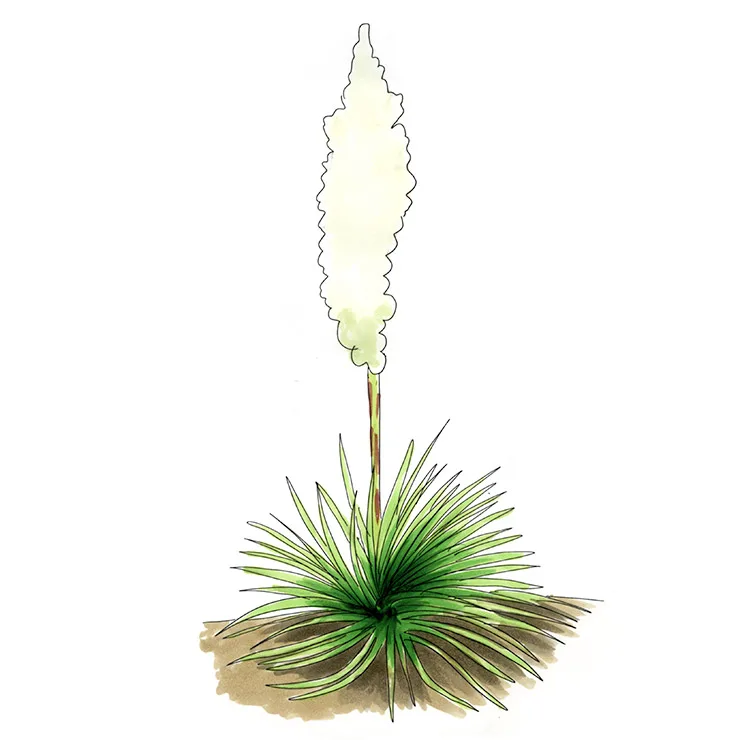
Yucca rupicola
Twist-leaf Yucca
Features twisted, flexible leaves with curled fibers at the edges. Native to Texas, it grows in rocky and limestone-rich soils. Its flowers are creamy-white and appear on a short stalk. The name "rupicola" means "rock dweller," reflecting its preference for rocky terrains.
Maximum height: 2-3 feet.
Pollinator: Yucca moths.
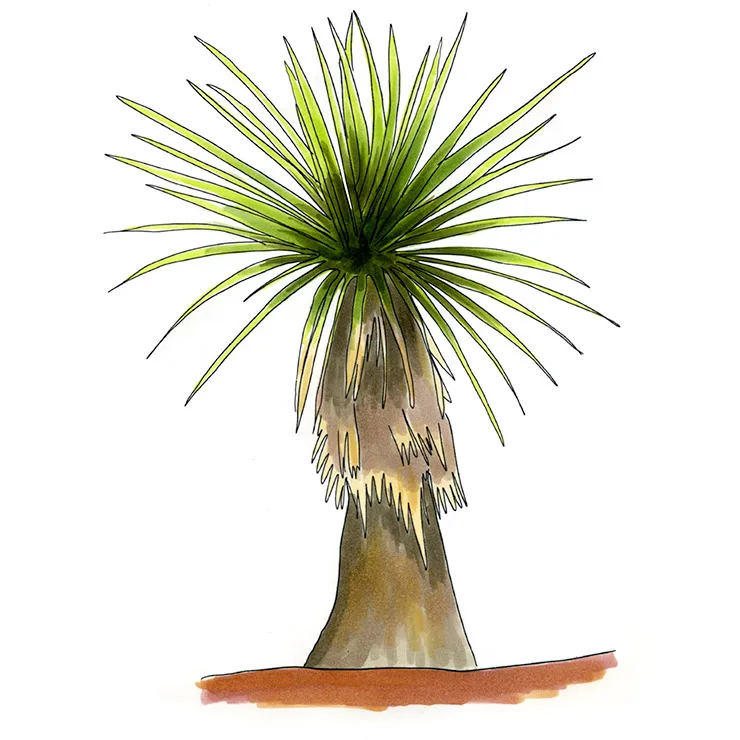
Yucca schidigera
Mojave Yucca
A robust species with spiny, sword-like leaves and a tall trunk. Found in the Mojave and Sonoran Deserts, it thrives in sandy and rocky soils. Its flowers are white with purple streaks. Extract from its trunk is used as a natural foaming agent in drinks, shampoos and animal feed.
Maximum height: 10-20 feet.
Pollinator: Tegeticula mojavella yucca moths.
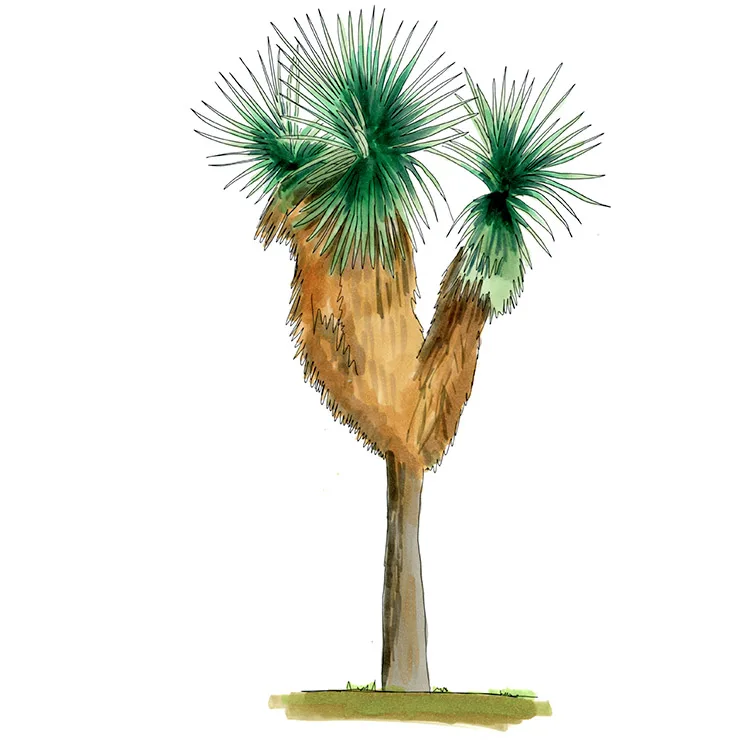
Yucca × schottii
Mountain Yucca
A natural hybrid (Yucca baccata × Yucca madrensis) with long, flexible leaves and a stout trunk. Found in southeastern Arizona and Mexico, it grows in mountainous regions. Its flowers are creamy-white with greenish tints. This hybrid was named after German-American botanist Arthur Schott, who studied and explored desert ecosystems.
Maximum height: 8-15 feet.
Pollinator: Yucca moths.
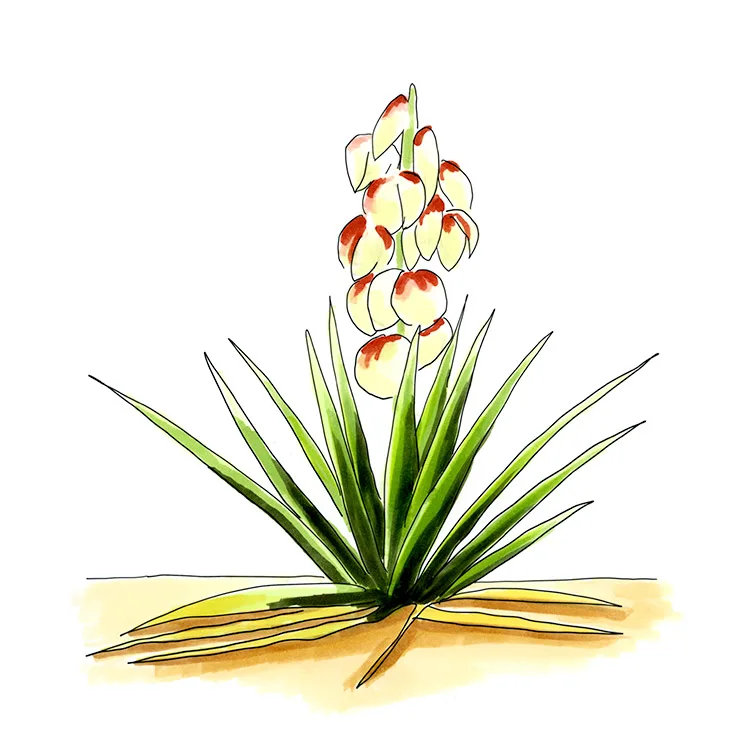
Yucca sterilis
Sterile Yucca
A rare yucca with stiff, narrow leaves and a compact rosette form. Native only to the Uinta Basin of northeastern Utah, it grows in arid, sandy and rocky soils. Its flowers are white but rarely produce viable seeds. The name "sterilis" refers to how seldom it sets fruit; it spreads mainly by underground rhizomes.
Maximum height: 1-2 feet.
Pollinator: Rarely sets seed; spreads mainly by rhizomes.
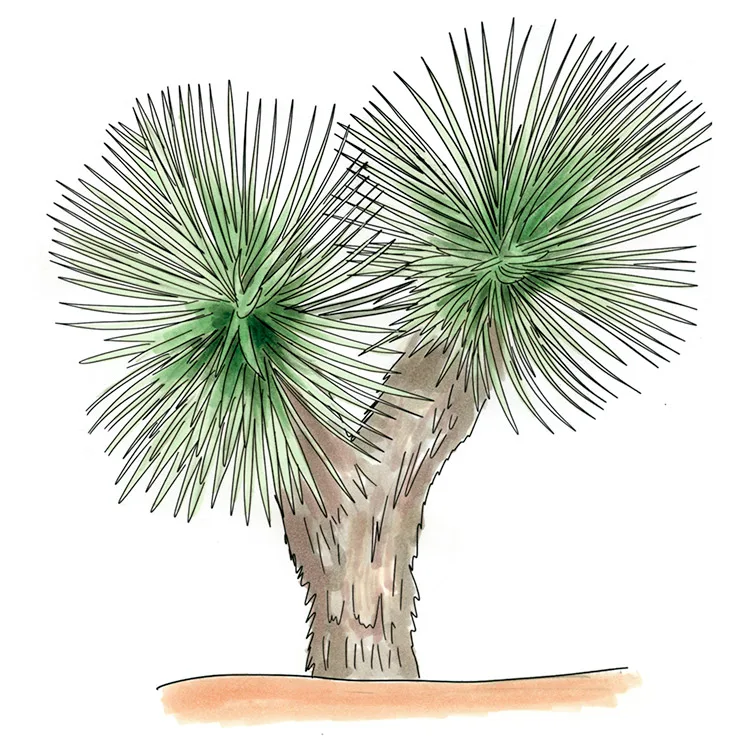
Yucca thompsoniana
Thompson's Yucca
A small, tree-like yucca with narrow, stiff leaves and a thick trunk. Found in west Texas and northern Mexico, it thrives in rocky, arid habitats. Its flowers are white and borne on tall stalks. This yucca is often confused with Yucca rostrata, but it's distinguished by its rough, sandpapery leaves and its habit of branching into many heads.
Maximum height: 4-10 feet.
Pollinator: Yucca moths adapted to its flowers.
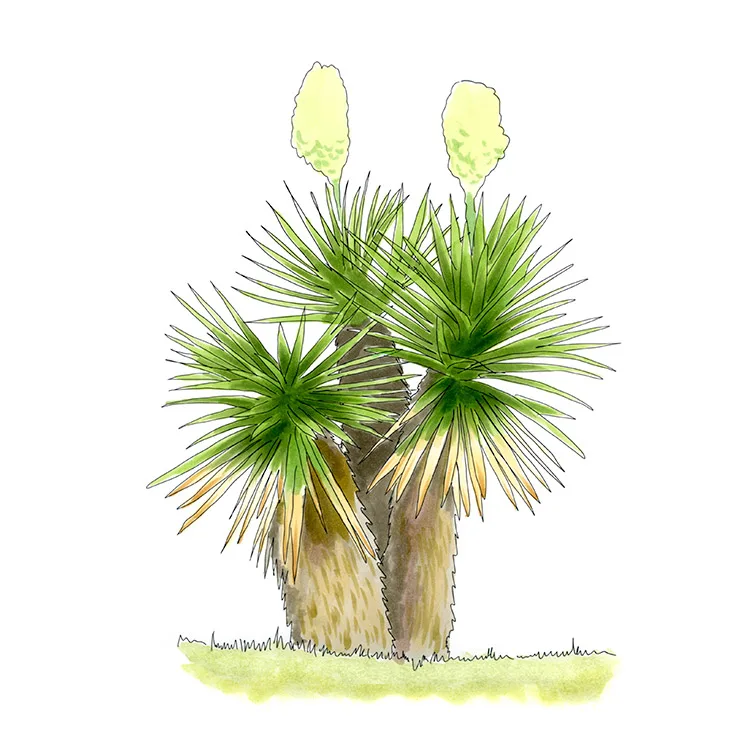
Yucca treculeana
Spanish Dagger
A tall, robust species with thick, sword-shaped leaves and a stout trunk. Found in South Texas and northern Mexico, it grows in brush country and scrub. Its flowers are white and grow in dense clusters that can reach about 6 feet, making it a striking landmark.
Maximum height: 15-20 feet.
Pollinator: Tegeticula treculeanella yucca moths.
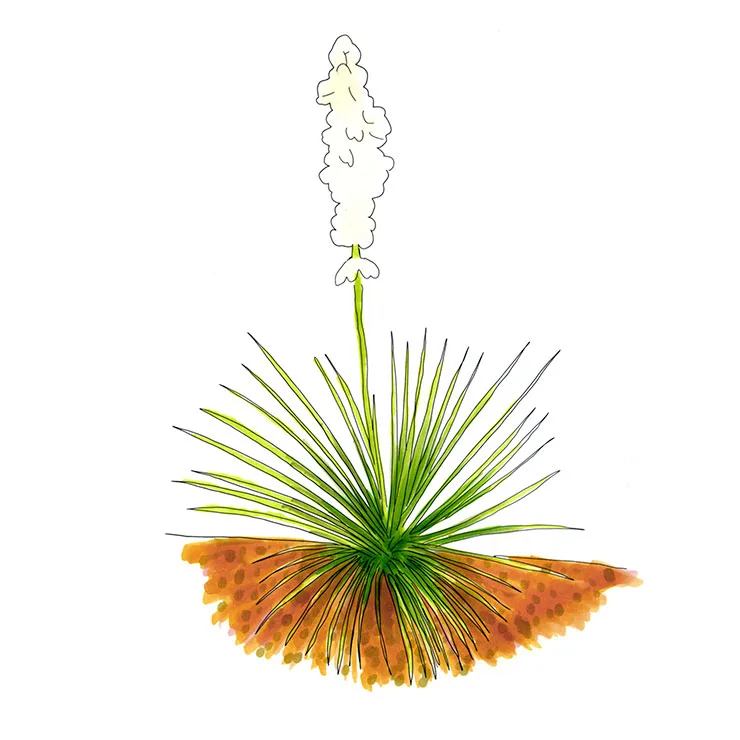
Yucca utahensis
Utah Yucca
A yucca with narrow, spiny leaves that grows in sprawling, many-stemmed clumps. Native to southwestern Utah, southeastern Nevada and northwestern Arizona, it thrives in rocky, arid regions. Its flowers are creamy-white and appear on a medium-height stalk. This yucca often grows alongside junipers, creating picturesque classic Utah desert landscapes.
Maximum height: 4-9 feet.
Pollinator: Yucca moths of the Utah desert.
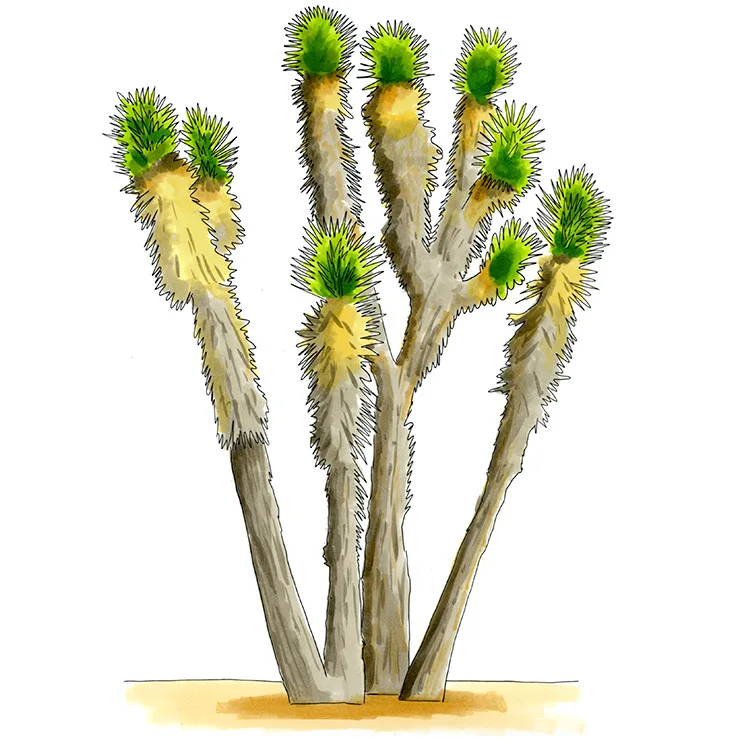
Yucca valida
Datilillo
A medium-sized yucca with stiff, sharp leaves and a branching trunk. Native to Baja California, it grows in rocky and sandy soils. Its flowers are white bells in dense clusters. Its name "valida" means "strong," referring to its robust growth and adaptability to harsh desert climates.
Maximum height: 10-23 feet.
Pollinator: Yucca moths.
Yucca Plants of the World Poster
A hand-drawn poster showing every wild yucca species, each labeled with its scientific name.
