Cefalù and the Sour Orange
An Amaro at Dusk. A Bizzarria. The Forgotten Foundation of Sicily.
August 7, 2026
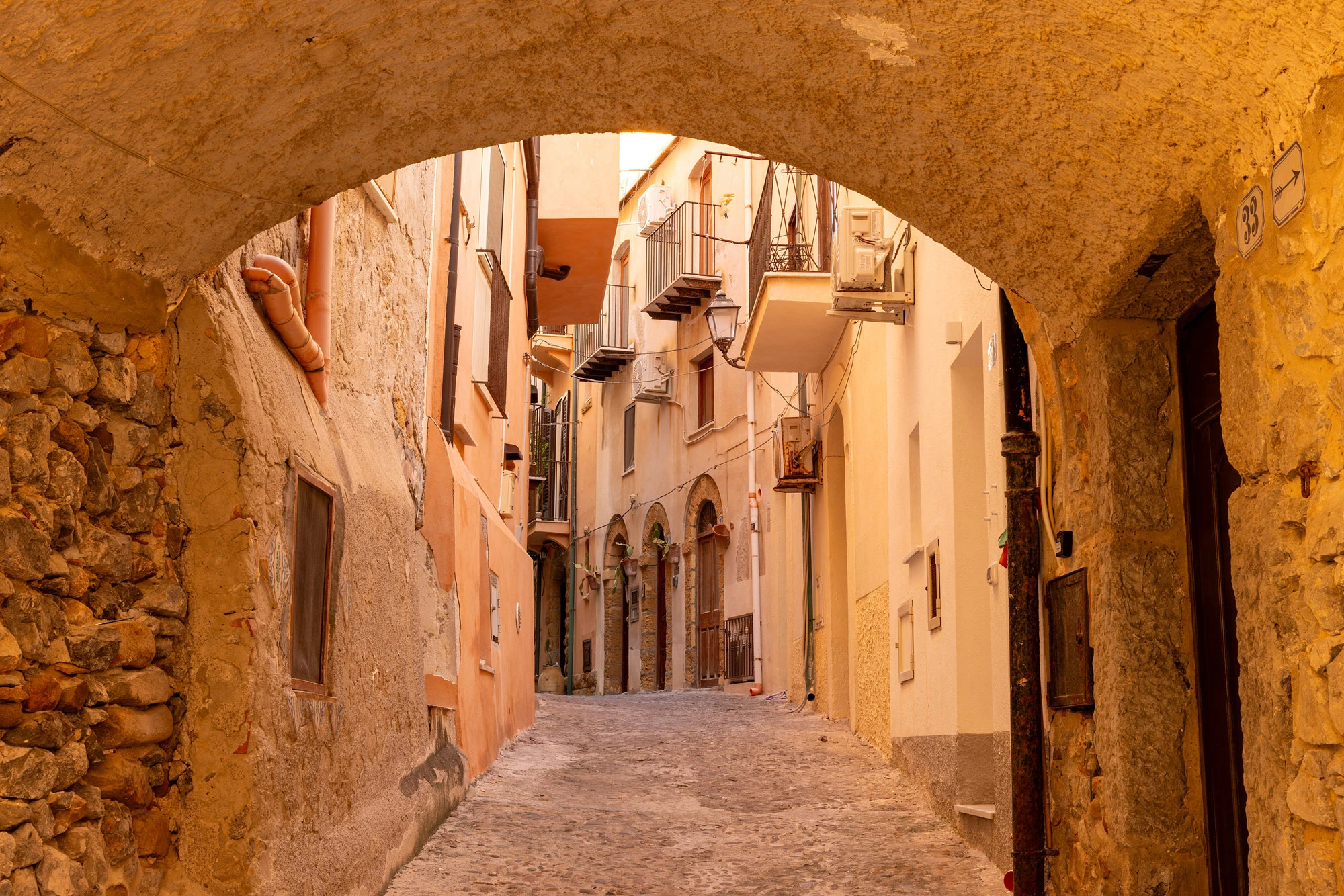
There is a point on the drive east from Palermo where Cefalù appears from around a bend. Suddenly, you see this gigantic promontory with vertical walls. Cefalù sits below, ancient walls in Sicilian pastels, creeping up onto the promontory’s cliff sides.
I had walked these streets once before, and outside the busy season, when it felt like I had the whole village to myself. For anyone who dreams of seaside villages, Cefalù is among the very few anywhere in the world that crosses into an ageless threshold of beauty.
Ivan, driving the rental car, waves my wonder off, insisting there is nothing extraordinary about places like Cefalù. He grew up on a coast built from the same pale limestone, where church towers rose above fishing boats and narrow streets climbed away from the sea. Because his childhood was identical to this, he makes sure to remind me that he finds nothing of value in these old walls. “To me, I would be interested in Minnesota,” he said of my birthplace. “I would love all those small towns; that would be interesting to me.”
But I realize that by dismissing the joy of this place, Ivan is also excusing himself from climbing every staircase in Sicily.
When we begin to walk through Cefalù, I already know that the loveliest facets of the village are also off limits. Iva had already made her position on medieval alleys perfectly clear back in Palermo.
“They smell.”
Iva doesn’t mean this as a complaint, but a statement of fact. She had come to Sicily to eat, not to smell things.
We head out to look for lunch, and when I stop to point out a Eurasian Collared Dove and start telling Iva how Kellan loved these birds as a boy, she turns her gaze away from it.
“Yes,” she says. “But there is also the death. In Croatia we eat these doves.”
Lunch stretches into its second hour. The plates disappear. Ivan is already wondering where dinner should happen.
Beneath the Orange Tree
I decide to go for a walk. Nobody is surprised, as we’ve been traveling with our friends for years and we know our different rhythms. Jane and I are wanderers. We enjoy the lack of structure; the improvisation that happens with a loose schedule. We can go out, roam, meet people, and Ivan and Iva will stay exactly where they are until another remarkable meal presents itself.
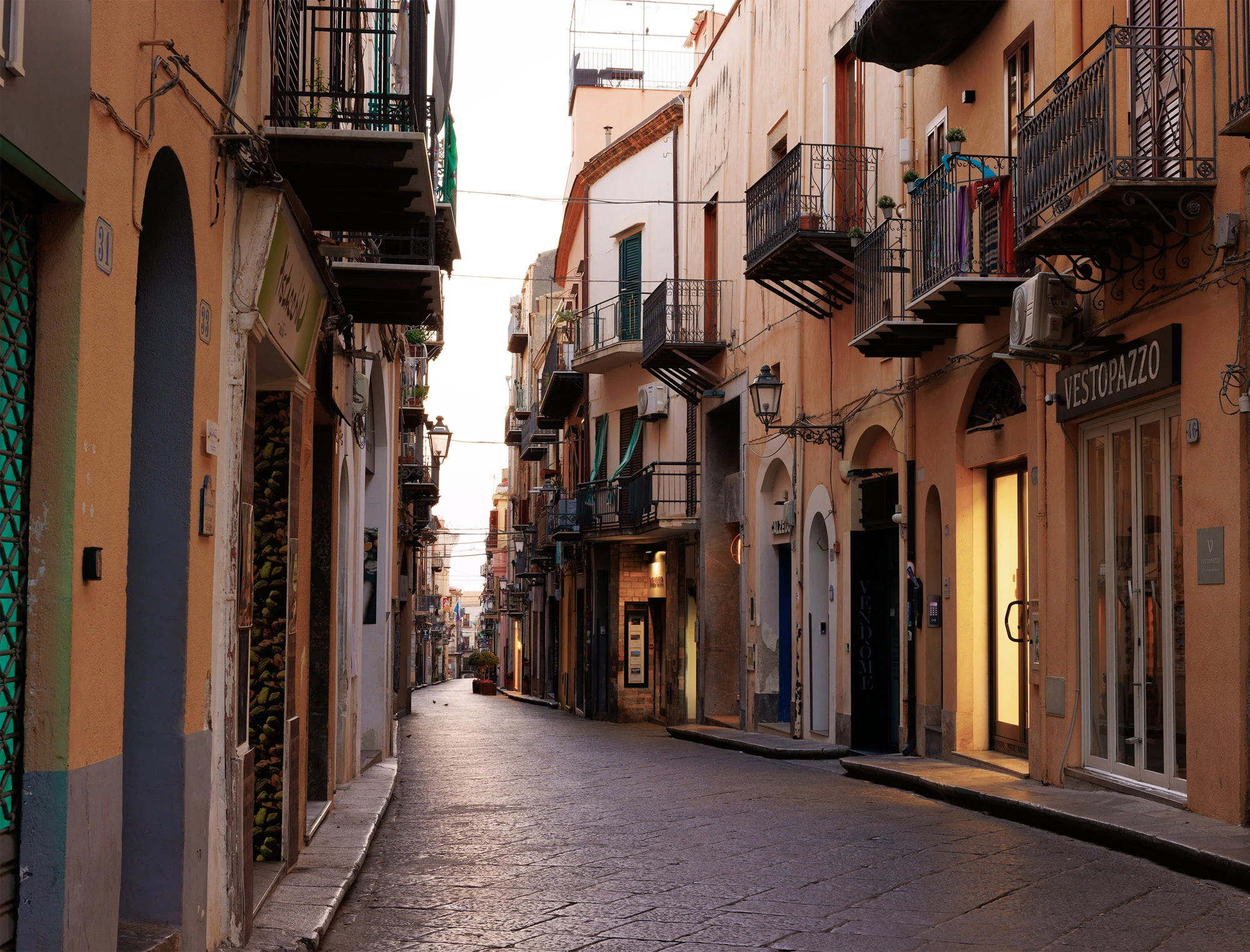
I decide to head towards the parts of Cefalù I hadn’t had a chance to see ten years ago. I criss-cross through the alleys and find a small courtyard with some benches and an orange tree.
In the heat, I am glad I left my heavy daypack in the rental apartment. My smaller pack is so small, I have to make tough choices about what stays behind. I am overjoyed when I see that my morning self decided to pack the sketchbook and watercolors.
I have been carrying watercolors with me for twenty years, but I never really bothered to learn much about the pigments and the centuries of knowledge that has come with artists experimenting with mixing color. But now, I’ve learned just a little more about how even just a few colors; maybe burnt sienna and ultramarine and yellow ochre, can emulate so much of the way light works in the real world.
And when you stop planning and just let that water and pigment do their work on the paper, there is this magic that happens. The paint dries into blooms, and water with just a touch of pigment swirls and mixes and settles into something I did not intentionally set out to create.
I sit beneath this orange tree for a long time. Sketching outdoors always attracts people; and when three local kids show an interest, I draw three cats and hand them my waterpen, one at a time. I don’t speak Italian, but with kids you can point and show and communicate well enough. If I could speak their language, I might have told them that everything good happens when you think less about painting inside the lines. But their mamas will teach them something similar in the kitchen when they tell them to learn to ignore the recipe and instead follow their heart.
An Amaro at Dusk
In the evening, Jane and I meet up with Iva and Ivan at a wine bar scarcely larger than its doorway. We each order a few small plates. I order bruschetta topped with fresh ricotta cheese whipped with lemon zest, and topped with anchovies. It is perhaps the loveliest thing I will taste in Sicily.
The thing is, nobody would have said we were eating citrus. They would have said we were eating dinner.
Then Ivan decides I should have an amaro.
At first it’s bitter. Then floral. It’s citrus zest and resin. It’s the fragrance of a snapped twig.
It’s sour orange.
I had spent the afternoon beneath an orange tree. Now I’m drinking sour orange. Neither seems important yet.
Our friends signal it’s time for gelato. Then, maybe more food. I wander off. There is one area of Cefalù I have never been to. The very top rim of streets above the cathedral.
I can still taste the amaro as I navigate through the very narrow streets. It is completely quiet up here. I find stairs leading up towards La Rocca, and I take them, walking in the dark by the apartment lights below.
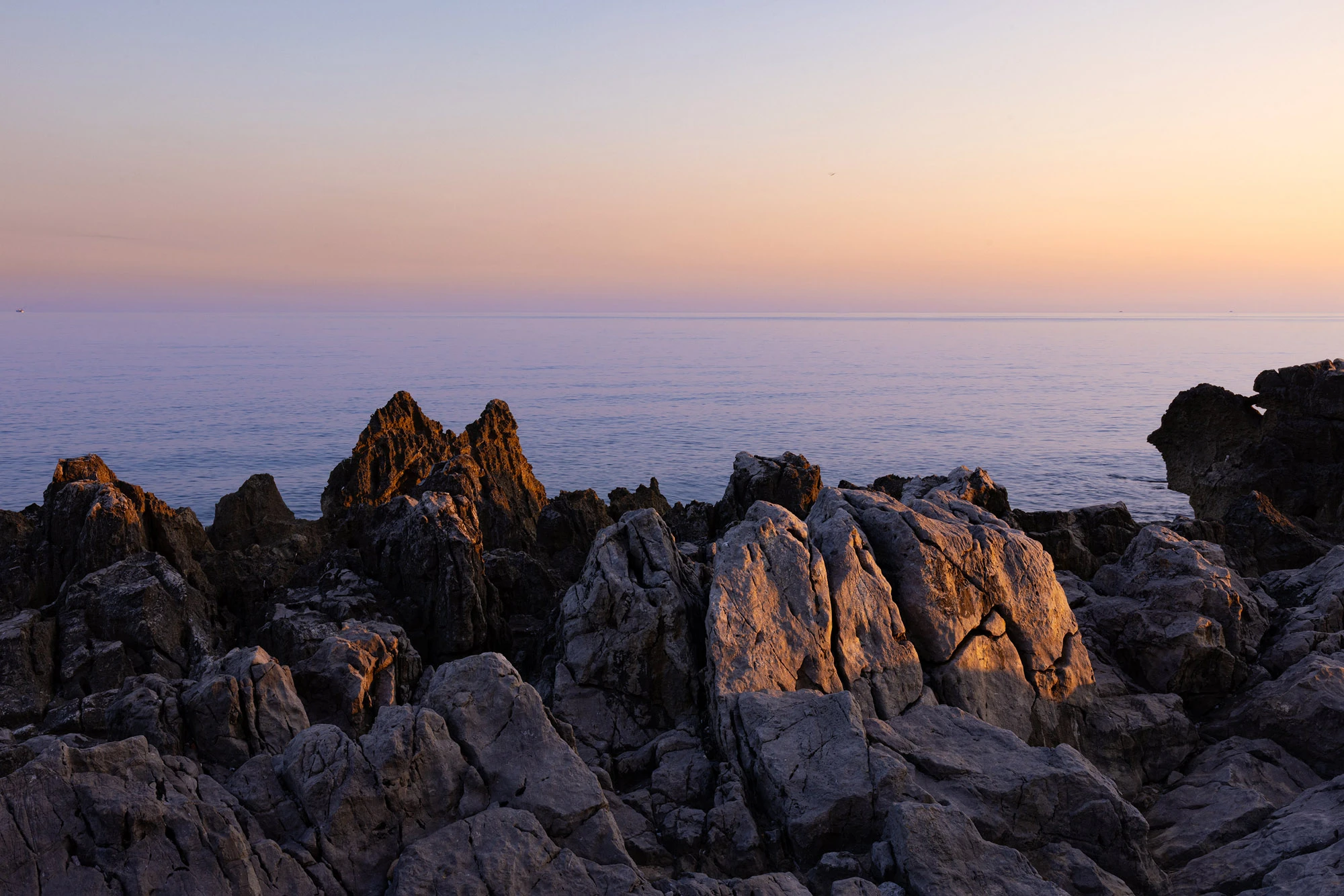
When I look down, I realize I have stumbled on a view of the whole town. And then it all comes together.
A Norman Town
Cefalù is a Norman town.
Everything about Cefalù that matters is Norman. The cathedral is Norman. The street plan is Norman. That wondrous silhouette is Norman. Everything in Cefalù was put there in the twelfth century by men whose grandfathers came from Norway, by way of Normandy, by way of Southern Italy.
Inside the church below me, there is a Christ built out of gold glass. The book in his hand is open. The left page is written in Greek. The right page is written in Latin. The same sentence written twice explains the Norman era in Sicily.
The Normans were Latin Christians, but they inherited a society where the Christians worshipped in the Greek Byzantine tradition. It was a multicultural society; and the Normans uniquely understood that that made it a uniquely successful society. The Normans learned that it was better to co-opt this land of Greek craftsmen, Arab gardeners, Latin bishops, Lombard settlers and Jewish merchants than to try to erase it.
This Norman era is also when the sour orange began to blossom.
The citron came to Sicily first, and it would forever remain a specialty. Nobody ever really learned to cook with it. The citron can be used by a religion, but the sour orange could be used to build infrastructure.
Like the citron, the sour orange arrived in Sicily on Arab merchant ships and was planted as something practical, not as a cash export crop. It was planted in courtyards and along streets and at the edges of orchards. Its fragrance could be smelled from miles away. These flowers, after all, are the ingredient of neroli oil.
When the Normans conquered Sicily in 1091, they were taking over management of what could be argued was the most sophisticated and cosmopolitan society in Europe. They knew they had to manage, not change a society built on complex irrigation, scholarship, technology, urban wealth and vast trade connections.
So instead of firing the Arab gardeners, they kept them, they celebrated them. When we look at architecture from the middle ages, we use the phrase, “Arab-Norman” because the Normans kept the bones of an Arab world and built on it.
And that’s when things started to change with the sour orange.
What the Sour Orange Did
The first thing it did to Sicily was change its food.
Today, when we look at Italian-themed cookbooks, they often feature a lemon on the cover. This is even more likely when it comes to Sicilian cookbooks. But in Medieval Sicily, lemons were mild and unreliably acidic. When Sicilians needed acid in their food, they had three choices: vinegar, verjuice, or sour orange.
Sour oranges, thriving in Norman Sicily, were everywhere, and free. Sicilians built their marinades from sour oranges, and drizzled it over their fish.
Acre for acre, Sicilian citrus would eventually become the most valuable agricultural crop in Europe. But sour oranges weren’t making anyone rich. Instead, they were becoming the reason future agriculture could exist.
The graft that becomes the top part of the tree might be a sweet orange or a lemon, but for most of Sicily’s history, the sour orange, which tolerates bad soil and cold nights and wet roots and disease, became the universal rootstock. For centuries, every crate that left Palermo harbor was grown on a tree nobody was buying.
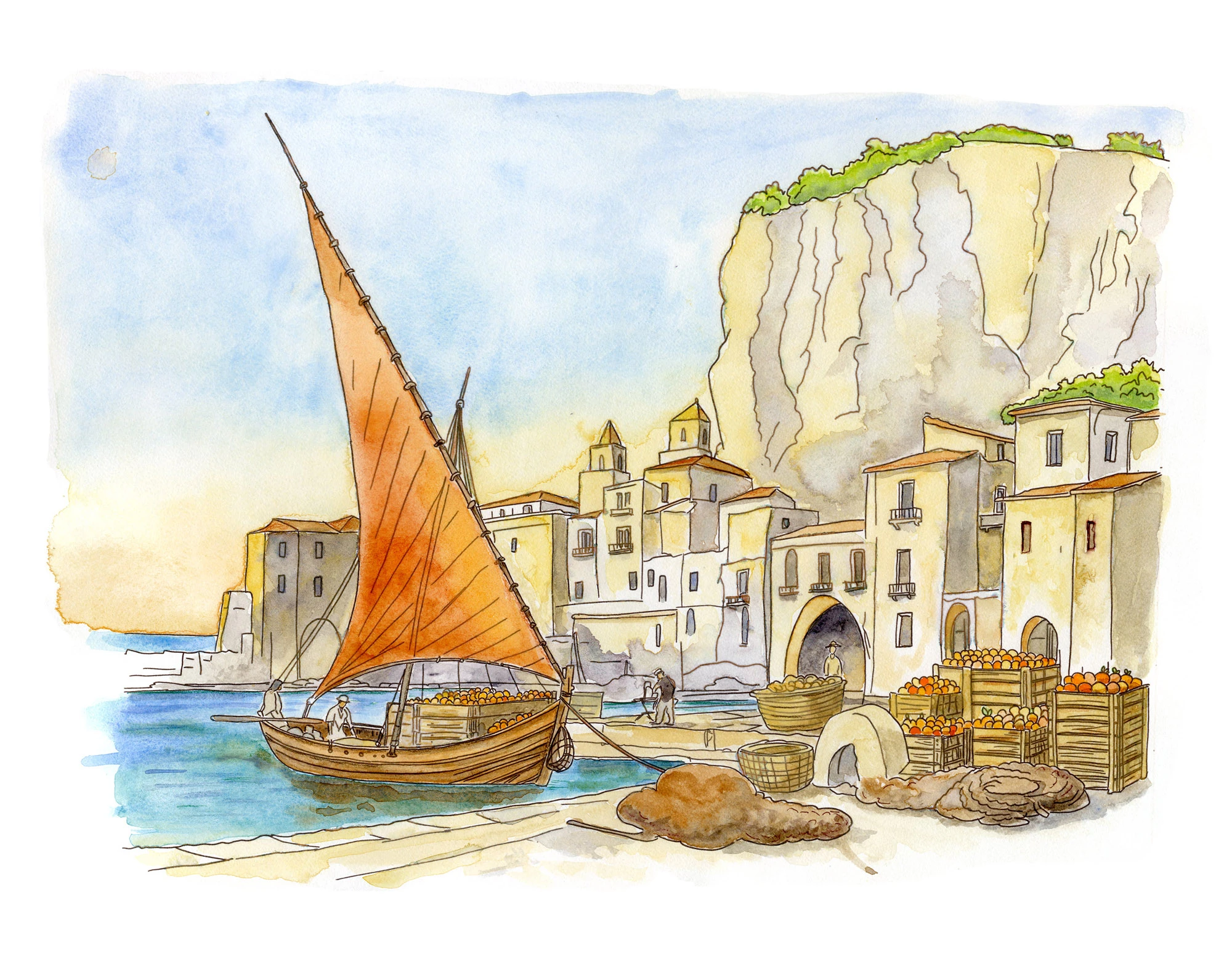
Sour oranges going into crates and bound for the Aeolian Islands on a small lateen-sailed Sicilian merchant boat. Watercolor and liner pens.
A Tree That Was Two Trees
The citron citrus that we talked about in Palermo entered into history in Leviticus, in which God tells the Israelites to gather the fruit of what they called the beautiful tree.
But the Bizzarria entered our modern world through the writings of Charles Darwin.
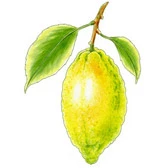
Sometime in the early 1640s, in a garden outside Florence, a gardener grafted a citron onto a sour orange. This was ordinary work — you take the top of one tree and the roots of another and bind them together, and growers had been doing it for centuries.
The graft failed, which happens all the time.
But something grew back out of the junction anyway. It came up as a single tree carrying citrons on some branches and sour oranges on others, and here and there a fruit that was somehow both.
Almost always, when you cross two plants sexually, you get a hybrid, the way a male tiger and a female lion produce a tigon, or the way a false killer whale and bottlenose dolphin become a wholphin. You and I are also hybrids of our parents, because every cell carries both of them.
But if you cut into one of the Bizzarria’s strange fruits, there is a clear line. On one side, everything is a citron, and on the other side, everything is sour orange. The line does not blur.
Nobody understood the central mystery of the Bizzarria until the twentieth century. A stem grows in layers. Think of a glove fitted over a hand. The outer layer builds the skin, while the inner layer builds everything inside.
In the Bizzarria, sometimes the citron is the glove and the sour orange is the hand. In that case, the skin would be bumpy and irregular and acid-colored, but cut into it and the pulp is all sour orange. Sometimes, the Bizzarria would produce a smooth orange skin; inside it was pale acid and thick citron rind. Nothing is ever halfway, because no cell is ever halfway.
For most of its history, the Bizzarria wasn’t a species of citrus. It was just a single tree, living in a single garden. More than one time in its history, the tree was forgotten. It was long believed to have been lost and was only rediscovered most recently in the 1970s.
That’s because when the Bizzarria produces seeds, only the interior makes seeds. They will always be citron or sour orange. The only way to make another Bizzarria is to graft a branch onto some other rootstock, and hope it stays bizzarria.
The reason that the Bizzarria exists at all is because seventeenth century Florence produced a culture and society of tinkerers. Not just farmers or agriculturists, but scientists, naturalists, academics, gardeners and artists, all poking at plants.
Citrus particularly delighted curious people, and people wrote about it, sketched it, painted it. As they planted and grafted, they asked questions, they improvised, they found mysteries in the rarities. They were drawn to citrus with mangled fingers sticking out every which way. They were drawn to bulbous oranges and striped lemons and limes that looked like pears.
They were tinkerers, and if just one generation of Florentine gardeners failed to produce a tinkerer, it would have been gone. There is no wild population of Bizzarria waiting somewhere. It became the first non-fictional chimera anyone had ever laid eyes on — though nobody would have a word for what they were looking at for centuries.
What Darwin Needed
Two hundred years later, Darwin needed it.
It is easy to forget how little he knew. He had shown that creatures vary, that the variations pass on, and that this is enough to build every living thing. What he could not say was how.
Darwin wanted to know what it was that moved from parent to offspring, but he hadn’t the faintest idea what it was, where it was hidden or how it traveled through organisms.
Even as Mendel, through his tinkering with peas, uncovered the fundamental traits of inheritance, Darwin would never see that founding evidence of genetics.
So, and this is the thing about Darwin, he did what he always did, he tinkered with the strangest cases of life, and asked questions.
To Darwin, the existence of the Bizzarria was enormous. It meant that heredity existed in bark and wood. In everyday tissue, not locked away in reproductive organs. Heredity existed in skin and toenails and hair. From this he created a provisional hypothesis — pangenesis — which conceptualized bodies circulating particles that inform the creation of the offspring.
Sure, he was wrong. The Bizzarria was not the evidence he took it for, because the two citrus never fused at all. They only stacked.
But he was wrong in a good way. He was saying that heredity had to be something material, that it was particles rather than a blending fluid, at a moment when nobody on earth could show him one. His failed provisional hypothesis was remarkable in that this mind that uncovered so many of the great biological answers was also circling around genetics long before DNA would enter the human record.
And there is something about that tree he had no way to see.
The citron was the graft. The beautiful half, the fruit with scripture behind it, the one placed on top.
The sour orange was underneath. It was the roots.
I sat beneath one for two hours in Cefalù and never thought about it once.
The Roots Underneath
Now I am above the city, and I think about Jane and our friends somewhere down below, and I realize that in a way, maybe Iva is right. You don’t need to know what’s holding a place up in order to eat it.
Pull up a lemon in Sicily and for centuries the roots were sour orange.
Pull up the Bizzarria and you find the same thing.
From up here, I try to imagine a Sicilian merchant vessel from Palermo, loaded with citrus grown on sour orange rootstock. The great cargoes leave for Genoa or Barcelona. This little ochre-sailed vessel makes its living in the smaller harbors, and if tomorrow’s wind is fair, perhaps it is bound for the Aeolian Islands.