
Case file · Chapter 5
Patrick Moore's Biodiversity Denial Debunked
Moore calls the scientific estimate that one million species face extinction "shameless fakery." Here's the taxonomy he doesn't understand.
Updated October 2, 2026
In Chapter 5, Moore takes aim at the biologists who estimate that one million species are at risk of extinction from climate change and other threats. He also attacks the widely cited estimate that there are 8.7 million species on Earth today.
In this chapter, Moore seethes against the estimates made by biologists, and against the global infrastructure of knowledge about threats to species. Moore stumbles hard, spilling mistakes, errors and falsehoods left and right.
Throughout the chapter, Moore keeps insisting in various long-winded ways that science can’t make estimations. He claims of the un-identified species that scientists believe exist, “we do not have any clue as to whether the 6.69 million species actually exist…I call this fakery at the most shameless possible level. These species are imperceptible and have no identifications, and yet they are able to make the most accurate estimate ever?”
I reached out to Dr. Andy Purvis, the lead author of the report that Moore focuses on in this chapter. Purvis helped explain the errors made by Moore.
My Life with Taxonomy is a Testimony to Moore’s Falsehoods
Patrick Moore has spent much of his life in stuffy offices, his back turned to the natural world. I have been lucky to have spent much of my adult life in the outdoors. I have seen and identified 1,300 bird species, 350 fish species, 200 butterfly species, 150 reptile and amphibian species, 50 dragonfly and damselfly species, and countless mammals, moths, trees, shrubs, wildflowers, beetles, fungi, orchids and more. Learning the names of species and identifying them as an amateur in the wild is one thing, but formally describing them is another.

I photographed this unidentified fly in the San José del Cabo Estuary.
I have also been lucky to meet, interview and work with dozens of biologists, including taxonomists. I have helped ornithologists tag endangered birds. I have worked with coral and marine biologists, and hiked with botanists on surveys. That glimpse into the world of species taxonomy gives me a good smell test for Patrick Moore’s self-published book. I know how much training, grit and peer review it takes to become a taxonomic specialist. And so I know how full of bologna Moore is here.
Biological taxonomists are scientists who specialize in the classification, identification, and naming of living organisms. Their work is crucial for organizing the vast diversity of life on Earth into a systematic and hierarchical framework.
Most taxonomists focus on a narrow group of living things. They study an organism’s shape, anatomy and genes to find what sets it apart. They sort it into groups based on how it is related to other species. Then they give it a scientific name, following strict rules set by international codes for animals, plants, fungi and algae. Many use DNA to work out how species are related, and DNA sequencing has made their work far more precise. Many also do fieldwork, watching living things where they live.
Despite being very specialized in the taxa they study, taxonomists often collaborate with researchers from various fields such as ecology, genetics, and environmental science. This interdisciplinary approach helps us to build a comprehensive understanding of living organisms.
Let’s Break Down what we Know about Species
Naming a new species is a long process, and it usually starts with a taxonomist. First, someone finds a new organism in the field, in a museum drawer, or in a DNA sample. The taxonomist then compares its body and genes with those of known species. They look closely at size, color, shape and inner structure. If the organism is clearly different, the taxonomist describes it and gives it a formal name. Other scientists can then review the work before the new species is accepted and published.
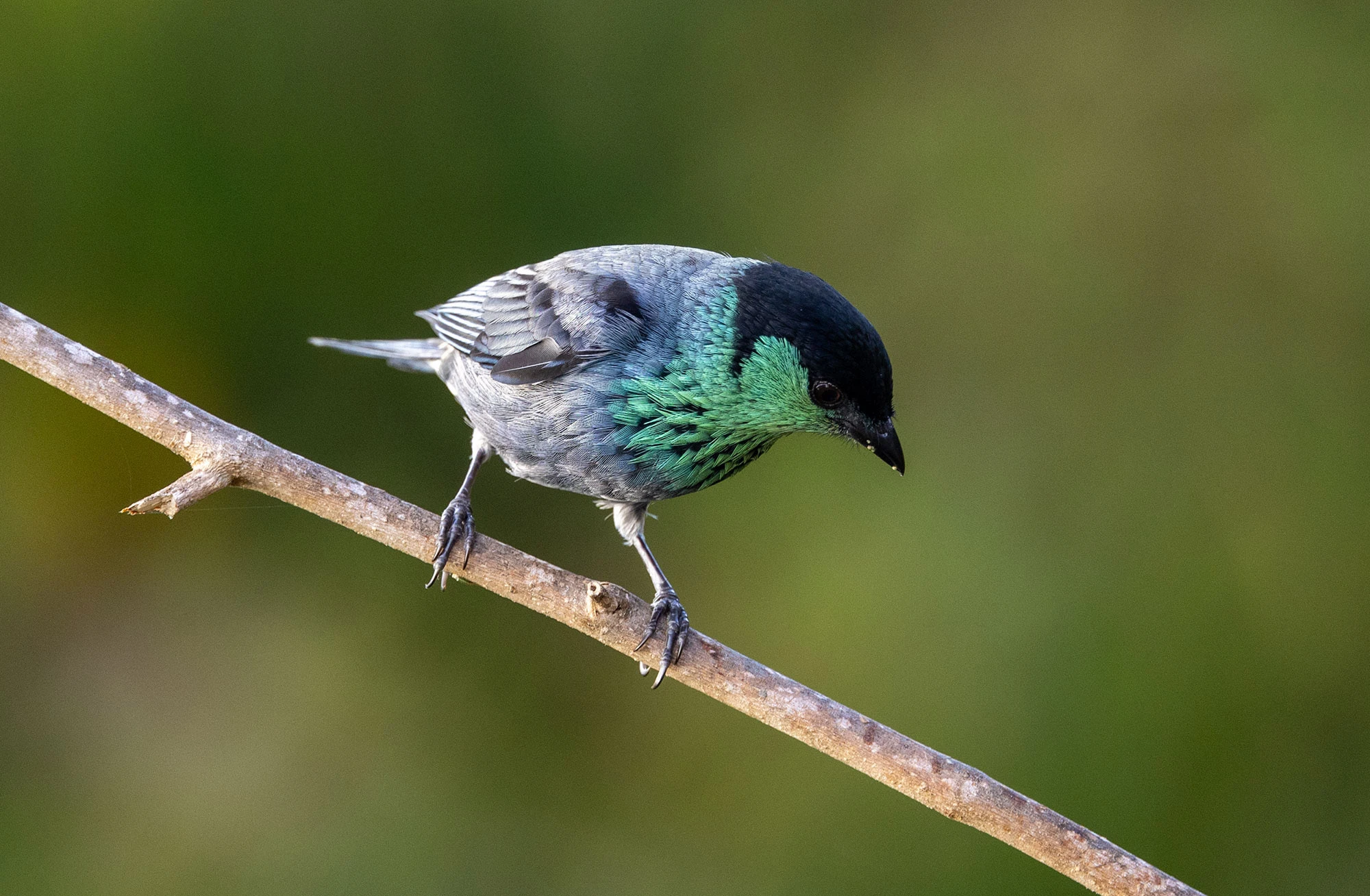
This Black-capped Tanager, which I photographed in Magdalena Department, Colombia, is one of 11,188 described birds.
The best count of known species comes from the IUCN, the International Union for Conservation of Nature. Founded in 1948 and based in Gland, Switzerland, it is the world’s largest conservation network. It brings together governments, nonprofits, scientists and other experts.
According to the IUCN, 2,161,755 species have been described as of November 2022.
Number of Described Species According to the IUCN
Moore is Dead Wrong about Estimation in Science
Estimation is a basic part of science. In biology, it is how we get a sense of how much life there is on Earth.
In taxonomy, estimation is essential. The Earth hosts an immense variety of species, but identifying and cataloging each one is a monumental task. Taxonomists use methods such as field surveys and sampling, to identify and classify species within a given area.
Taxonomists cannot find every species on Earth. Much of the planet is too vast or too remote. Think of how little we know about the creatures of the Mariana Trench. So scientists take what they learn from samples and use it to estimate the total, for one ecosystem or for the whole planet.
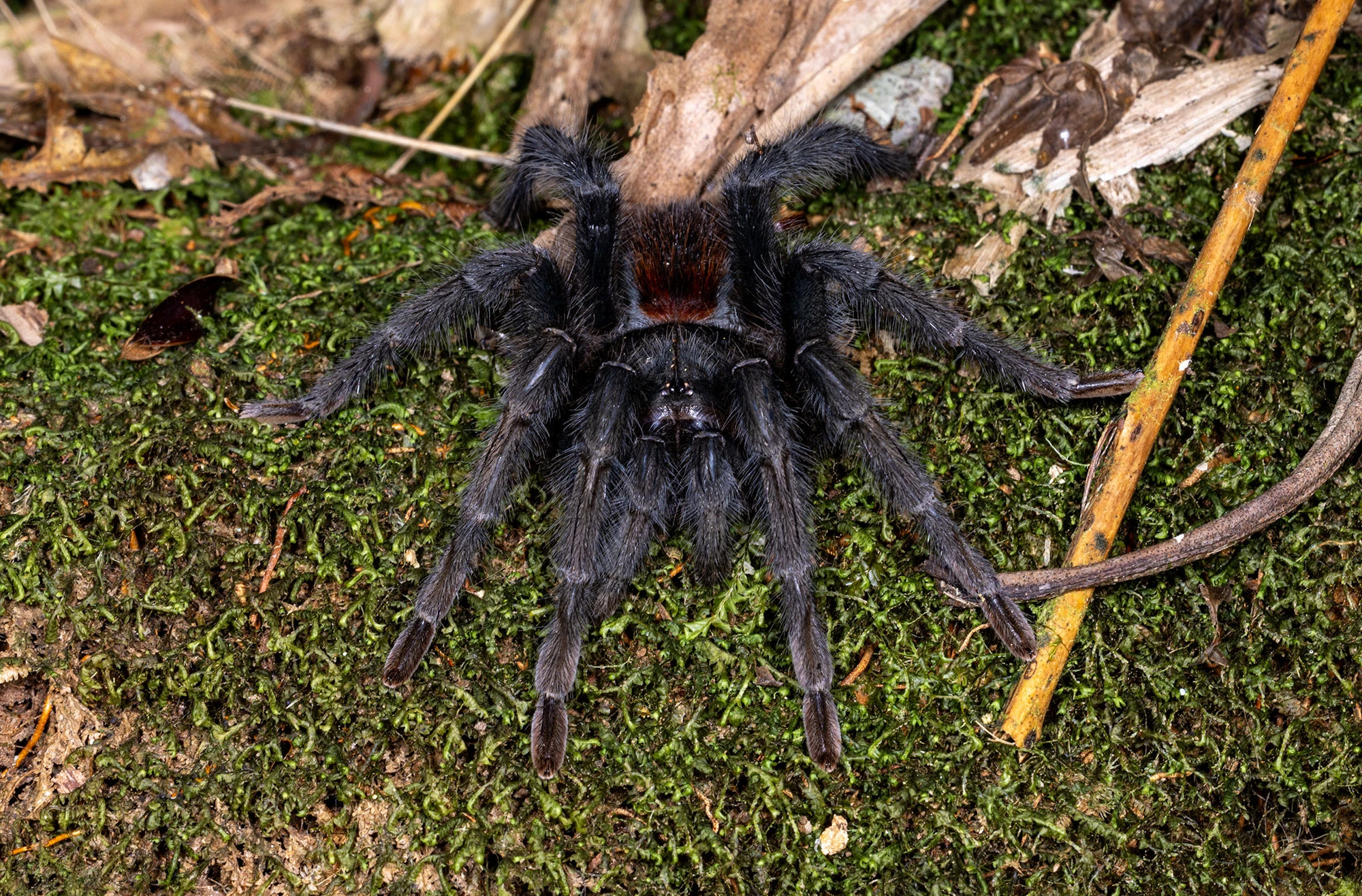
A Kankuamo marquezi spider is one of 110,615 described arachnids. This species, the only one in its genus, is known for sword-shaped hairs that sting predators, unlike other tarantulas, which can throw their hair. Many of the species I saw in Colombia don't even have common names, as they have only recently been described — a reminder that 10,000 to 15,000 new species are being described every year. See my entire spider life list.
Taxonomists often use sampling techniques to study a representative subset of a population or ecosystem. This could involve collecting specimens from specific habitats, using traps, or employing DNA analysis.
The data obtained from these samples are then extrapolated to estimate the total number of species in the larger population. Statistical methods help account for uncertainties and variability in the sampled data.
DNA barcoding uses short stretches of an organism’s DNA to identify it. It helps most when a species is hard to tell apart by sight. Here too, estimation is built in. Taxonomists do not read the whole genome of every specimen. They read a few key markers and draw wider conclusions from them.
Some species are cryptic, meaning they have subtle morphological differences that make identification challenging. Estimation becomes crucial in recognizing and understanding the hidden diversity within these cryptic species.
Molecular tools, combined with traditional taxonomy, help reveal the presence of cryptic species and estimate their abundance in ecosystems.
Estimating the total number of species globally is a monumental challenge. Taxonomists use a combination of regional studies, extrapolation methods, and modeling to arrive at estimates of global species diversity.
These global estimates are vital for conservation efforts, as they help prioritize areas of high biodiversity and guide strategies to protect ecosystems with unique and threatened species.
Moore Screws up Big-time on the Estimate of Global Species
In this chapter, Moore keeps trying to cast doubt on the estimate of 8.7 million species. He suggests the number was invented by the group that presented it to Congress. His wording makes it sound like a figure dreamed up in a hurry by an unqualified partisan.
Nothing could be further from the truth. There have actually been many estimates about the total number of species on Earth. Most of them range from about 5 million species to 12 million species. However, the most accepted estimate — and therefore the most cited estimate — is 8.7 million species.
This estimate is often attributed to the work of Dr. Camilo Mora and his colleagues, whose study was published in the journal "PLoS Biology" in 2011. The study aimed to provide a comprehensive estimate of the total number of species on Earth, including both described and yet-to-be-discovered species.
There are good reasons this study is so widely cited. It used a new method, drawing on species databases, published research and expert opinion. Combining these sources helped it get past the limits of any one method.
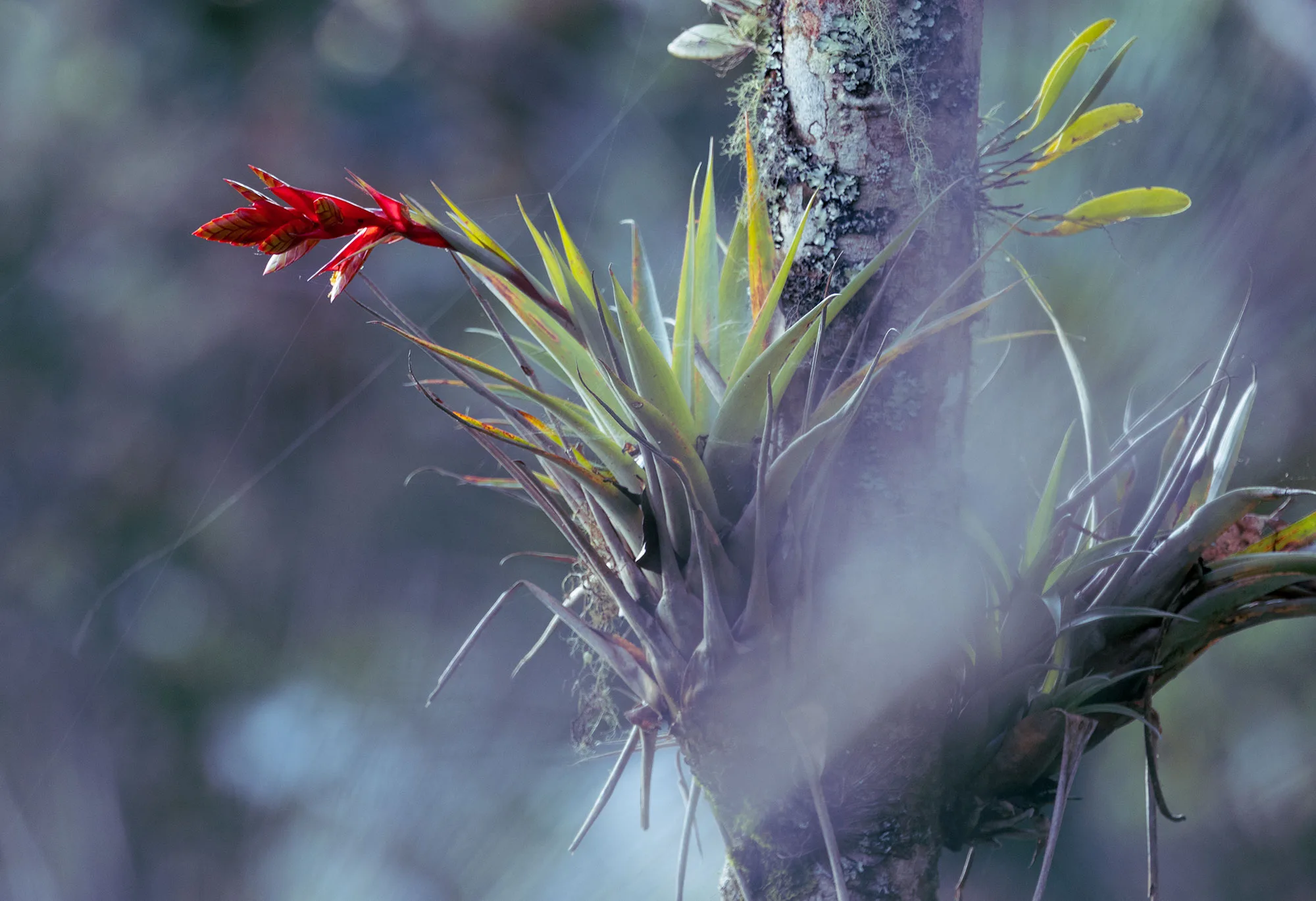
Tillandsia confinis, a type of air plant from the family Bromeliaceae. About 650 Tillandsia air plants have been identified, but plants have some of the highest diversity on Earth — 424,335 plants have been identified, according to the IUCN.
The study involved collaboration among researchers from different disciplines and regions, fostering a global perspective on biodiversity. This collaborative effort adds credibility and influence to the findings.
The study also passed peer review and was published in a respected journal, which means experts checked it before it appeared in print.
The study considered various taxonomic groups and ecosystems, providing a more holistic perspective on global biodiversity. This approach is valuable for understanding the interconnectedness of different species and ecosystems.
No one knows the exact number of species on Earth. New research, new tools and the exploration of hard-to-reach places will keep sharpening the count. Even the idea of what counts as a species is still changing. But Moore’s attack on the most cited estimate has no basis, and he offers no credible challenge to it. He calls the estimate ‘shameless fakery,’ then rants about politics to avoid dealing with the data.
How much of life has a name
Moore calls the undescribed species “imperceptible” and the 8.7 million estimate “fakery.” But the estimate isn’t pulled from the air. In the best-studied groups, like plants, most species are already named, and the way those named species nest into genera, families and orders is what Mora’s team used to predict the rest. The gaps are biggest exactly where you’d expect: fungi and small animals.
Show the numbers
| Kingdom | Described (catalogued) | Predicted total (± SE) | Share named |
|---|---|---|---|
| Plants | 215,644 | 298,000 ± 8,200 | 72% |
| Chromists (kelps, diatoms and kin) | 13,033 | 27,500 ± 30,500 | 47% |
| Protozoa | 8,118 | 36,400 ± 6,690 | 22% |
| Animals | 953,434 | 7,770,000 ± 958,000 | 12% |
| Fungi | 43,271 | 611,000 ± 297,000 | 7% |
| All eukaryotic life | 1,233,500 | 8,740,000 ± 1,300,000 | 14% |
Source: Mora C, Tittensor DP, Adl S, Simpson AGB, Worm B (2011), “How Many Species Are There on Earth and in the Ocean?” PLoS Biology 9(8): e1001127, Table 2.
In this chapter, Moore falls into the Slothful Induction Fallacy. The evidence for the 2011 study is strong, yet he tries to pin its creation on the panel that presented it to Congress. He is also guilty of The Tu Quoque Fallacy. Rather than back up his own claims, he spends the chapter attacking the people who cite the data.
Moore’s Attack on Global Threats to Species is Misguided Misinformation
Moore’s intention, by going after the 8.7 million species estimate, is ultimately to discredit the claim made by the IPBES that one million species are at risk of extinction. Moore calls these threats to extinction a “scare story…based on unobservable factors that cannot be independently checked by sensible people.”
He never explains why he thinks the estimate of threatened species is a scare story. Instead, in another Tu Quoque Fallacy, he complains that his testimony was cancelled and left out of the record. The scientists, he grumbles, went “uncontested and free to peddle their twaddle.”
In reality, his testimony was cancelled because it was immediately apparent he was an angry partisan with no knowledge of the subject, and not an expert.
One of the themes of Moore’s book is to repeatedly claim that if ‘sensible people’ can’t understand or directly observe something, then it must be false. Most science is complex, and for laymen to understand and synthesize complex scientific estimates, they need to put in the effort. Thankfully, there is a high degree of transparency to the tool used by scientists who estimated the total number of global species threatened with extinction — the IUCN Red List.
Dr. Andy Purvis explains estimates of threatened species.
The IUCN Red List is the leading record of threats to species around the world. Its strength comes from its method. Every species, in every group and every region, is judged by the same standards. Each assessment uses the best data available: how the population is changing, where the species lives, how much habitat it has lost, and what threatens it.
The Red List is also open. Its methods and criteria are published for anyone to read. That lets other scientists check the work, which is a big part of why it is trusted.
And it is global. It covers mammals, birds, amphibians, reptiles, fish, insects and other invertebrates, and plants, in every kind of habitat. That reach makes it the best tool we have for seeing which species need help most.
The report presented to Congress was led by Dr. Andy Purvis. He explains that the estimate of threatened species comes from the share of species found to be threatened on the IUCN Red List. About 10% of insect species are threatened, or roughly 500,000 insects. About 25% of all other species are threatened, or roughly 500,000 more. Together, that makes about one million species.
Moore’s Graph on Extinctions is Misleading, and was Debunked by the IUCN
In Chapter 5, Moore shows a graph that suggests fewer species are going extinct. But the graph comes from the CO2 Coalition, a low-credibility political group. Moore is one of its directors, and it argues, against the science, that more CO2 is good for the planet. In a sharp takedown of this chapter, Professor Sean Holman reached out to Craig Hilton-Taylor, who heads the IUCN’s Red List of endangered species.
Hilton-Taylor explains how Moore’s graph was misleading. “Indeed…it’s a reverse image of [Patrick Moore’s] graph.”
Moore makes other mistakes in this chapter. For example, he claims that, “It was not until the extinction of the passenger pigeon in 1914 that the general public became concerned with and supported programs to prevent further extinctions.”
This is simply not true. People worried about extinction long before the passenger pigeon died out. All through the 1800s and early 1900s, groups pushed to protect wildlife and wild places. Yellowstone became the first national park in 1872, in part to protect its wildlife.
The decline of the American bison, for example, prompted conservation efforts in the late 19th century, leading to the establishment of protected areas and conservation measures to save the species from extinction.
The loss of the passenger pigeon was a turning point. It showed how much harm people could do to wildlife. But public concern for conservation did not start there. The movement to protect wildlife was already well underway.