
Guana Cay Blog Archives
Part two of two: the environment & the science — real-time dispatches, 2005–2011
This is Part 2 of the Great Guana Cay blog archive — the real-time dispatches on the environment and the science: the Bahamian environment, coral reefs, mangroves, the science of coral conservation, island development conflicts, and golf & environment commentary from 2005 to 2011. For the legal fight, the developer, and the press coverage, see Part 1.
For the current state of the story and the science behind it, start at the Guana Cay overview page instead. This page is the archive underneath it.
A note on how to read this page: these are dispatches written in real time, on one side of an active legal and political fight, between 2005 and 2011. Where later documents — the monitoring reports, the 2012 coral reef decline study, and the case study refutation — confirm, update, or complicate something said here in the moment, I have added a note at that point.
Contents
Part 1 — The Legal & Political Fight
- The Legal Fight: Save Guana Cay Reef vs. the Government & the Developer
- Local Rights & the Hope Town District Council
- From "Rise Up Sweet Island": the Yosemite allegory & Troy Albury's affidavit
- Discovery Land Company
- Bakers Bay Golf & Ocean Club
- University of Miami
- Press Coverage
Part 2 — The Environment & the Science (this page)
Science & Environment
Guana Cay and the Bahamian Environment
November 15, 2011
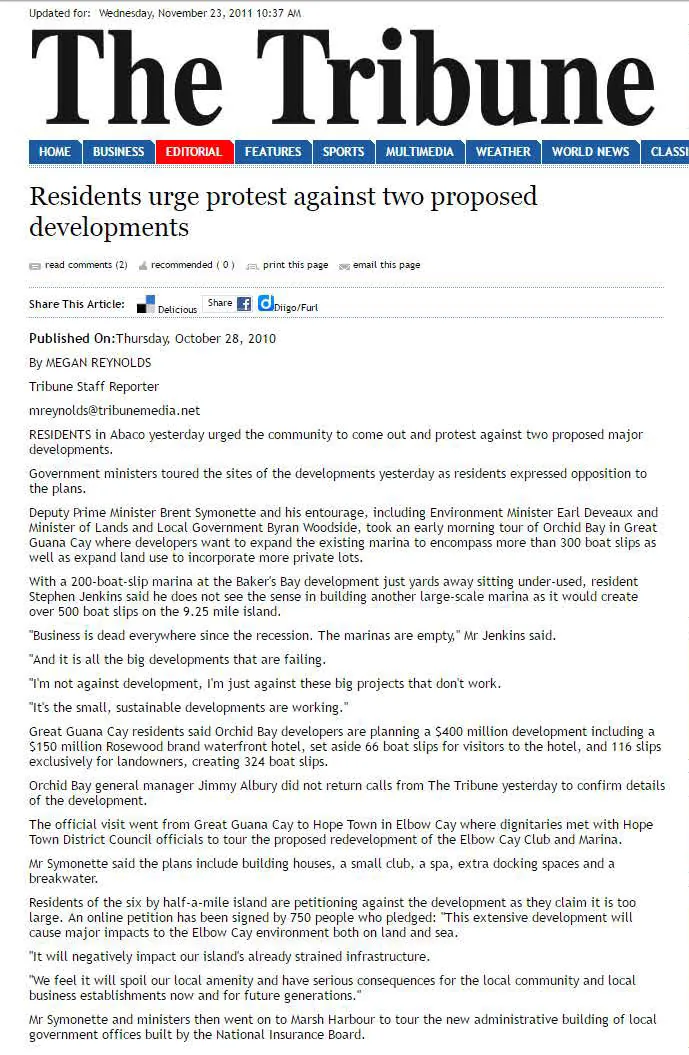
Tribune: Residents on Elbow Cay and Guana Cay Urged Protest against Proposed Developments in the Abacos. Green Turtle Cay now seeing same Pattern.
On October 28, The Tribune wrote:
"Residents in Abaco yesterday urged the community to come out and protest against two proposed major developments."
Another quote:
With a 200-boat-slip marina at the Bakers Bay development just yards away sitting under-used, resident Stephen Jenkins said he does not see the sense in building another large-scale marina as it would create over 500 boat slips on the 9.25 mile island.
"Business is dead everywhere since the recession. The marinas are empty," Mr Jenkins said.
"And it is all the big developments that are failing."
A similar pattern in nearby Green Turtle Cay.
September 22, 2009
Guana Cay Inspires Two Major West Indies Environmental Wins: Power Plant and Golf Course Curbed in Abaco and BVI
Something incredible happened in the past week. Two environmental movements made major wins against unrestrained development in the Caribbean. And both issues were directly inspired by Great Guana Cay.
A Power Plant under construction without local consultation has been halted after Guana Cay lawyer Fred Smith found out the government was pulling another Bakers Bay.
In the British Virgin Islands, locals banded together after consulting members of Save Guana Cay Reef and their attorney, Fred Smith. The locals won on all counts, and have established the Hans Creek area, an important estuary for BVI, a protected fisheries area. These dual wins further support my conviction that the Bakers Bay Club fight would have a resounding impact around the Caribbean Basin.
Meanwhile, locals on Great Guana Cay await a ruling on their own case.
Judge Protects Hans Creek Area on Beef Island, British Virgin Islands (Bahamas B2B)
June 24, 2009
State of Bahamas Anchor Developments Today

Construction at Bakers Bay near the main Disney facility.
BIMINI BAY RESORT AND CASINO
Developer: RAV Bahamas, a subsidiary of Miami-based Capo Group
Acres: 700
Features: 2,100 Housing Units, a 250 Room hotel managed by Conrad Hilton, a 20,000 square foot casino, small convention center, and 18 hole golf course
Status: Locals successfully RESTRICTED expansion of development.
GINN SUR MER
Location: West End, Grand Bahama
Developer: The Ginn Co. of Celebration
Acres: 700
Projected Investment $4.9 billion
Features: 4,000 condominium and hotel units, 1,800 single family homes sites, two golf courses, marinas, a casino and airplane runway with customs and immigration
Status: Failed
ABACO CLUB AT WINDING BAY
Location: Cherokee, Abaco Islands
Developer: Peter de Savary
Acres: 528
Features: Cottages, Villas, golf course, spa, pools
Status: Not selling units, slashing prices. Lack of interest in isolated area.
Bakers Bay GOLF AND OCEAN CLUB
Location: Great Guana Cay, The Abacos
Developer: Discovery Land Co. of Scottsdale, Arizona
Acres: 600
Projected Investment: $500 million
Features: Tennis courts, a golf course designed by Tom Fazio, a 185-slip marina, beach cottages and mangrove bungalows
Status: Not selling units, being brought before highest court in commonwealth, letting workers go.
ATLANTIS
Location: Paradise Island
Developer: Kerzner International of Paradise Island
Acres: 171
Projected Investment: $1 billion
Features: 2,317 room resort, 7 acre lagoon within a 78 acre "waterscape", a large casino and 63 slip marina
Status: Just laid off 800 workers.
EMERALD BAY RESORT
Location: Great Exuma
Developer: EBR Holding Ltd. of Great Exuma
Acres: 470
Projected Investment: $150
Features: 183 room Four Seasons hotel, crescent-shaped beach, golf course designed by Greg Norman, and 150 slip marina able to handle boats up to 200 feet long
Status: In receivership — can't find a buyer — they just laid off 500 workers
RUM CAY RESORT MARINA
Location: Rum Cay
Developer: Montana Holdings of Nassau
Acres: 900
Projected Investment: $700 million
Features: New Airport Terminal, and hangar, 80 slip marina, hotel and marina village
Status: Failed
MAYAGUANA
Location: Mayaguana
Developer: Bahamian Government and "I Group" of Boston
Acres: 10,000
Projected Investment: $1.8 billion
Features: Plans include expansion of the former U.S. Air Force base at Abraham's Bay to include "the world's longest runway" and a trust fund put aside by the developer to finance infrastructure and public services in the Bahamian-occupied portions of the island
Status: Failed
ROYAL ISLAND
Features: Golf course development
Status: Failed
April 27, 2009
Great Guana Cay Golf Course Opposition inspires British Virgin Islands Fight
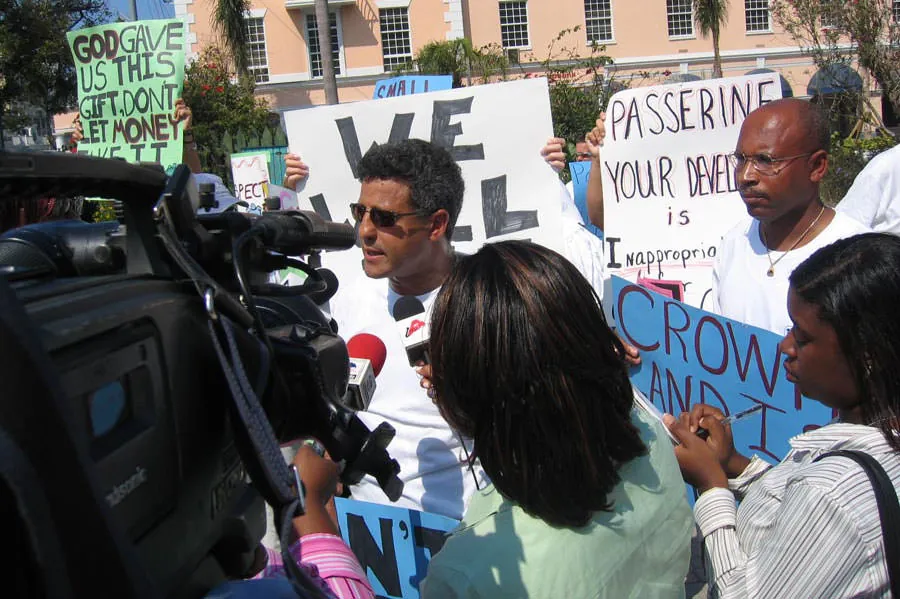
Save Guana Cay Reef Attorney Fred Smith talks to reporters.
I am posting this full article from Caribbean Net News.
A landmark environmental case in the British Virgin Islands, that was inspired in part by the Save the Guana Cay Reef action in the Bahamas, will be heard in the British Virgin Islands High Court from 27th — 29th April 2009.
The case, Virgin Islands Environmental Council v Attorney General and Another, sets a precedent in the BVI as the first environmental and public-interest challenge to a government decision. It involves judicial review of the former NDP Government's planning approval for a five-star hotel, marina and golf course that would destroy the scientifically documented biologically important Hans Creek Fisheries Protected Area in Beef Island, British Virgin Islands.
Legal issues in the case center around the irrationality of the decision in light of an over-arching "Development Agreement" which pre-approved many of the project components, and the illegality of project approval in blatant contravention of the Fisheries Law prohibiting development that would adversely impact a fisheries protected area.
The case is being fought by the Virgin Islands Environmental Council (VIEC), a coalition of local fishermen, concerned residents, scientists and environmental activists. The politically charged issue came to a head during an election year.
When local lawyers refused to assist, the group reached out to Fred Smith, Freeport attorney for Save Guana Cay Reef, who was the first attorney to give the group a legal opinion on the merits of their case. His timely encouragement and advice enabled VIEC to file their claim against the decision within the six-month time limit for bringing judicial review.
Updated April 23, 2009
Great Guana Cay Blog Roundup
Save Guana Cay Reef continues legal action against Bakers Bay Club and the government of the Bahamas. Despite losses in the Bahamian court system, the case is expected to move to Privy Council in early 2009.
Local Resolve on Great Guana Cay and Abaco Islands.
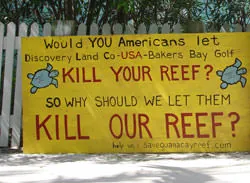 75 of the 91 Bahamians on Great Guana Cay continue to fiercely oppose the Bakers Bay Club. Opposition is also strong among visitors to the Abacos. Opposition is increasing as more see what the fast-pace of construction is yielding: cookie-cutter Arizona-style megadevelopments closely packed together.
The Big Picture
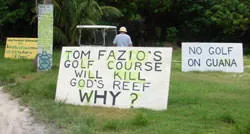 The islanders of Great Guana Cay live at the very northern periphery of the West Indies; south of them are literally hundreds of similar stories. The locals are one of the first groups to fight against unsustainable overdevelopment on their island in a sustained, all-out front. But other groups around the Bahamas and the Caribbean are learning from Great Guana Cay — and there is good news. Beef Island is also taking a golf and marina megadeveloper to court, and Sir Richard Branson has just signed on to support the legal costs to take the developer to task. At ecologically-critical Pear Tree Bottom in Jamaica, locals won to preserve the island's ecosystem against a golf development.
August 5, 2008
Bahamas Anchor Projects begin to Fail as Upscale Golf Developments across Western Hemisphere Flounder
Prime Minister courts Bakers Bay Club as other anchors go under
The previous Prime Minister of the Bahamas, Perry Christie, based his tenure on the idea of anchor developments — flood the small, quiet out-islands with big foreign money — casinos, golf courses, hideaways for the ultra-rich. Local communities balked and fought, but the administration fought on for what it believed to be the country's economic saviour. Last year, Hubert Ingraham, who had served as Prime Minister before Christie, beat him on a campaign that questioned the anchor development program.
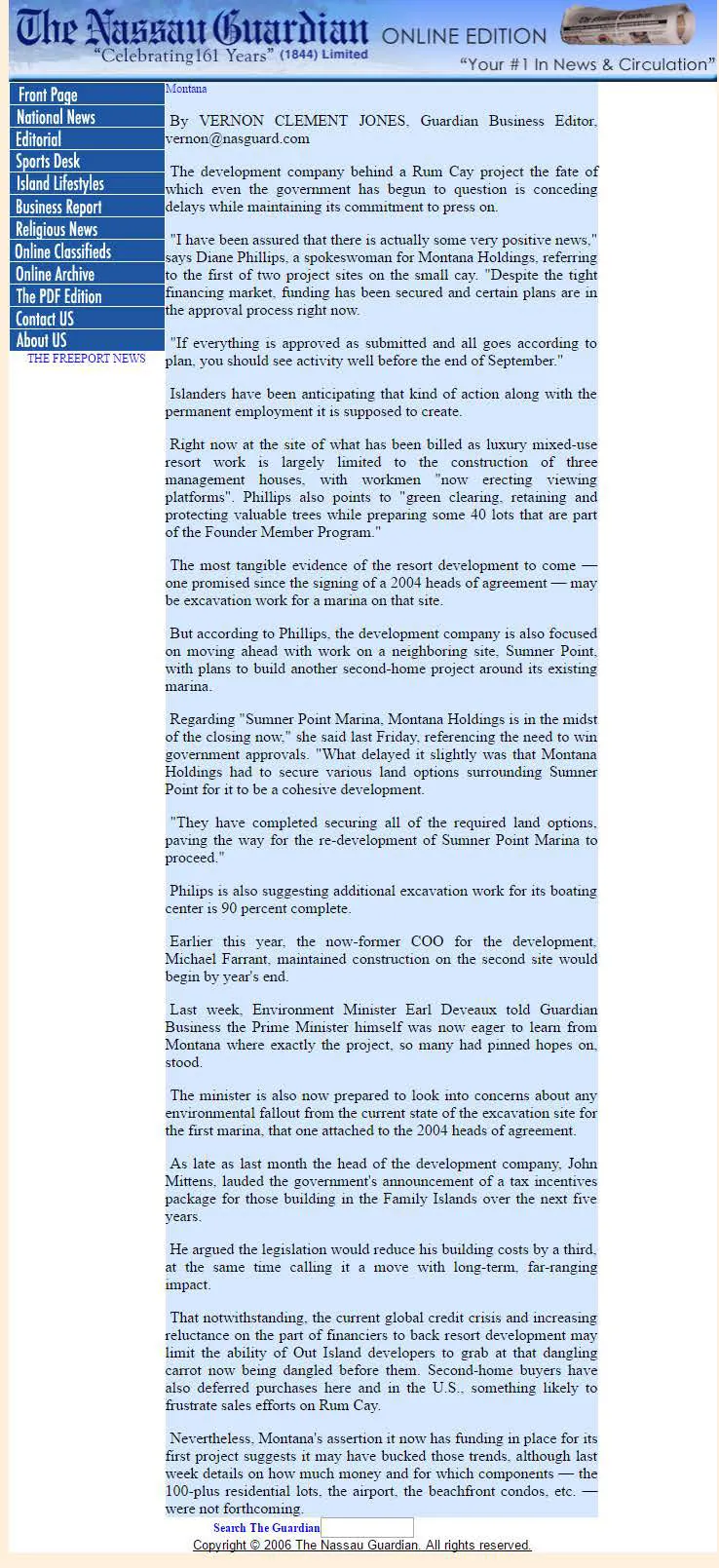
But now, Ingraham is seeing the anchor developments faltering. The news is everywhere, and follows a trend that we are seeing throughout the west, as recession strikes. One example is Lake Las Vegas, a golf megadevelopment now in bankruptcy court. But here in the Bahamas, the anchor projects are crashing left and right. For example, the Nassau Guardian reports of the Rum Cay Project, "The development company behind a Rum Cay project the fate of which even the government has begun to question is conceding delays while maintaining its commitment to press on."
BahamasB2B reports of the Ginn Project: "In a move that could have serious consequences for Grand Bahama, developers behind the Ginn Sur Mer project have announced that they will have to make "difficult decisions relating to the "management and oversight" of their property in West End after again missing a deadline set by their money lenders...Development companies affiliated with Bobby Ginn had been given 30 days ... to work out a solution to their financial woes after defaulting on a loan repayment..."
Meanwhile, here in the Abaco Islands, the Joe Cay Development learns from Bakers Bay mistakes.
February 17, 2008
Three Years Later, Worst Case Scenario
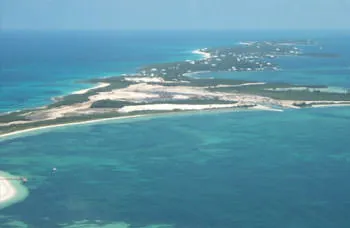
Mangroves gutted. This photo shows almost the entire island. To the left (north) is the Atlantic. The dark splotches in the water there are corals. The dark splotches to the lower half of the photo are seagrass beds and small coral formations, mostly now dead. Center right is the marina under construction, attached to the failed cruise ship way from the Disney/Premiere destination, which even the current developer admits harmed the coral reef. Photo courtesy SGCR.
Three years ago, hundreds of Bahamian residents and second home-owners on Great Guana Cay banded together to form the Save Guana Cay Reef Association when a California golf developer was given authority to build a megadevelopment on their tiny island without their input or consent. The local community had many fears, and their fears were backed by science and precedent.
Meanwhile, the developer employed tactics to reassure the Bahamian community that the residents were quite wrong about their concerns. Looking at Great Guana Cay today, and the claims made by the locals of Great Guana Cay and the developer, a worst case scenario has been realized. The local's fears about the Bakers Bay Club are proving true. This month, we'll look at every issue in daily updates. Although the developer's promises, and the impact of their development are bad, there is certainly hope for Great Guana Cay, as court decisions loom and scientists begin to discuss ways to restore the habitats of the northern end of the island.
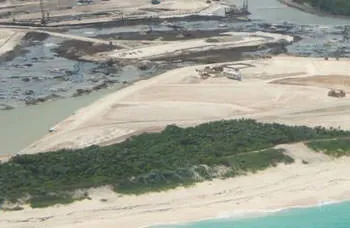
Aerial shows marina butting up to the coral reef shore of Great Guana Cay. Photo courtesy SGCR.
Developers should have a right to develop their land. But community input is essential whenever a development will profoundly affect that community, and this is especially so when the temporary land interests of developers clash with the long-term land interests of a community. Additionally, development in critical ecosystems must abide not just to a particular country's strictest environmental standards, but to the standards that preserve these critical environments — it is not the regulation that matters, but the final result. This is especially true in the Bahamas, whose environmental standards are still a work in progress, and do not yet adequately regulate development that affects reefs and mangroves.
The nearshore waters of Great Guana Cay are a critical ecosystem — the island's coral reef is one of the finest staghorn/elkhorn communities in the West Indies. It is of significance not only to the people who rely on it for their employment and tourism, but to the world as well. These Caribbean-Atlantic reef systems are under severe stress. We are losing them, and so protecting this spectacular reef is important for the world's biodiversity. Preserving the reef at Great Guana Cay preserves a habitat that exists nowhere else and which provides shelter to endangered species, such as three species of sea turtle.
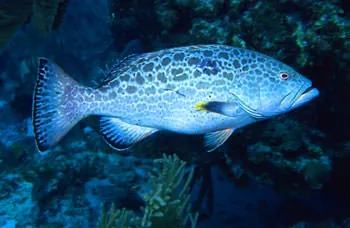
Grouper, photographed by Erik Gauger, 1989.
The Bakers Bay Club proposal does not address the loss of the coral reef. From the beginning, the developer has refused to acknowledge this.
To save it, the locals must successfully sue the developer and the government, and hope to have the marina and golf course plans removed from the development. A win for Great Guana Cay will impact more than just the lives of the residents, who feel terrorized by the Bakers Bay Club's animosity towards their way of life, towards their resistance, towards their reef.
The following entries will look at each issue caused by the Bakers Bay Club and what is actually happening on the island today.
February 24, 2008
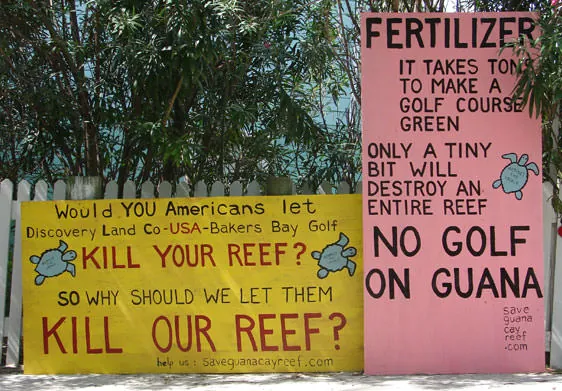
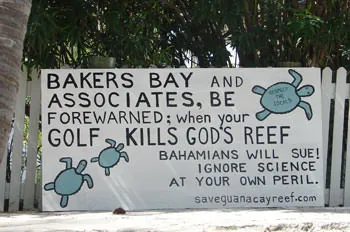
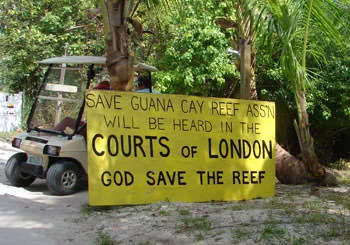
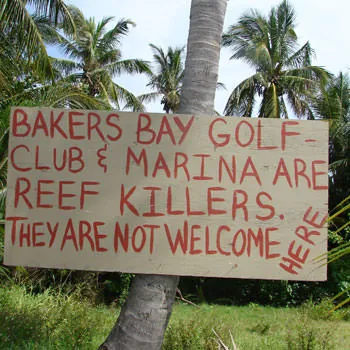
Protest Signs
New signs appearing on Great Guana Cay.
January 01, 2008
You Can Fool Some of the People...
After Prime Minister Hubert Ingraham held a private, secret meeting with the Bakers Bay Club late in 2007, he announced that 75% of the Bahamians on Great Guana Cay were terrorists. This is an incredible statement from a Prime Minister of a country of some 300,000 people, who was elected largely on a platform brought to national attention by the residents of Great Guana Cay.
The Prime Minister now calls Guana Cay residents 'terrorists.'
The Prime Minister of the Bahamas called his own citizens terrorists.
These citizens are fighting for their rights.
These citizens have never used violence. Their battle is a legal one and is taking place in the Bahamian courts.
These citizens have always stuck to high ground, deferring to facts.
The message of the people of Great Guana Cay is supported by an international following of concerned marine scientists, human rights activists and conservation organizations.
The term terrorism carries with it the absolute highest negative connotation. This is especially true today, in a world reshaped by the fear of terrorism. To call your own citizens, whose action would otherwise be considered both heroic and peaceful, is the ultimate insult. Because of Ingraham's history of levelheadedness, this statement suggests he may have been coerced.
The following is a letter written by Guana Cay Bahamian Aubrey Clarke, of Save Guana Cay Reef after the Prime Minister's shocking betrayal of his own people. The letter was printed in the Abaconian and was well received by Abaconians, who feel likewise betrayed by the Prime Minister's statements.
Please note that the Guana Cay locals continue a peaceful, objective, legal fight against the Bakers Bay Club. The next court appearance is this February.
Was it not Hubert Ingraham, himself who a couple of years ago told us how great Winding Bay at Cherokee was going to be for us? Remember all the great things that Mr. Peter De Savary was going to do? Water for all of Cherokee, jobs for Bahamians, money by the millions and all we had to do was to give up a little bit of our Crown land and Mr. De Savary would do the rest. The REST is history. De Savary is GONE, money is GONE, land is GONE, hundreds of acres of land GONE, and millions of gallons of water GONE, millions of dollars for our treasury GONE. He was even given two taxi plates. No jobs for Bahamians, what a deal!
Now in less than 3 years, Hubert Ingraham wants the people of Guana Cay to do the same deal for Mike Meldman of Bakers Bay Golf and Ocean Club! Only this time it won't be millions, it will be BILLIONS! Plus according to the WORLDS leading marine scientists, from Jean Michael Cousteau to Dr. Thomas Goreau, that the golf course, only a few feet away from the world's third largest barrier reef, will cause the reef die a slow death from fertilizers, pesticides, waste water and herbicides. These top scientists have sent you and the former Prime minister, reports and letters without any acknowledgement from either you or the former Prime Minister. NO CORAL REEF SCIENTISTS INDEPENDENT OF THE PROJECT AT BAKERS BAY ENDORSES THE GOLF COURSE!!
No Hubert! No, not the people of Guana Cay! We are going to fight you in the courts and we are going to let the world know that you are backing reef killers.
In closing, I want you to understand the meaning of the word "terrorist". You implied, in your press conference that Save Guana Cay Reef members are terrorists.
"Terrorists are those who force an unannounced event on a citizenry. An event planned in secret, intended to overwhelm. The element of surprise is essential. There is COLLUSION. There is CONSPIRACY. There is a goal in mind that involves paralyzing the population financially and emotionally.
A position of power, resulting in financial superiority and controlling interest. The citizens are the LAST to know. Usually terrorists rely on backing from rogue governments or pay per deed governments."
I believe Mr. Ingraham that the term terrorists fits someone else's shoe, not Save Guana Cay Reefs!
Save Guana Cay Reef Association
Aubrey Clarke
February 13, 2008
ReEarth Director Speaks
The Bahamian conservationist and ReEarth Director Sam Duncombe is interviewed by The National Guardian on transparency, golf courses and continued concerns about development in the Bahamas.
"The ReEarth Director said many environmentalists and concerned Bahamians are left in the dark about the details of some proposed projects. "We need to know about all of the developments, so that people who will be affected can have their say on what's going on, and that's what a democracy is all about," she said. "We can't have government in the sunshine if it's cloudy some days and we still have some issues that unfortunately continue no matter which government is in power. But people want to be involved in the forward movement of the country and can only bring issues to light if people speak about them."
May 2, 2007
Free National Movement Cleans House
Prime Minister Hubert Ingraham was the second Prime Minister of the Bahamas, he is now also the fourth. After a fierce election campaign between Prime Minister Perry Christie of the Progressive Liberal Party (PLP) and former Prime Minister Hubert Ingraham, Ingraham has defeated Perry in a landslide. The FNM candidates have also cleaned house across the Bahamas, winning key seats in congress. The press in the Bahamas was taken off guard, many admitting that they were predicting a much closer race.
Prime Minister Perry Christie, once a roommate of Ingraham, has isolated Bahamians with his twisted economic development plan — the very plan which created the existence of this blog.
Unemployment has gone on the rise, public works projects have sat at a standstill, economic indicators are grim. All of this can be attributed to Perry Christie's so-called 'anchor-development plan.'
Prime Minister Christie much preferred the glitzy, fast and unabashedly trashy lifestyle defined by the Miami and greater Florida development booms of the 1980's and 1990's, over the simpler, culturally unique style of the Bahamas.
In American developers whose styles are as dated as the McMansions of Miami, Christie found allies, and premised his entire development plan for the country on his relationships with them. A few weeks ago, a friend of mine forwarded me a letter from an American developer, asking the friend to invest. The letter advertised "very close ties with the Christie Administration." You know what that means — being friends with the Christie Administration means special favors — let's fudge the environmental reports with our friends in Government, let's offer a few acres of crown land here, a few acres of treasury land there. As long as we're in with the Christie Administration, we can do anything...
Christie imagined creating megadevelopments in the small, wayward islands called Out-Islands — and turning them from sleepy white-sand beaches with pristine reefs into gambling centers, swanky clubs, golf resorts and marinas. The economies will boom, he thought. The money will pour in!
The Bahamavention advertising campaign was a complete failure, but its style matched precisely the tourism approach of the Christie administration.
Christie's ideas weren't too different from the Bahamas Tourism ads that appeared throughout North America during the winter 2006-2007 season. The ads were so poorly done, and so offensive to the type of person who might even consider visiting the Bahamas, that it has been claimed that the ads actually have had a negative effect on tourism dollars pouring into the country.
Christie's plan to build the Bahamas through the image of low-rent American developers like Michael Meldman would mean that the Out-Islands would lose the very qualities that made them tourist destinations: coral reefs would be lost, mangroves would be bulldozed, small communities would have dance clubs and gambling halls and giant airports plopped on land they had always rightly and legally believed were theirs for eternity.
Christie's plan, like the Bahamavention ads that paralleled the last days of his administration, is a total and complete bust. Good riddance and welcome back Hubert Ingraham.
Prime Minister Ingraham is a gentleman, a true leader, and a man who has often gone against popular sentiments in the Bahamians to make unpopular moves that turned out to be the smartest move possible.
04.12.07
Ingraham Continues to make Guana Cay the Issue
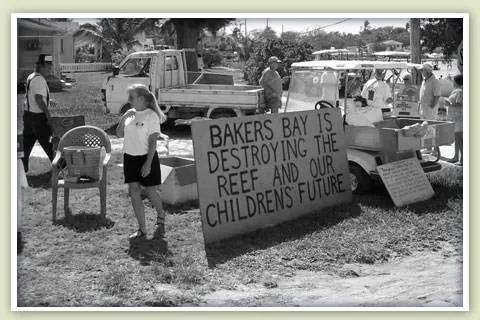
Guana Cay locals keep the message lit while Ingraham tours their message across the island nation.
In an article in Bahamas Journal, former Prime Minister Hubert Ingraham continues to make the Guana Cay issues central to his campaign:
"Five years later they have handed over thousands of acres of Crown Land to foreigners for residential developments for more foreigners. Five years later, deserving Bahamians are still waiting in that long Perry Christie line to have their applications for Crown Land processed," he said.
Electing Ingraham in May is crucial for ending the reckless development spree started by Perry Christie.
May 04, 2007
Guana Cay Citizens to Speak at United Nations Tuesday
MANGROVE DESTRUCTION, CONSERVATION AND RESTORATION
11 AM — Noon, May 8th, 2007
Mangroves are critical ecosystems for shore protection and fisheries, yet are being destroyed at an accelerating pace. This Presentation will discuss the global threats to mangroves and focus on the critical situation in the Bahamas.
Program
Chairperson
Dr. Tom Goreau
President Global Coral Reef Alliance
Speakers
Alfred Quarto, Mangrove Action Project
Importance of Mangroves, global threats, and mangrove restoration
James Cervino, Pace University
impacts of mangrove destruction on coral reefs and fisheries
Bill Parks
Threats to Mangroves in Bimini, Bahamas
Save Guana Cay Reef
Stopping the destruction of mangroves on Great Guana Cay, Bahamas
Fred Smith, Bahamian Attorney
The legal and policy steps needed to protect mangroves
04.23.07
Save Guana Cay Reef to Attend UN Event
Save Guana Cay Reef Association has been invited to send delegates to the United Nations Commission, who will be discussing Sustainable Development in the third world at their New York City offices, in early May.
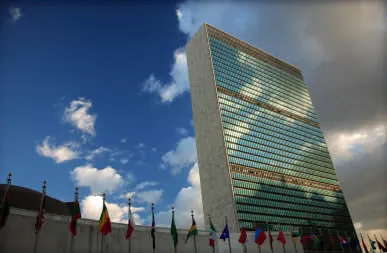
Tiny Guana Cay will speak at the United Nations on behalf of all environmental concerns in Bahamian Out-Islands as well as on behalf of their own fight against the Bakers Bay Club. The meeting is a historic one for the Bahamas.
The Guana Cay Association began their fight in early 2005 and are still fighting to save their tiny island from what they see as over development destruction. They are now widely recognized in The Bahamas as the grass roots non-governmental organization opposing the Baker's Bay Club Development on Great Guana Cay's pristine northeastern end, and the Save Guana Cay Reef Association is now pushing for environmental protection laws for the entire Bahamas.
The attending members from Save Guana Cay Reef have been accredited and will join the historic meeting attended by other member nations from around the world, UN agencies, major international funding agencies, the private sector and the press. Global mangrove protection will be a central issue, and Alfredo Quarto, the President of MAP (Mangrove Action Project) will join SGCR to speak on behalf of mangrove protection in the Bahamas and the Caribbean.
The Association will present videos, scientific documentation and photographic evidence of their concerns about unchecked development from islands throughout The Bahamas.
Loss of mangroves, threats to coral reefs, and fish habitat will be their primary focus. The group will have floor time on May 7th and they hope to capture the attention of the world as they work to save The Bahamas reefs, beaches and oceans. "This will be a wonderful opportunity to share our collection of research with other island nations facing similar concerns," said Sidney Weatherford, Guana Cay life resident and association member.
The association has built an international audience and attracted the support of organizations throughout the world. Scientists supporting SGCR include a coral ecologist from Canada, a coral scientist from Jamaica, a coral pathologist from the Woods Hole Institute in the United States, Jean-Michel Cousteau and Ocean Futures Society and the Sierra Club. The Global Coral Reef Alliance will be joining Save Guana Cay Reef and the association's lead attorney, Fred Smith, in New York this May.
Save Guana Cay Reef has been integral in building the Save The Bahamas Alliance; a network of out-island environmental and community rights groups fighting like minded battles for local rights and environmental protection. Save Guana Cay Reef also networks with organizations in other Caribbean Basin nations to share ideas about sustainable practices so that these tourism and marine resource-based economies can continue to prosper from their delicate, but bountiful resources.
"We are absolutely not opposed to development," says SGCR President Troy Albury, "we just want the developments to be better planned, the impacts monitored, and most importantly environmentally safe for the surrounding reefs."
This visit is an historical one for the association and the Bahamians who started the campaign. It is the first time a Bahamian delegation has attended the UN on environmental issues and the SGCR members are thrilled to be representing their country and to know that their concerns will be heard internationally.
Save Guana Cay Reef continues to battle the proposed Baker's Bay Club on the grounds that the development's footprint is much too large and destructive for this small island whose economy relies on small-scale tourism and fishing. The world's most respected coral and marine scientists back their position on Baker's Bay Club's monstrous mega development. They have stated publicly that the development will harm the islands reef, fishing resources, mangroves, and Guana's quiet tourism-based economy.
The group plans to travel to New York after the general elections, which they have been watching with deep interest. "When we started all of this we did not realize what a large impact land sales and development issues would be in the forefront of political concerns," added Albury, "We are thrilled that our countrymen now know we must be told about every development in our islands and that we have the right to be involved in what happens in our country and most importantly with our land."
February 20, 2007
Blunders and Bloopers Reveal Corruption
Today was historic in hinting at the layers of corruption in the current Bahamian government. Although the events of today are external to the story of Great Guana Cay's struggle against an unethical American golf course developer, they reveal a picture of the government that allowed this megadevelopment to be created in the first place. And, these events are helping to crumble the current regime. This is of incredible importance; because once this administration has been ousted, Discovery Land Company will likely be forced out as well.
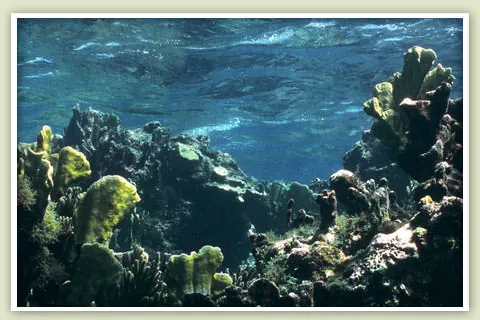
The Guana Cay coral reef, in peril as Discovery Land Company mows across the island. PHOTO by James Cervino.
The current Bahamian administration banks its success on a single issue: the building of anchor 'megadevelopments' on the Out-Islands. Out Islands comprise most of the Bahamas; but they are mostly wilderness areas with slow and sustainable development. Economists and ecologists agree that this anchor development approach is wrong: that by destroying the Bahamas' wilderness environments through the building of large casinos, tourism curiosities, mega-marinas and golf courses and excluding locals from involvement in their own backyards, this megadevelopment anchor approach is threatening the very future of the country.
The Bahamas has a worldwide reputation for not always being above corruption. The Bloggy Boyz, a Bahamian political blog group, broke the story of a news piece from a North Carolina developer today. The developer, Infinity Partners, posted a long blog piece today about their involvement in an anchor project in the Bahamas. The blog piece included items that were NEVER meant to go public. But before the developer was able to take the link down, we managed to capture the full text of the entry.
Most notable, the developer admits that the Bahamian Government wanted to announce the news of the megadevelopment 30 days before the election this May. This is the type of corruption that Notes from the Road has been pointing out since we became involved in this story in 2005.
Here are some quotes from the piece and my comments:
"Margaritaville: Beka has discussed and Buffet is interested in developing a Margaritaville Hotel and Casino and an entire town of Margaritaville."
Jimmy Buffett will never get involved in this project. If he even touches the Bahamian Megadevelopment fiasco, he will turn back on his years of environmental efforts and isolate thousands of his fans. I recommend that my readers contact Jimmy Buffett and all of his fan sites and urge him to stay away from getting involved in these environmentally destructive megadevelopments.
"Golf Development: Beka Development has agreed in principal to have Mike Riley, previously lead designer for Nickolas, design a links course. Additionally, Beka has had significant negotiations with Greg Norman Golf to design a course to PGA specifications for future tour championships."
Golf developments are being approved like mad in the Caribbean right now.
"The existing Bahamian Government has elections on May 5, 2007 they would like to complete all the approvals and make a formal announcement at least 30 days in advance."
"Prohibition from others to access any canals or harbors within five miles of our site."
Keeping Bahamians far away from the rich patrons of these megadevelopments is a classic approach of the Christie Administration. He has become a lackey to foreign developers.
"Environment Approvals: Bahamas Golden Beach Ltd. has engaged the East Bay Group to complete the environmental impact analysis. East Bay Group has expressed no concerns regarding the project master plan and the effect to the environment and is preparing a report for the Government. East Bay Group is well received and respected by the Bahamian Government as they have been involved in a significant number of like environmental approvals."
Here is the address for East Bay Group. I encourage anyone interested in Bahamian community and environment issues to contact East Bay Group and inform them of coral and mangrove issues in the Bahamas:
East Bay Group, LLC
631 US Highway One
Suite 400
North Palm Beach
Florida
33408
Tel: (561) 296-4525
Fax: (561) 296-4547
"Casino License: The Government has committed a contingent master casino license for the remainder of the island. The contingency remaining is Bekas ability to complete its definitive agreement with Foxwoods Development Company, Foxwoods willingness to manage for Harcourt Development the existing shut down Royal Oasis Casino and Bekas willingness to purchase Government crown land at the Golden Beach site for a minimum of $5,000,000 ($2,800 per acre). Foxwoods is not obligated to invest into the Royal Oasis Casino."
That the current Administration is allowing this many casinos into the Out Islands is damning. The Out Islands are conservative, religious communities whose rural values are quite different than those of Nassau and Paradise Island.
"The Government has allowed Bahamas Golden Beach Ltd. to be the master developer of the entire east end of the island. This includes an area exceeding 100 sq miles."
This development is another example of a massive, massive sell off of land that was initially set aside as public land for Bahamians. This administration must be stopped before the island nation of the Bahamas is destroyed, its culture lost and its coral reefs in grave condition.
Also, today Immigration Minister Shane Gibson resigned after the Anna Nicole Smith scandal. International media from around the world are reporting on Gibson and reciting stories of corruption in the Bahamas. While the Anna Nicole Smith story is tragic, the fact that a senior member of the current administration fast-tracked her paperwork for personal reasons is just a glimpse into the way this administration operates. It took an international tabloid scandal to force any accountability at all here — a sign, to me, of how little of this administration's day-to-day conduct was getting real press scrutiny.
February 13, 2007
Scandal hints at PLP Corruption, Incompetence
PLP Immigration Minister Shane Gibson is yet to answer several questions about his alleged affair with celebrity Anna Nicole Smith. I have posted some of those questions, taken directly from The Nassau Guardian below. For the purposes of the plight of Great Guana Cay, what is important here is not what Minister Gibson did, but how the current government, which backs the Bakers Bay Club on Guana Cay, is falling apart even as the opposition party steps up in favor of the Guana Cay locals.
Minister Gibson did you ever have any sexual relations, at any time, with Anna Nicole Smith?
Who do you believe is responsible for giving the pictures of you with Ms Smith to The Tribune?
Minister Gibson do you think it was appropriate to be with Anna Nicole Smith as she imbibed an alcoholic beverage in one of the photos, considering that you and your wife said you were mainly ministering and consoling Anna Nicole Smith in her time of bereavement?
At any time did you, Minister Gibson, see Ms Smith taking any sort of drugs, whether prescribed or otherwise, similar to when you witnessed her drinking alcoholic beverages in your presence?
How do you think the Bahamian public should feel about any Cabinet Minister being involved in any type of drug/sex scandal which has placed the nation under intense scrutiny from the international press?
October 2, 2006
Save the Bahamas Meeting Unites Diverse Out Islands
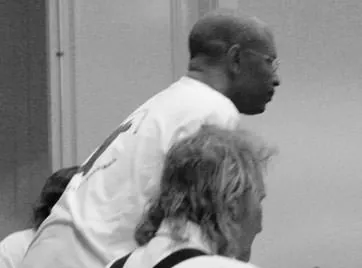
Great Guana Cay Mayor Glenn Laing at the Save the Bahamas Coalition Meeting.
Preliminary reports from the Save the Bahamas Meeting in Freeport indicate a smashing success. Leaders in coral conservation from around the Americas attended, and representatives from several Out Islands groups showed.
The Freeport News writes about the Freeport Save the Bahamas Meeting.
Here is the official Press Release from the Save the Bahamas Meeting:
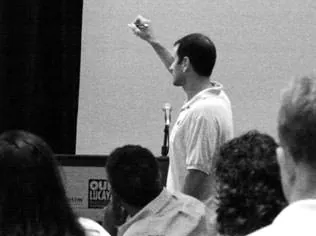
Dr. James Cervino discusses the role of developments and algae growth on coral systems in the Caribbean. Photo SGCR.
The first meeting of Save The Bahamas was held this past weekend in Freeport with an all day seminar and meeting at the Westin Resort at Our Lucaya. Focus was on the issues relating to the effect of developments on the environment, local communities, economy, the local culture, and local industries. Also discussed was the need for a stronger local government position for all of the islands, public consultation concerning developments, and protecting Crown Land for future generations of Bahamians.
This meeting was the first time an organized event had been held to target these hot-button topics. Save Guana Cay Reef Association, fresh from the victories in Privy Council, that has stopped all work at Bakers Bay, Guana Cay by Discovery Land Company, hosted the event.
"I am very excited that we have formed Save The Bahamas. It was amazing to talk to the other islands and realise that they all are experiencing the same problems as Guana. The same irresponsible development and lack of environmental protection is apparent in all areas of the country. Together we can make a difference in what we leave behind for our children. We need to get the message out to our government (both present and future) that our marine and terrestrial environments are the only natural resource we have and we need to get some serious legislation with teeth, in place, to protect them," said Troy Albury, President of Save Guana Cay Reef Association.
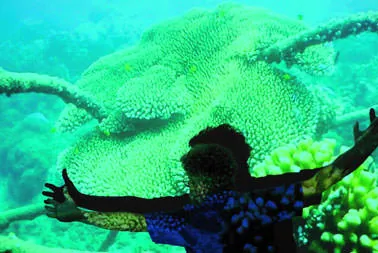
Dr. Tom Goreau arrived in Freeport fresh from Panama to deliver a speech on coral reef protection to the Save the Bahamas coalition. Tom Goreau is President of Global Coral, and an esteemed coral scientist. Photo SGCR.
In attendance were local business and community representatives from Freeport, Nassau, Abaco, Bimini, and San Salvador. Also, there were representatives from many well known environmental organizations; Sam Duncombe from ReEarth, Eleanor Phillips from The Nature Conservancy, Erik Carey from The Bahamas National Trust, Lori Kenyon from Friends of The Environment, and local business owners whose businesses depend on niche tourism like; diving, fishing, eco-tourism, small resort management/ownership and real estate. Dr. James Cervino from Pace University in New York, a leading coral pathologist and Dr. Thomas Goreau, President of the Global Coral Reef Alliance were also in attendance. Both gentlemen spoke about the ill effects of development damage to local reefs and beaches, and noted that Bahamians need to be pushing for environmentally friendly developments.
Dr. Goreau, formerly a Senior Scientific Affairs Officer at the United Nations Centre for Science and Technology for Development, also debuted his film "TOURISM, WATER QUALITY AND CORAL REEF HEALTH" at the conference. The film highlighted the impacts of captive dolphin and turtle pens and excessive waste on water quality that effects reef health and can be viewed at www.globalcoral.org

Jermaine represents San Salvador at the Save the Bahamas Coalition opening meeting. Photo SGCR.
Plans are in the making for additional meetings in the near future. In the process of planning this event Save Guana Cay Reef Association was contacted by numerous individuals from all of the Bahamian islands who support their desire to expand Save The Bahamas to include everyone affected or concerned with similar issues. A representative from Bimini who attended the meeting was delighted to have had the opportunity to network, in particular, with members of organizations operating within The Bahamas who have effectively dealt with problems similar to those Bimini is now facing. "In order for The Bahamas to survive as a tourist destination, it must protect and preserve it's incredibly rich marine environment by insisting that development be properly scaled, properly regulated and sustainable."
Summing up the event Sidney Weatherford, a seventh generation Bahamian from Great Guana Cay, Abaco noted "I would hope that Save The Bahama's will encourage more Bahamian's to voice their outrage at what is happening to our island's. We need to stand up and say no more "give away's" of our Crown Land, no more destruction of our mangroves and no more golf courses and marinas near our sensitive reefs. We need tough environmental laws in the Bahamas and the laws need to be enforced!"
January 28, 2006
World Premiere of Global Coral Film in Bahamas
A new short documentary film by the Global Coral Reef Alliance, Tourism, Water Quality, and Coral Reef Health, had its World Premiere showing today at the SAVE THE BAHAMAS Conference in Freeport, Grand Bahama.
This film, shot and edited by Dr. Thomas J. Goreau, President of the Global Coral Reef Alliance, shows the impacts of nutrients from captive dolphin pens in Mexico and a captive turtle pen in the Cayman islands on the surrounding reef, including bacteria and algae blooms that kill corals which are associated with high levels of coral disease. The film points out that coral reefs are the most sensitive ecosystem to nutrients, that the effects of human sewage, waste disposal, and fertilizers on golf courses and agriculture are responsible for the vast bulk of the problem, and that these can be quickly reversed, but only if all land-based sources of nutrients to the coastal zone are recycled on land instead of polluting the ocean.
The SAVE THE BAHAMAS Conference is the first time that grass-roots environmental organizations from all over the Bahamas have met to unite in common efforts to stop the uncontrolled mega development schemes that are causing their mangroves to be bulldozed and their reefs and fisheries severely damaged by nutrients from inadequately treated sewage and fertilizers from golf courses, which is degrading the quality of life of all Bahamian residents. Islanders realize that they face similar threats on most of the islands, but must unite to preserve their future options for sustainable development before the damage becomes so widespread to be irreversible.
This effort springs from the remarkable recent court victory of the residents of Guana Cay in obtaining an injunction to halt a development scheme which would have severely degraded the natural resources and fisheries, deprived the islanders of access to major fishing grounds, and destroyed their juvenile fish nursery habitat. It follows international protest over ongoing efforts to destroy large areas of mangrove in Bimini for a marina. The meeting also recorded strong local opposition to locating natural gas liquification plants in the Bahamas for shipment to Florida, because these have been rejected by Florida as too dangerous to have there!
October 1, 2006
Considerable Ruckus
Caribbean Travel & Life November issue reports in on Great Guana Cay and Bimini, referring to both development opposition groups as creating a 'considerable ruckus.' "Descendents of the Abaco Loyalists along with expat homeowners — are battling tooth, nail and barrister against a 585 acre project called Bakers Bay Golf and Ocean Club...at press time, construction had been halted by a Privy Council stop-work order while Bahamian courts pondered the issue."
More and more large international magazines and newspapers are catching on to the story of Great Guana Cay versus the California golf developers.
September 27, 2006
Coalition to Save Bahamas Becoming Powerful Force
A press release from today confirms the mounting size of the Save the Bahamas Coalition.
Coalition to convene Environmental and Local Rights Conference in Freeport
The Grand Bahama Human Rights Association and Save Guana Cay Reef Association this weekend will host a "Save the Bahamas" conference in Freeport.
Both Associations have organized a meeting of delegates from throughout the Bahamas who represent Family Island communities trying to promote and save their local rights, traditions, culture, land and marine environments.
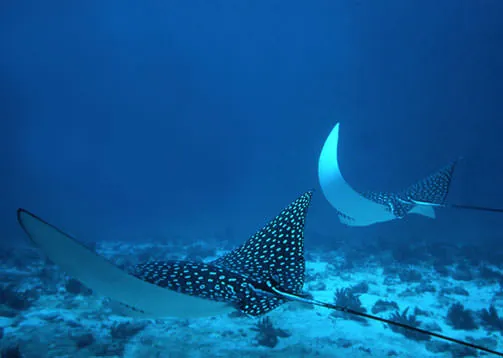
The fate of the Bahamas may rest in this weekend's meeting. Photo Erik Gauger
Thus far, nearly 100 people have registered to participate. These include representatives from Andros, New Providence, The Abacos, Bimini, Eleuthera, Mayaguana and Grand Bahama.
In addition, a number of dive operations, NGO's and eco-tourist resorts have also confirmed attendance.
Also in attendance will be the Nature Conservancy, Sierra Club, world-renowned coral pathologists, wetlands restoration specialists, and marine biologists.
Mrs. Sarah Kirkby, Secretary of the Grand Bahama Human Rights Association, said that they were "very excited about this coalition".
She continued
"This is looking like a great opportunity for the Bahamas in many ways. We have environmental experts from around the world joining forces with us and the commitment from the Family Islands has been astonishing. We can't wait to meet the people who will attend. We all seem to be experiencing the same challenges! We have heard some horror stories about their struggles with development issues."
Mr. Troy Albury, President of the Save Guana Cay Reef Association, said,
"The reports we have been getting from the rest of the Bahamas are shocking. Its really scary how similar they are to Guana Cay. This coalition is going to be really powerful. The people of Guana Cay have led the way to save their local rights and environments. Together we can do this for all of the Bahamas!".
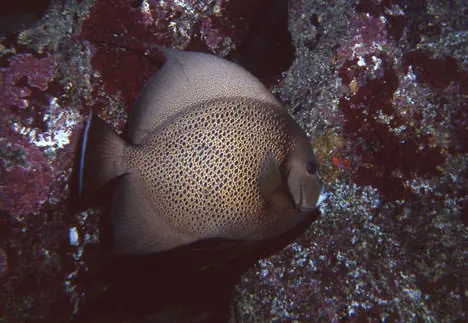
Reef fish are at danger from Guana's Proposed Megadevelopment. Photo Erik Gauger
Mr. Smith, President of the Human Rights Association said,
"Save the Bahamas will be a powerful NGO. With its local Bahamian network throughout the Family Islands, its huge international connections, the support it has received from the environmental community, it will be a strong and lasting national and international advocate to protect local rights and the environment.
Since the late 1980's, the Grand Bahama Human Rights Association has promoted local rights and was instrumental in getting the FNM Government to pass the Local Government Act helping to begin the transfer of power to the people and decentralizing the colonial dictatorship structure of Bahamian governance.
The work of the Save Guana Cay Reef Association has merged local rights and environmental issues. They are inextricably intertwined."
The object of the conference is to provide a forum for all of the diverse communities of interest to share their challenges. This will be a wake up call to politicians, in particular, Cabinet. This should be an exciting election issue for both the FNM and the PLP.
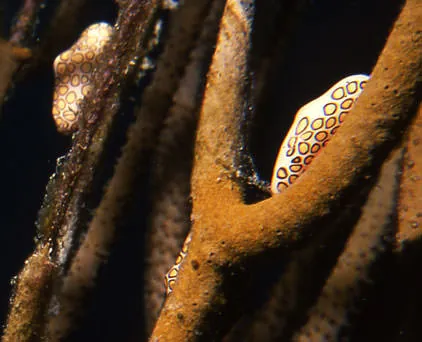
Fragile soft corals are at risk from the Bakers Bay Project. Photo Erik Gauger
The Association will push for both political parties to publicly commit to passing an Environmental Protection Act, the creation of an Environmental Protection Agency which will have teeth and effective regulatory oversight of developments by Bahamians and foreigners throughout the Bahamas.
The Association will also push for amendments to The Local Government Act to strengthen the ability of local communities to govern their own affairs.
Mr. Smith said,
"Family Island Home Rule is a must! It will come!
The Family Islands contribute hundreds of millions of tax dollars every year to the Public Treasury. They are treated like colonies and their human and physical resources are exploited and depleted by Central Government in Nassau. They are treated as second-class citizens."
The Save the Bahamas Association will become the Green Peace of the Bahamas environmental landscape.

A Tiny Island set the stage for a Nationwide backlash against unsustainable development and community mistreatment.
The conference will begin with a cocktail party for delegates to get to know each other on Friday.
On Saturday the conference will be chaired by Mr. Joseph Darville of the Grand Bahama Human Rights Association.
There will be a presentation by each group to educate each other on their challenges and needs.
Mr. Troy Albury will give an overview of the successful war waged against the Central Government and foreign development abuse at Guana Cay and Mr. Frederick Smith will give an overview of environmental law in the Bahamas.
On Sunday Kayak Nature Tours will graciously provide visits to the Gold Rock Creek National Park in Freeport, Grand Bahama and guests will have an opportunity to see the disgraceful destruction of the environment at the Disney and Gold Rock Creek Film Studio destroying the beach, wetlands and entrance to the National Park.
Mr. Albury said,
"This coalition is a water shed event for the future of the Bahamas. We are thrilled that so many passionate people have committed to become involved".
Mr. Smith concluded his comments,
"The days of wholesale development destruction and abuse of Family Islands rights is over. Both the PLP and FNM will now have to wake up and recognize our rights. It is time for a new Bahamian Development Paradigm".
September 23, 2006
Save Guana Cay Reef fever spreads throughout Bahamas as Nation-wide Coalition Meeting Looms
Earlier this month, Save Guana Cay Reef association announced that it would hold a country-wide meeting to build a coalition of similarly affected Out-Islands, whose environment and culture are all similarly being harmed by unethical relationships between the Bahamian Government and foreign developers.
Response to the meeting has been overwhelming. This upcoming weekend, hundreds of leaders from around the Bahamas will meet to discuss ways to save local Out-Island environments.
Add to that, some of the world's most distinguished coral and conservation leaders will join the Bahamians to help save their country. According to the Save the Bahamas website, "Local Rights Groups feel that there is strength in numbers, and if we could create an organization that could unify our efforts on a national scale we could all help each other."
The site continues:
The response for the "Save The Bahamas" meeting this coming weekend in Freeport has been tremendous! As a result we have outgrown our previous meeting space: The Ferry House restaurant. We will now be holding our meeting on Saturday at Our Lucaya Resort (directly across the street from the previous location). We have also expanded our meeting times to 8a.m. -5p.m., in an effort to accommodate the wide range of attendees and speakers. There will be an optional lunch available (at a very reasonable cost) or guests may choose to go elsewhere for lunch. We look forward to seeing you this weekend beginning at Yellow Tails bar and grill (at Pelican Bay resort) at 7:15 Friday evening for a casual meet and greet. Reservations are still available at Pelican Bay resort and at surrounding hotels. Thank You and See You There!
Rumors persist that Discovery Land Company intends to send its workers to demonstrate against the meeting. Let's certainly hope so.
July 21, 2006
Honorable Hubert Ingraham responds to Notes from the Road
Recently, former (note: now current) Prime Minister of the Bahamas and Abaco native Hubert Ingraham wrote to Notes from the Road to discuss our stance on Great Guana Cay.
Ingraham has often taken positions opposite of the Bahamian public, and history has treated him well for taking powerful stands on matters that would have been considered radical in its time.
In his letter to Notes from the Road, Ingraham denounced the current administration for its handling of the Great Guana Cay issue. He writes:
"...the people most impacted by the development, the residents of Great Guana Cay, were not properly kept in the picture as the Government moved to sell or long lease much if not all of the remaining public lands on the cay to the private developers of the Baker's Bay Resort. This was wrong and unacceptable.
As legitimate concerns were raised by residents concerning possible adverse impacts on their livelihoods as fishermen and tour dive operators should the proposed development damage the off-shore coral reef, the government became secretive; it withheld from the public information contained in the Environmental Impact Assessment conducted on the proposed development. This caused many people to expect the worst from the development.
The veil of secrecy continued as residents of Great Guana Cay sought to learn how their traditional access to beaches and to traditional crabbing areas falling within the proposed development zone would be preserved. Again mistrust was fostered."
The FNM must have a stronger public stance on Bakers Bay Club. The FNM has an honorable history on changing the way the Bahamas acts towards the environment. Backing the locals of Great Guana Cay will enforce this legacy.
The letter from the Honorable Ingraham included much more detail, although we will release that detail at a later date.
Coral Reefs, Marinas and Golf Courses
March 5, 2011
Coral Reef in Saipan Impacted by Golf Course
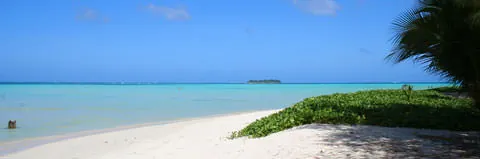
A recent survey by Dr. Peter Houk of Pacific Marine Resources Institute and the DEQ Marine Monitoring Team at Greg Norman's Laolao Bay Golf Course have revealed that 20 years after construction, dramatic negative effects on the coral reef's health have occurred.
From an article from the Saipan Tribune:
* Significant increase of seasonal brown macroalgae, as well as persistent red algae on the reef flats. This proliferation of macroalgae is considered undesirable, and has cascading impacts to other components of the coral reef ecosystem;
* Coral assemblages have shifted from larger, more structurally-complex colonies to numerous small encrusting colonies, providing less habitat for reef-dwelling organisms;
* Species richness of coral has declined throughout most of LaoLao, and is most pronounced in the eastern portion of the bay;
* Fish densities have shown significant declines, mainly a shift from large-bodied fish to smaller ones;
* The functional diversity of fish has also declined significantly, meaning reduced grazing efficiency on the reef associated habitats, and more space for macroalgae and undesirable substrate to grow. The full article on the Laolau Golf Course and Coral Reefs can be read here.
These negative effects are typical of the types of environmental consequences of golf courses built in ecosensitive areas, and precisely the type of effect that coral scientists warned prior to the approval of the Bakers Bay Golf & Ocean Club in the Northern Bahamas.
January 01, 2010
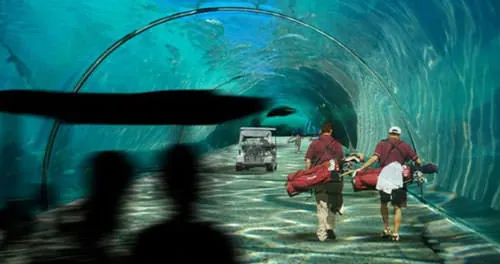
Floating Golf Course Inside Maldives Coral Reef will have Zero Impact on Environment, according to Developers
A developer in the Maldives has released a press release saying they will be building a floating golf course, inside the ring of a coral reef. They claim that the coral reef golf course will have zero environmental impact.

The fact that several news agencies and blogs reported this as fact is absurd. Although, I think we should focus on the story by Bridgette Meinhold, who writes in the green design website, Inhabitat, "Threatened with rising sea levels from climate change, the island nation may be doomed to a watery grave unless it transitions to floating developments. Developed by Dutch Docklands and designed through a collaboration between golf course developer Troon Golf and Waterstudio.NL, the zero-footprint solar-powered golf course will be one of the first floating developments..."
Meinhold, who appears to have taken the press release at face value, has fallen for a classic trick that golf developers employ to confuse the public. A floating golf course, by all means will have a devastating effect on the nearby coral reef. This story plays out again and again around the world.
The developer has, and probably does not require, an ounce of an environmental impact statement, but, through bloggers and journalists, is able to spin an audacious golf plan in the middle of a coral reef as a positive way to save an island nation! For all we know, the fertilizer and human waste will be dumped directly in the coral reef.
But Meinhold fell for the idea that the developer spun, that this golf course development is actually a good thing for the Maldives, because it will save the island nation from certain doom once sea levels rise.

This is the lowest level of greenwashing I have ever heard, and I suspect that Bridgette Meinhold will want to amend her article with notes on the impact that golf courses have on coral reefs. If Inhabitat hopes to live up to their credo that "design will save the world," they should live up to that credo by publishing real articles on sustainable development, not repurposing greenwashed press releases from new spins on megadevelopment environmental fails.
Note also that Meinhold calls the golf course "zero-footprint," an absurd statement, considering this golf course will likely cause permanent damage to yet another coral reef.
April 21, 2011
Golf Course Megadevelopment Threatens Baja Coral Reef
Robert F. Kennedy Jr cowrites article on Mexican golf development.
But now Hansa Baja Investments, a Mexican subsidiary of the Spain-based real estate development firm Hansa Urbana, plans to build a massive resort complex directly north of the National Marine Park. The developer has proposed what amounts to a sprawling new city on the scale of Cancún: 10,000 acres including 30,000 hotel rooms and residential housing units, at least two golf courses, 2 million square feet of office and retail space, a 490-boat marina and a private jet port.
Read the article here.
January 01, 2010
Mangroves and Coral Reefs
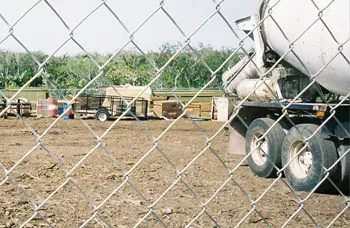
Construction site at Bakers Bay Club. Photo courtesy SGCR.
Throughout the Caribbean in the last 20 years, poorly managed coastal land has been threatening coral reefs. In particular, large developments and government projects have cleared acres of coastal mangroves, in order to bring hotels, airports and golf courses closer to the water.
The effect has been stunning.
Mangroves are rich in biodiversity. In the Abacos, which are the first stop for birds along the Atlantic flyway, rare birds nest in these mangroves. More importantly for the local habitat, mangroves are nurseries for lobsters as well as the fish who eventually inhabit the coral reef. Even more importantly, the mangroves filter the rainwater run-off.
This is the key for Great Guana Cay, because the mangrove forests of Great Guana Cay have now been removed by the Bakers Bay Club. Mangrove forests are essential at absorbing the nutrients produced by the land. Coral reefs require a nutrient-poor ecosystem in order to survive. By removing the mangroves from Great Guana Cay, Bakers Bay Club has engaged in a mistake seen again and again throughout the Caribbean.
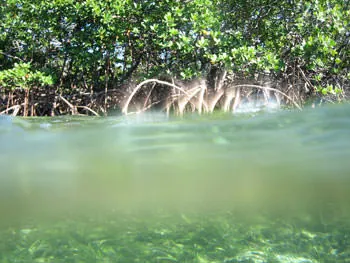
Swimming up the mangrove river, "Joes Creek" located on the crown land of the Bakers Bay development. Photographed by Jane McClanahan.
Nutrient-rich water, created by removal of mangroves (or by altering the natural landscape of terrestrial flora in general near coral reefs) increases the nutrients entering the porous skin of the coral polyps. The coral polyps cannot contain an explosion of thick algae, which quickly suffocate the corals, and kill the reef. These algal blooms disrupt the balance of the reef, crashing not only the corals themselves, but the fishes and invertebrates upon which the ecosystem depends.
It was reported by locals who met with Discovery Land Company's CEO at an informal meeting at Nipper's bar, that he asked them why they were so interested in saving the mangroves. Even at this meeting held in 2006, a CEO of a company whose project is at risk for the threat it poses to mangroves and coral reefs, did not even understand why.
This attitude has been consistent throughout the Caribbean, resulting in further degradations of coral reefs throughout the region.
In her excellent critique of modern tourism trends in the Caribbean, Last Resorts, Polly Patullo offers several examples of the dangers posed by removing mangroves. I quote an extensive passage while firmly recommending this book to everyone interested in the region.
"McKinnon's Saltpond in Antigua was no exception, even if it had earlier been subjected to damage from oil spills from a now abandoned refinery. Yet, like thousands of other stretches of mangrove throughout the Caribbean, the attractions of unused land close to stretches of fine sandy beach, were too great a temptation for developers to ignore. In the mid 1980's, the St. John's Development Corporation, a statutory government body, and an Italian investment company, planned to build condominiums and a marina on land that included the salt pond.
Before this could happen, an environmental impact assessment was made, which recorded, among other things, that the condition of the reef at that point was, "fair" and that the salt pond prevented the outflow of polluted fresh water into the two bays. It recommended various remedies to limit the environmental damage that would be incurred by the Marina Bay Condominiums project.
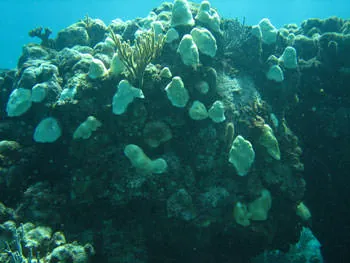
Corals near the development site are already showing stress. This photo shows coral bleaching, a climate change related stress. Photographed by Jane McClanahan.
The report was shelved and the project went ahead. Part of the pond was reclaimed by dredge and fill methods and the condominiums were built. Within a few years, the impact of these changes had been felt: divers confirmed that there was dead coral on the reef, together with fewer fish, turbid water, and patches of dead sea grass around the channel.
The salt pond, which had become a swamp, also suffered. Its mangroves began to die, because untreated sewage from hotels, was periodically emptied into the swamp. For several consecutive summers following the draining of the pond, thousands of fish died from lack of oxygen, their bodies rising to the surface of the rotting swamp.
To solve this problem, the government pumped seawater into the swamp. The 'dilated' sewage spilled out of the swamp and ran down the beaches before escaping into the sea to join the frolicking tourists.
There were also reports of raw hotel sewage being pumped directly into the sea that laps at its frontage, and so, as one observer noted, 'dispersing offal among the tourists, who are so happy to be in the sun, they do not notice what else they are in.'"
The majority of Great Guana Cay's mangroves were removed by the Bakers Bay Club. This is a travesty. But there is hope. Locals and supporters of the opposition to the development have expressed interest in restoring this habitat after the developer leaves. Successful mangrove reintroduction projects have been successful in the past. And a motivated local population makes the hope for restoring the mangrove habitat that much closer to a reality.
09.25.07
Caribbean Coral Nears Extinction, Runoff Responsible
Time Magazine discusses the role of development runoff in the death of corals in the Caribbean in a recent article on the subject. The article states, "...Six species of reef-building coral could vanish from the Caribbean due to rising temperatures and toxic runoff from islands' development, according to a study released Thursday."
The importance of runoff and mangroves destruction in the health of coral reefs was almost never discussed in the media only a few years ago. But they are catching on.
February 23, 2007
New Photo Horrifies Locals, Scientists

Photo Courtesy SGCR
A new photo reveals the rate of development on the northern end of the Bakers Bay Club development. This photo, which only shows about half of the development, reveals the construction pattern for the golf course and many of the mansions.
The photograph reveals a rate of construction which is leaking harmful nutrients into the reef at a rate that has likely already caused damage to a reef which scientists call the 'finest example' in all of the Bahamas. The photo also reveals a light white streak in the bottom half of the image, in the Sea of Abaco. That is silt escaping from the silt curtain.
In the 1980's, Disney and Premiere Cruiselines dredged here, and the photo reveals their massive deepwater dredge operation in the very bottom of the image.
January 01, 2010
Global Coral Issues Report on Bakers Bay
Internationally recognized coral scientist Tom Goreau has issued a statement regarding the Bakers Bay development on behalf of the Global Coral Reef Alliance. Below is the complete text of the statement:
Thomas J. Goreau, PhD
President, Global Coral Reef Alliance
The massive destruction of mangrove forests in northwestern Guana Cay, Abacos, by the Bakers Bay Development Scheme ("Passerine at Abaco Resort Community Development") to create a huge marina and golf course in mangroves and low lying forest areas, and to nearly quadruple the number of houses on the island, should be stopped immediately before it destroys what is left of the coral reefs and fisheries of the region.
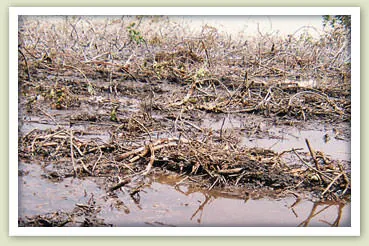
Mangroves, essential to Guana Cay's fisheries, have been torn apart only feet from the vital estuary that feeds the relationship between the island's reef, seagrass beds and saltwater flats. The Bahamas needs sound economic development that protects its environmental resources, but this is a classic case of the sort of developments that have been allowed to cause untold damage in the past and which should no longer be permitted, now that the cumulative damage is clearly visible, and will be made far worse by climate change in the near future.
Much stronger environmental laws and oversight are urgently needed because the Bahamas has permitted developments whose environmental costs have neither been recognized nor compensated for, and the accelerating pressures of global climate change make continuation of such policies a fool's paradise of profiting today and ignoring all the consequences that will strike tomorrow.
Large areas of critical mangrove habitat on the site have already been bulldozed and burned in order to create space for a golf course, marina, and more than 400 houses plus hotel accommodations, in an area that was flooded by the last hurricane. These developments already have, or soon will, destroy critical nursery areas for many species of reef fish, conch, and lobster.
Of critical importance are the coral reefs, lying just offshore from the areas being destroyed for this development, which rank among some of the best left in the Bahamas, and which are critical for the livelihood of Guana Cay residents. These reefs are extremely vulnerable to any nutrients that will inevitably wash onto them from the adjacent fertilizers of the golf course and the inadequately treated sewage of the more than 400 houses and other residential units that will be constructed on this currently uninhabited site. Coral reefs are the most nutrient-sensitive ecosystem on earth. They are adapted
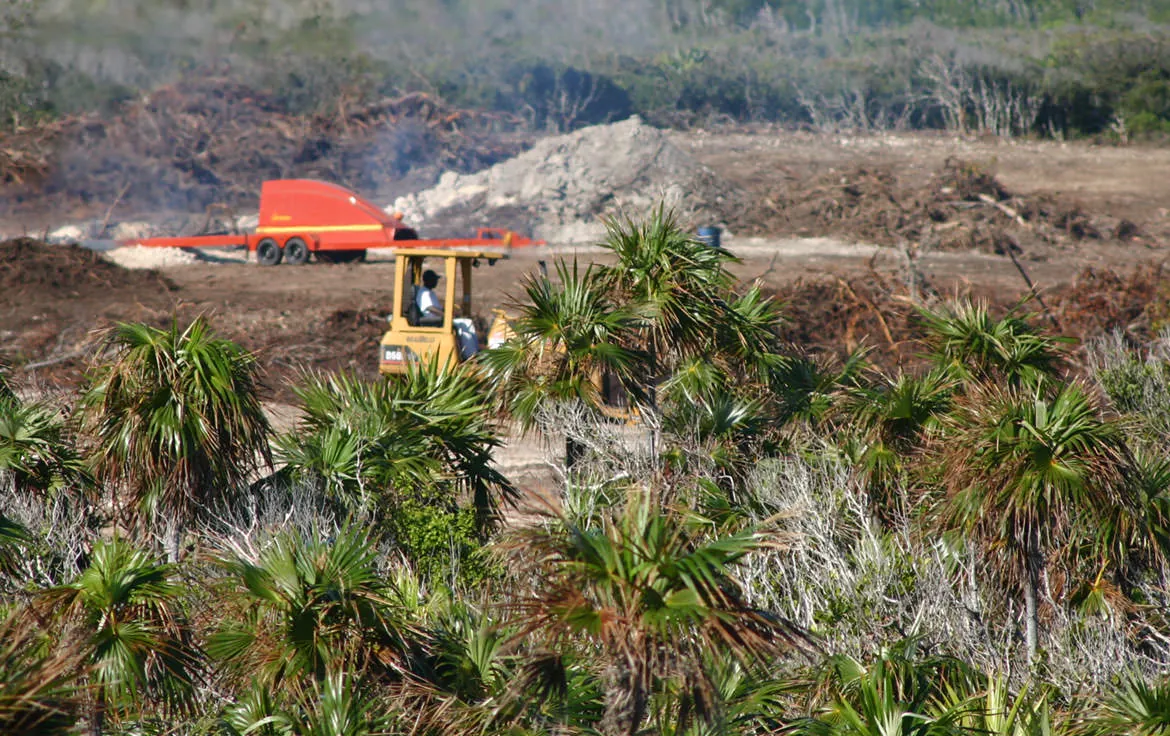
Corals can survive only a light footprint. Image of construction crews in the early days of the Bakers Bay development.
to clear, clean waters, and are overgrown and killed by weedy algae at lower nutrient levels than any other habitat. We now know that it takes only 0.014 parts per million of nitrogen and only 0.003 parts per million of phosphorus to turn healthy coral reefs into masses of algae devoid of all marine life except a couple of algae eating fish. My ecological assessment of the site indicates that the entire area is already close to this threshold even before the massive new fertilizer and sewage releases from this project begin.
My assessment of this site is based on personal observations of the algae and over 50 years of experience of studying the role of algae on coral reefs, and the impacts of nutrients on them.
I watched the coral reefs of Jamaica and many other places around the world destroyed by algae overgrowth caused by nutrient buildup in coastal waters from fertilizers and inadequately treated sewage, studied the impacts of nutrients on algae growth.
I wrote the review on the impacts of land-based sources of nutrients on coral reefs and fisheries, and how to control them, for the United Nations Expert Meeting on Waste Management in Small Island Developing Countries.
In addition I also wrote the National Coral Reef Assessment and Management and Restoration Strategy for the Turks and Caicos Islands, the Bahamas' closest neighbour and the most similar country ecologically. Turks and Caicos is the only country in the world that forces all developers to recycle all their waste waters on their own property.
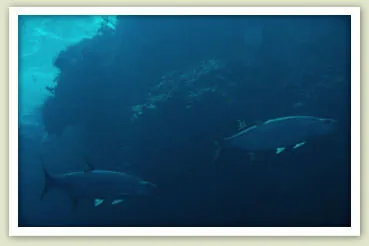
Tarpon swim along the Great Guana Cay barrier reef. Photo by Erik Gauger
I dived at several coral reef sites near the Bakers Bay development on February 9 2007. It should be noted that this is the coldest and driest time of the year and therefore the corals are the least affected by bleaching, diseases, and algae overgrowth, in contrast to the earlier independent assessments made at warmer times of the year by Dr. Michael Risk and Dr. James Cervino.
Nevertheless, my observations completely back their conclusions, and refute the claims of the environmental impact assessment made by the development's hired consultants, which irresponsibly downplay or ignore the impacts to the reefs and fisheries that the development would inevitably cause.
Although widely regarded as some of the best reefs remaining in the Bahamas, these reefs have clearly suffered from the cumulative impacts of accelerating stress from increasing nutrients over the last decade.
Older photographs of these reefs taken by Erik Gauger show little or no algae, but at present there is about 2-3 times more bottom coverage by algae than live corals, even though these observations were made at the season of minimum algae abundance. The buildup of algae and bacterial slime will rapidly smother most of what is left once new nutrients are added.
At present there are still large numbers of sand producing algae that build the beach, but as nutrients increase these will be overgrown and killed by weedy algae that produce no sand, so that the new supply of sand will vanish while the corals that protect the beach from waves die from algae and disease, as sea level rises, and while hurricanes greatly increase in strength.
Especially worrisome is the high abundance of weedy algae species indicating high nutrient levels, especially Cyanobacteria (blue-green algae, but which here are predominantly slimy and reddish in color) overgrowing dead and dying corals, sea fans, and gorgonians. This problem will get far worse when the water warms and more nutrients are added.
That this algae abundance is due to excessive buildup of nutrients from existing developments in the Abacos and not due to over-fishing is clear because the fishes are dominated by algae-eating surgeonfish and parrotfish, but they are unable to control the algae buildup from smothering and killing corals.
Local fishermen who have known these reefs for decades say that the algae buildup has happened over the last 5-10 years. In addition the water on the leeward side of the island, where the Marina entrances will be located, is already chronically green, indicating high nutrients. It is clear that a long term plan to identify and map all the nutrient sources to the coastal zone, and the use of modern methods to recycle all of the nutrients on land and prevent coastal pollution need to be used in the Bahamas.
Most of the corals are already gone, and it is only a matter of time for the rest if the current path of development continues in which all the waste nutrients go into the ground and then into the sea. Instead new methods need to be used to recycle the nutrients on land and feed them to plants and forests that are clearly starved of nutrients.
Several new and highly efficient methods to do just this will be presented on May 7 2007 at the Partnership of New Technologies for Small Island States at the United Nations Commission on Sustainable Development, which I am organizing and invite the Bahamas delegation to participate in.
It is therefore clear that nutrients are already excessive and must be reduced through improved sewage management and nutrient recycling, not only in Guana Cay, but also in the Marsh Harbour region, if these reefs are to survive in the long run.
It is equally clear that any conversion of the site from natural mangrove and forest to marinas, golf courses, and houses will inevitably add huge new nutrient sources from fertilizers and sewage that will swamp the existing nutrient sources, and very rapidly kill the remaining reefs and fisheries within a few years.
Not only should the Baker's Bay project be stopped, the developers should restore and mitigate the damage they have caused, and in my view they should be required to pay compensation to the people of Guana Cay for the destruction they are causing to local reefs and fisheries.
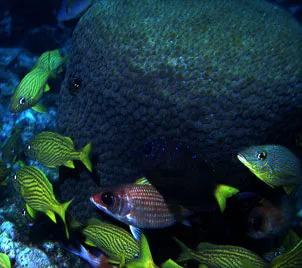
Photographs taken before Disney and Discovery Land Company reveal the story of a reef before unchecked development. Photo by Erik Gauger
In addition to damage from algae there has clearly been a large amount of mortality several decades ago of the magnificent elkhorn and staghorn coral forests that my grandfather photographed in the Bahamas in the 1940s. Large dead elkhorn corals dominate the shallow water, and the amount of living ones are small, young, and less than one percent of what they were.
Not a single live staghorn coral was found, although their dead broken skeletons are common on the bottom. These two species are the most important in protecting the shoreline from erosion. There has clearly been a large amount of partial mortality of the large head and brain corals from coral bleaching caused by global warming, and much of this took place in 2005.
However, one unusual feature of these reefs is the unusually high abundance of young corals of the uncommon species Manicina areolata or "rose coral".
I have compiled long term satellite temperature records for the Bahamas, and the trends are clearly upwards, so severe bleaching events, like hurricanes, are bound to become more frequent and intense in the future.
Given the fact that the Bahamas is the most vulnerable country in the Atlantic to global warming and global sea level rise, it is crucial that the Bahamas develop a strong leadership voice in international efforts to stop human-caused climate change.
Given that it would be the first Atlantic country to be drowned, its silence at international climate change conferences has been astonishing, as if people would rather hide their head in the sand than face the facts confronting them and stand up for their own long term interests.
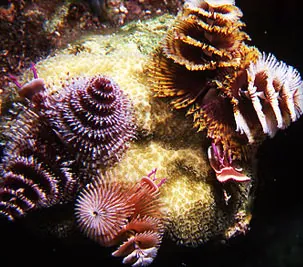
The Guana Cay reef is a unique and beautiful treasure; more than a tourist draw for Guana Cay, it is of international importance.
The Bahamas is now racing down the same unsustainable track which has destroyed the reefs of Florida, and where 50 mile long blooms of slime have smothered the reefs next to sewage outfalls, and where hiding the sewage underground by deep well injection of wastes has been claimed to be the "dilution solution to pollution".
It is not: the sewage has been held back for a few years underground but is now pouring out of the deeper rock layers into the sea, causing blooms of algae and bacterial slime that are now killing reefs from the offshore side. Tragically, the Florida developers and sewage injectors are now bringing their methods to the Bahamas, which is even more vulnerable.
South Floridians have a whole continent they can move to when the rising seas drown South Florida, but Bahamians do not have this option and must protect what they have.
One could hardly imagine a worse site for such a development if we desire to preserve our coral reefs, mangroves, and fisheries. This project would only temporarily enrich a handful of speculators and their hired help at the price of severe long-term costs to the Bahamian environment and people, like the developments underway in Bimini and so many other places.
It should be stopped immediately before it causes further harm. If allowed to continue this development will devastate the resources from which the people of Guana Cay live, for the benefit of foreign speculators who are unlikely to ever see the consequences of their irresponsible actions.
It is typical of an outdated model of development that enriches large foreign investors with no real long-term concerns about the future of the Bahamas, and will provide mainly low paid jobs for Haitian immigrants.
In sharp contrast, Guana Cay is a model for small-scale locally owned tourism, which creates a completely different ambience that more tourists prefer, causes far less environmental damage, and in the long run is more economically beneficial to the Bahamian economy.

A team organized by Global Coral Reef Alliance examines a 200 year old coral structure just feet off the shore from Bakers Bay Club.
This reef structure, stressed and 'bleached' by rising sea temperatures in this 2006 photograph by James Cervino, faces insurmountable obstacles posed by the Bakers Bay Golf course. I urge the Government of the Bahamas to promptly enact and enforce environmental laws to protect the Nation's natural resources before they are further destroyed or degraded, and in particular to immediately stop this damaging "development" scheme.
It is astonishing that the Bahamas is one of the few countries in the world with no real laws to protect the environment, especially the coral reefs and mangroves that are so crucial to it. For years long-term divers in the Bahamas have been telling me how fast the reefs are disappearing.
In fact the damage is now so extensive that even saving and strictly protecting ALL remaining habitat in good condition will not be enough. Large-scale restoration of damaged coral reefs and mangroves will be needed if the country is to maintain its shore protection from rising sea level, its fisheries, and its ecotourism value.
A long term sustainable environmental policy that is enforced is the badly needed first step. I have voluntarily looked at this site, with no payment for my time, because of the urgency of the issues involved in this particular project, which has achieved worldwide notoriety for its destructiveness, the incompetence of its environmental impact assessment with regard to marine impacts, the give-away of Bahamian Crown Lands to foreign developers, and the near unanimous opposition of local residents.
I have dived longer and in more reefs all around the Caribbean, Pacific, Indian Ocean, and Southeast Asia than any other marine scientist in the world, and advise international agencies, governments, non-profit community groups and environmental conservation groups, hotels, and dive shops on protecting and restoring coral reefs all around the globe.
My only personal consideration is the preservation and restoration of the coral reefs for future generations.
Mangrove Conservation
April 22, 2009
From Mangroves to "Disney Main Street"
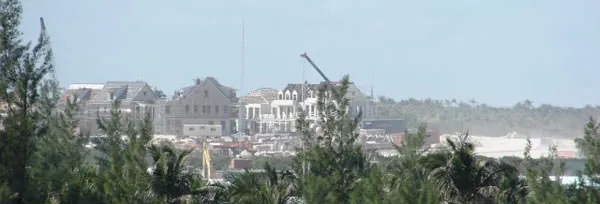
Abaconians and other residents of the Northern Bahamas are beginning to question the Bakers Bay Club from a cultural perspective, as members of Save Guana Cay Reef have since the beginning.
This image from November 2008 shows the marina village, which is built on a terraformed landscape which was formerly the island's last remaining mangrove habitat.
Locals and visitors, seeing the construction for themselves, are beginning to say, "That doesn't look Bahamian" and "It looks like Disney's Main Street." And "I had no idea it was going to be so tightly packed together."
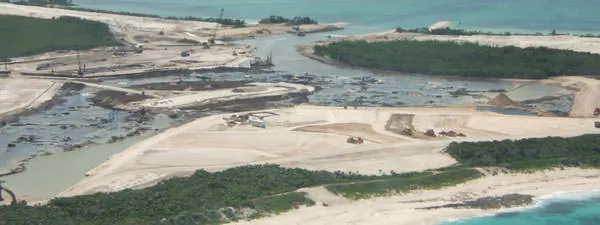
The Marina site in 2007. The marina is dangerously close to the coral reef. Since the island is made of porous limestone, the nutrient overloads and pollutants seep directly into the reef — the classic combination of toxic death for coral reefs.
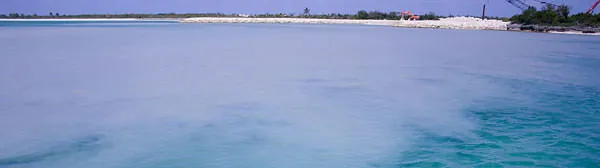
In 2008, I photographed massive silting from the construction site. In addition to the nutrient overload caused by this development, this silting kills corals.
August 5, 2008
Mangrove Loss and Climate Change—A Global Perspective — Article from World Rainforest Report mentions Great Guana Cay
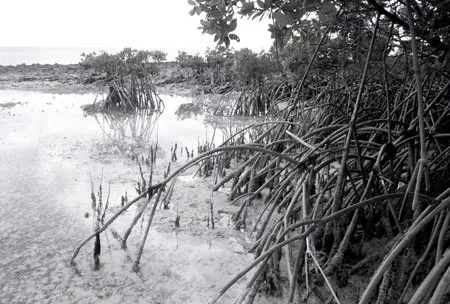
Guana Cay mangroves under threat
Mangroves are the rainforests by the sea. Large stretches of the sub-tropical and tropical coastlines of Asia, Africa, Oceania, the Americas and the Caribbean are fringed by mangroves, once estimated to cover an area of over 32 million hectares.
Now, less than 15 million hectares remain—less than half the original area. The importance of the protective mangrove buffer zone cannot be overstated.
In regions where these coastal fringe forests have been cleared, tremendous problems of erosion and siltation have arisen, and terrible losses to human life and property have occurred due to destructive hurricanes, storm surges and tsunamis. Today there is a growing urgency to recognize the importance of conserving and restoring protective mangrove greenbelts to lessen the dangers from future catastrophes, because as sea levels rise so will the frequency and intensity of hurricanes and storm surges.
Mangroves can buffer against the fury of such destructive storms, protecting those settlements located behind a healthy mangrove fringe. Mangrove Action Project (MAP) is working with other organizations in the global South towards restoring degraded and cleared mangrove areas as a high priority. MAP is especially interested in restoring some of the 250,000 ha of abandoned shrimp farms located in former coastal wetland areas, especially in Asia and Latin America.
But, even more importantly, MAP is working to help conserve and protect existing mangrove wetlands around the world. Conserving existing mangroves and restoring the vast areas of degraded and cleared mangrove wetlands will serve as a partial solution to global warming. Our planet perhaps faces one of the greatest threats to life as we know it.
This crisis is being fueled by human induced climate change. Because nearly half of humankind today lives in cities and settlements located along the now vulnerable coasts, global warming and consequent sea level rise cannot be ignored. Already evacuations of low-lying islands have begun in South Asia and the South Pacific Islands.
It is expected mass evacuations of millions of coastal residents will occur within the next 50 years as sea level continues to rise as a result of the greenhouse effect caused by excessive carbon gas emissions. Nevertheless, mangrove wetlands are often the first line of defense, helping to secure the coasts against erosion and storms.
Mangroves are also one of nature's best ways for combating global warming because of their high capacity for sequestering carbon. This is a characteristic of mangrove wetlands that now demands our most immediate and undivided attention.
One of the greatest contributions that mangroves may have to offer is their great propensity to sequester carbon from the atmosphere and store this in their wetland substrate. According to the Feb. 2007 issue of National Geographic, "Mangroves are carbon factories… Measurements suggest that mangroves may have the highest net productivity of carbon of any natural ecosystem (about a hundred pounds per acre per day)…"
Mangroves have been seriously undervalued by those government agencies responsible for their protection and management, as is so clearly evidenced in the Caribbean, especially in the Bahamas where such travesties in shortsighted developments are now occurring at Guana Cay and Bimini Islands. This combined lack of conservation ethic, shortsighted greed and weak law enforcement have allowed massive losses of these coastal wetlands, with one huge, hidden cost arising from the oxidation and release of stored mangrove carbon.
From a study performed by Dr. Ong of Universiti Sams in Malaysia, it was found that the layers of soil and peat composing the mangrove substrate have a high carbon content of 10% or more. Each hectare of mangrove sediment might contain nearly 700 metric tons of carbon per meter depth.
In building large numbers of shrimp farms or tourist complexes, the resultant clearing of mangroves and subsequent excavation of the mangrove substrate could result in the potential oxidation of 1,400 tons of carbon per hectare per year.
Again, according to Dr. Ong, "Assuming that only half of this will become oxidized over a period of 10 years, we are looking at the return of 70 tons of carbon per hectare per year for ten years to the atmosphere. This is some 50 times the sequestration rate.
This means that by converting a mere 2 percent of mangroves, all of the advantages of mangroves as a sink of atmospheric carbon will be lost…" According to the latest study by the UN's Food and Agriculture Organization (FAO), the current rate of mangrove loss is around 1% per annum—or around 150,000 ha of new mangrove area loss per year.
This translates to around 225,000 tons of carbon sequestration potential lost each year, with an additional release of approximately 11 million tons of carbon from disturbed mangrove soils each year. Obviously, this is an immense problem requiring our concerted action.
Not only are we losing the important potential for carbon sequestration offered by the mangroves, but we are also seeing the release of major quantities of polluting gases from the disturbed mangrove substrate itself.
This continued clearing of mangroves for whatever reasons must now be perceived in an entirely new light…a light that illuminates far beyond the dark crevices of development for convenience and profit to a future for life and a sustainable living on this now endangered planet…this home we call our Earth.
By Alfredo Quarto, Executive Director, Mangrove Action Project
July 24, 2008
Nature Magazine on Mangroves
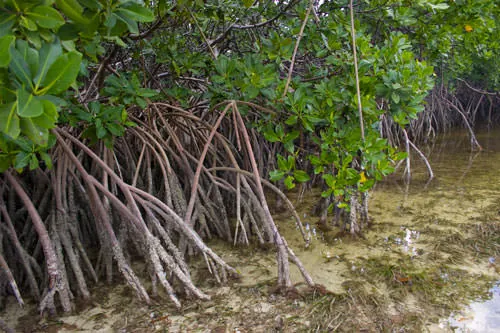
The mangroves of Great Guana Cay have been removed to build a marina.
Nature Magazine discusses the value of coastal mangroves to fishing. Those who have been decrying the destruction of mangroves at Bakers Bay have been saying the same thing for four years now — that the Bakers Bay Club's destruction of Great Guana Cay's mangrove fisheries will lead to a decline in fish populations, upsetting both reef tourism on the reef and fishing near Bakers Bay.
The authors write, "This economic value reinforces the need for governments to preserve mangroves, the researchers say. "Without a coastal mangrove ecosystem, the cost of food can only increase," says Aburto-Oropeza."
Nature Magazine Article on Mangroves
07.06.07
Updates in Photographs
The silt curtains are ineffective. This image shows silt on either side of the curtain. Constant silt in pristine marine areas can destroy the marine environment. Silt is particularly harmful to corals.

Save Guana Cay Reef advertises their struggle on signs which are displayed on private property.
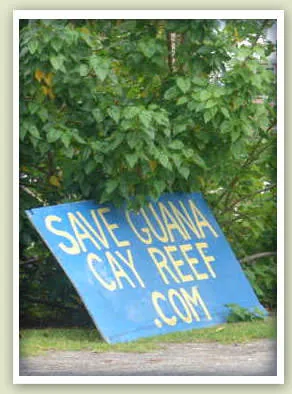
Bakers Bay Club doesn't like the signs. Often, potential buyers will ask what the signs are about. When Bakers Bay Club employees try to change the subject, often the potential clients will try to find out themselves. Some of these clients become advocates for saving the island from the Bakers Bay Club.
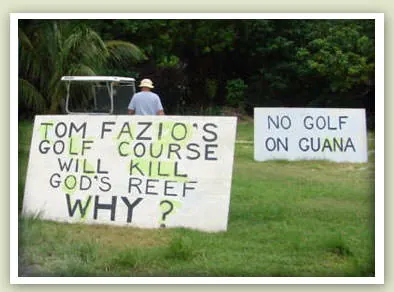
This is an image from the height of sea turtle nesting season. Bakers Bay employees rake the oceanside beaches near the northeastern tip of the island on a regular basis, even at the very height of sea turtle season.
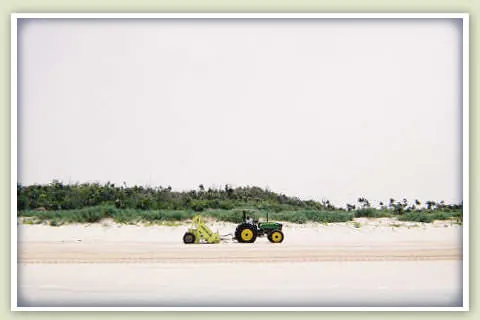
07.04.07
Crabbing Grounds Are Now Gone Forever
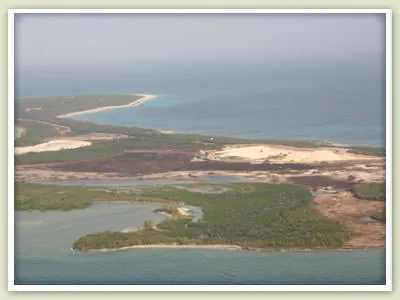
The location of the crabbing grounds is now completely destroyed. According to locals on the island of Great Guana Cay, the island's crabbing grounds have been lost to the Bakers Bay Club. For over 200 years, the people of Great Guana Cay relied on this area for subsistence.
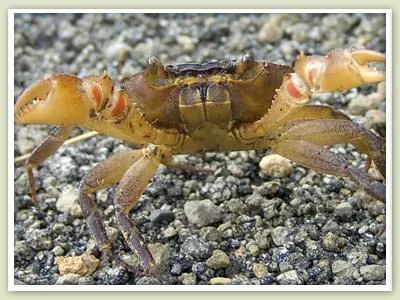
It is ironic that in Kathleen Sullivan-Sealey's research for the Bakers Bay Club and the University of Miami, her team writes, "Conservation techniques employed to control cat populations on islands have been successful in preventing extinctions and restoring ecosystems in the past decade...In order to prevent further negative impacts on bird, reptile, and land crab populations on Great Guana Cay, control and eventual eradication of feral or stray cats is suggested."
Sealey's recommendations on feral cats is laughable, especially since the crabbing grounds have been lost, not to cats but to the bulldozer that paid for her research. Eliminating feral cats from sensitive areas is of course a good practice in environmentally sensitive areas; but if the crabs the programs are trying to save are lost, what is the point?
Interestingly, the U of Miami report explains that feral cats didn't really exist on the Bakers Bay property until development began. From a common sense perspective, I would agree with this. The terrain on that end of the island was hardly suitable for travel by cats. Here is a quote from Sealey's plans for Great Guana Cay cats:
"Plan for Controlling Cat Populations on Great Guana Cay: Our goal is to eradicate feral cats on the island, and continue trapping to monitor the introduction of new cats. The use of 15 cage traps has been approved by Mr. Pinder, Director of The Bahamas Ministry of Agriculture. These traps will be loaned by Mr. David Knowles, and will be placed at various locations around the Baker's Bay Club property. The traps will be baited with fish and catnip, and checked daily. Hand-capturing will also be attempted. Dr. Derek Bailey, a veterinarian based in Marsh Harbour, will be assisting with cat disease testing, sterilization, and euthanasia."
06.27.07
Discovery Land Company Falsely Advertises their Unsustainable Marina is a Blue Flag Marina
"Baker's Bay Golf and Ocean Club, located on the northern end of Great Guana Cay in the Abacos will comprise an exquisite residential community of 585 stunning beachfront and ocean view acres, 175 custom home sites and 183 high-end single-family developer residences.
The development will also include a villa-style hotel, private golf club, 18-hole Tom Fazio-designed private golf course and a 33-acre marina village with a 158-slip "Blue Flag" marina." — From Bakers Bay Club Press Release
The Bakers Bay Club released a press release stating that its marina had been awarded the Blue Flag designation. This is one of several false statements in which Bakers Bay Club has attached itself to the authority of the Blue Flag group. But Bakers Bay Club has indeed not been awarded Blue Flag designation. You can read more about Blue Flag here.
The Blue Flag group does consider wider environmental implications in its assessment.
July 22, 2006
The Orchid Hothouse of Death
Discovery Land Company, the developer of the Bakers Bay Club has been advertising its greenhouse.
The greenhouse is being used to 'save' orchids and other plants from when the developer bulldozes one of the most important ecological zones in the Bahamas. The Bahamian press, which is uneducated on environmental matters, equated the saving of orchids to a green developer.
Bakers Bay Club is bulldozing acres of a unique terrestrial ecosystem, one that the EIA for the development admits is a vanishing ecosystem.
Orchids beware. Bahamian press are wooed by the Bakers Bay Club greenhouse, which is a red herring for genuine ecological issues regarding the development.
Photo courtesy SGCR.
The botanical collections at Bakers Bay Club clearly sidesteps the primary environmental issues, and appears to be used as a red herring to divert genuine concerns about the coral reef and mangroves of the island. Bakers Bay Club has collected some orchids and preserved them in a greenhouse, wooing many in the media into thinking they are careful land stewards.
That a few orchids were spared the bulldozer scarcely compensates for the inevitable alteration of Great Guana Cay's ecosystem during the massive terraforming and dredging that would accompany the construction of their golf course, marina, residential units and service facilities. The orchids, incidentally, are not endemic to Great Guana Cay, although the public relations campaigns at Bakers Bay Club make it appear they are. According to Keith Bradley, a former botanist at the Bakers Bay Club, the orchids Bakers Bay Club are 'saving' are actually quite common in the Bahamas.
Bradley writes, "There are a number of common species and these are the ones on Guana. These are Encyclia boothiana, Encyclia rufa, Cattleyopsis lindenii, and Oncidium floridanum. There is also a common species that may or may not be native, Oeceoclades maculata. There is one species which I have indicated as rare and needing special protection, Tolumnia (Oncidium) sasseri. It is known otherwise only from Abaco and Andros.
In truth though, taxonomists who have studied this genus carefully don't think it is a good species, instead being the more common Tolumnia (Oncidium) bahamensis. I would tend to agree."
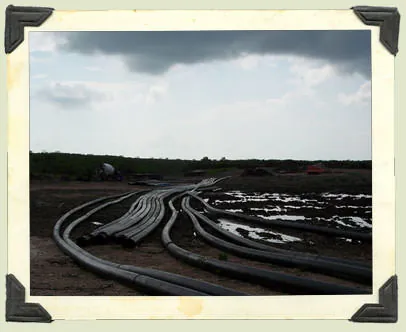
October 27, 2005
Of Marinas and Mangroves
"Contrary to prevalent rumors, Joe's Creek, the mangroves and the Guana Cay bonefish flats will all be preserved and not altered by development." — Advertisement from Discovery Land Company's Bakers Bay Golf and Ocean Club. Written on October 27, 2005.
Below the star-speckled surface, greenish orbs by the thousands pulse in sync. Grand cathedrals of roots rise from this metropolis of the weird. Its woody columns are inlaid in horned shells that move slow, like a golf cart in search of a lost ball. Fishes of many forms pass beneath these spires. As your keen eye wanders upward these spires, you will perhaps find an ivory butterfly form — an encyclia orchid — dangling like an angel, and even higher a green bird with a painted face — a green heron, whose wading demeanor is almost regal.
But all of these things, you will find only in a very subtle context. For this place, draped in layers of green, is so subtle a place that for most of history it was considered the dredges of the world.
This place, this lovely place is an Abaco mangrove.
Mangroves constitute most of the Bahamian Abaco Islands. Fly over in a plane, most of the island is mostly submerged at high tide.
The mangroves so dominate Abaco's "land" that the island has produced a fair trade out of a type of rugged tourism called bonefishing — saltwater flyfishing concentrating on the slim and transparent fish who meander these flats.
A mangrove is a community of salt-tolerant plants and trees that live in the muddy tidal flats of our world's tropical regions. These are a complex ecological buffer zone that serve to stabilize the land as well as feed the sea the bounties of the land. Equally, the mangroves act as the nursery of the sea. Sharks bear their young here. Coral reef fishes begin their awkward lives between the roots of giant mangrove trees. Molluscs grow.
The mangrove is part of a complex triangular relationship with the seagrass community and the coral reef.
Perhaps most important, the mangroves absorb excess nutrients before they make it to the nearshore environment. For many of these environments, foremost among them the coral reef, this absorption helps buffer them against their killer — excess nutrients.
The small islet of Great Guana Cay features its own mangrove systems. The southern mangrove system has recently been ripped out by a developer on the southern end of the island, which leaves only the larger mangrove system on the northern end of the island.
Enter the Discovery Land Company and their Bakers Bay Golf and Ocean Club. Here on the northern end of the island, the Discovery Land Company is going to rip out a gigantic swath of the last mangrove system on the island, and dredge out a gigantic marina — 180 slips. According to the Discovery Land Company's own website, some slips will be for sea-cruisers up to 200 feet long.
The consequences of this marina are far-reaching for the conch-fishing grounds, the bonefishers, the coral reef, the island's bird foraging habitat and the terrestrial ecosystem itself. Once the mangrove goes, so will the island's ecology. So how is it possible that the developer has said, "Contrary to prevalent rumors...the mangroves...will all be preserved and not altered by development."
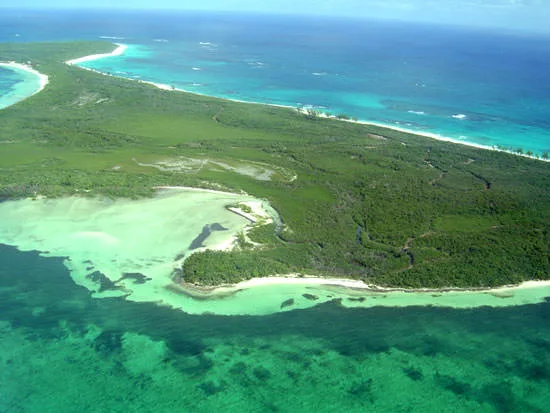
Photo courtesy Lory Kenyon. A view of Joe's Creek, the bonefish flats and the mangroves
Perhaps what they mean is that they will save trees of one of the mangrove species. A little tricky language can take you a long way.
But a mangrove is a community, and the developer's plans entail ripping out the mangrove system seen in the photograph above. At the center of this strange debate stands a battered marine ecologist who leads the paid consultant team of the Bakers Bay Golf and Ocean Club, and has created an EIA that more or less 'forgets' some of the most important aspects of impact. This 'sugar-coating on a poison pill' has been lambasted as an illogical document. Instead of examining the important components of marina flush-rates and gray water, the EIA largely concentrates on second-level environmental issues like litter (which the developer will clean up!) and orchid-thieves (which the development will stop!)
But governments rarely read EIA's anyways. And Prime Minister Christie sees international outrage over his support of such projects as the Bakers Bay Marina and the Bimini Golf Course as simply a tiresome obstacle to overcome. He has no inclination that perhaps the science community of the world is...correct. The marina will require ripping out the island's last mangroves and poisoning the island's flyfishing and bonefishing flats, as well as contributing to threatening the very ecosystem the islanders depend on for their livings. The marina will help to poison a fragile coral reef, one of the last intact in the world.
Dr. Michael Risk writes, "Throughout the EIA, mention is made of legislative guidelines and policies in place in the State of Florida. This seems in keeping with the attitude taken by many foreigners coming to Bahamas, that it is not a sovereign nation but an extension of Florida. In this, and in all developments, it is necessary to compare what is proposed with what is actually done.
If Florida has such effective laws and guidelines, then the environmental situation in that State should act as a model for all similar jurisdictions. It is instructive indeed to compare the proposed situation in Florida with what really happens.
If similar developments in Florida have had deleterious effects, despite those laws, then it might be expected that the same thing would happen on Guana, no matter what paper guidelines were in place. The best comparison would be with the Florida Keys, because of their geomorphic similarity to Bahamas."
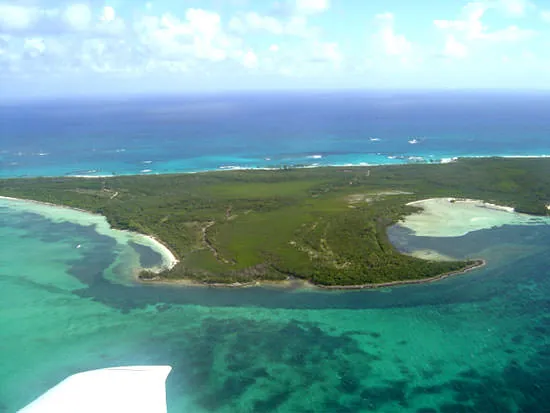
Photo Courtesy Lory Kenyon
In a telephone interview, Dr. Risk explains that the Guana Cay marina, as a percentage of total area on the island compared to marinas in Florida or the Florida Keys, is compounded to such a high level, that one can only rationally assume the worst.
In his response to the developer's EIA, he writes, "Marinas in the Keys, despite EPA regulations on flushing rates, are generally biological dead zones, with fuel spills, toxic chemicals, and anoxic sediments. In addition, virtually all of the virulent human viral and bacterial pathogens may be found in the waters of marinas in the Keys: Hepatitis A&B, cholera, tetanus, the lot..."
Kathleen Sullivan Sealey, paid consultant to the developer, told me in an email interview that, "Bakers Bay Club will be the first Blue Flag Marina in the Bahamas...look up the criteria for this programme out of the European Union Global Environmental Programme website."
Actually, a Guana Cay homeowner did contact the program. A representative of the blue flag program writes her, "In the International Blue Flag Coordination we are not aware of a planned marina in Guana Cay wishing to apply for Blue Flag status. I will therefore ask the Caribbean and Bahamian Blue Flag co-ordinators to investigate the issue and return to me with a reply. I will keep you informed."
Then Discovery Land Company's consultant says, "then you should ask the Bahamian owners of Boat Harbour or marinas in Marsh Harbour why they are not striving for the same standards?"
Photo of Great Guana Cay's settlement courtesy Norvell Slezycki
There are four answers to her comment about the marina in Marsh Harbour. One, it has existed for hundreds of years and is the main port of the Abacos. Two, it is not adjacent to one of the last healthy coral reefs in the world, and three, all marinas should strive towards higher environmental standards.
However, the main commercial harbour for the Abaco Islands cannot be compared to an unbuilt harbour on a tiny island adjacent to a coral reef. Lastly, Marsh Harbour was always a natural harbour, which means that the flush rate works very well. In Guana Cay, the harbour will have to be dug out of the island.
In the last nine months, tsunamis and hurricanes have wrecked horrific economic, environmental and financial damage around the world. Whether in India or Louisiana or Central America, scientists are explaining that much of the damage could have been avoided if these coastal regions had protected their coastal buffer zones.
In nearby Bimini, locals unsuccessfully fought a developer whose golf course cleared out the mangroves of over half their island. At high tide, this part of the island now sits underwater.
A single hurricane. A single direct hit. And much of Bimini's land-integrity could vanish, much the same way that Louisiana's coastline degradation has led to the state's southern half actually sinking. The devastation at Bimini has been so severe, that even Discovery Land Company admits it.
Which of these two mangrove systems is more important is difficult to measure. In fact, the two mangrove systems are important in different ways.

Joe's Creek underwater, courtesy Jane McClanahan.
Mangroves, like coastal salt marshes, are the intermediary zone between the land and sea. These plant communities literally thrive on the precipice. For Bimini, the mangroves literally hold up the structure of the island itself. For Guana Cay, the mangrove absorbs the nutrients from the shore.
Because of that, they have developed the ability to survive the harshest, including from the weather. In order to continue to exploit the thin nutrient-rich band between the land and sea, mangrove ecosystems need to be able to keep the land...from sinking.
In an article for Bahamascommunity.com, the author writes, "Dr. Sealey explained that the marina will be situated outside of the wetlands but anywhere that it does touch will be a buffered zone. The wetlands will be protected as far as possible with boardwalks around them in places." But the statement seems to contradict other statements that the developer made, suggesting that no wetlands will be affected.
In reality, the marina plans take out almost the entire wetland system, mangrove or not.
Sealey is quoted in the article, "The wetlands are perhaps my biggest concern in The Bahamas. Everyone wants to fill in these 'ephemeral ponds' and dredge them for marinas...Wetlands are among the most productive ecosystems in the world. They are nurseries for species inherent to The Bahamas, and they are where the ocean's food chain originates."
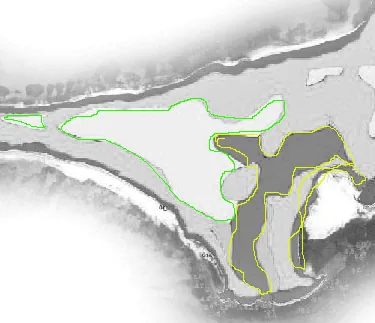
In this illustration based on the developer's own EIA, the areas outlined in green are inland mangroves and the areas outlined in yellow are coastal mangroves. It should be noted that a mangrove river, "Joes Creek" flows through this area and ends up in the sand bonefishing flats to the lower right. In this illustration, we depict the proposed marina per the developer's own plans.
How is it possible that the developer is able to state in paid advertisements to the local media that: "Contrary to prevalent rumors, Joe's Creek, the mangroves and the Guana Cay bonefish flats will all be preserved and not altered by development." Later, the developer changed the wording of this on their saveguanacay.com website, to state, "The mangrove wetland known as Joe's Creek, and the Great Guana Cay bonefish flats, will not be altered by the Bakers Bay Club development."
A inland estuaries expert, who resides part time on the island, is surprised by the developer's plans to build such a large marina. Jim Alderman writes, "Gray water in most cases is water that has gone through some stage of wastewater treatment; that which comes from water not treated and with minimal human contact. Laundry water is also called gray water."
"It is my understanding that Discovery is going to put their effluent (sink, wash, bath and sewage) through a primary and secondary sewage treatment and then use that effluent for irrigation. Basically, the primary treatment is removal and separation of solids and secondary treatment involves some sort of biologic process (there are many) and aeration. In total, the treatment plant there is a tertiary treatment that involves disinfectants.
Land application of wastewater, no matter what treatment phase, still contains nitrogen and phosphorous, the N and the P that is on fertilizer bags; the K is potassium, hence the 10-10-10 or N-P-K use by everyone to fertilize lawns, etcetera."
It is not impossible to remove the N and P but it is extremely expensive.
Some of the N and P will be taken up by the plants but not nearly enough. That which is not used will get into the ground water and travel laterally and seep into the ocean and the sea.
I calculated the number of homes, condos, and hotel room, that showed how much N and P are produced per person per day times 365 allowing for total occupancy...I got the initial per person figures from our state DNR. The bottom line is that gray water contains nitrogen and phosphors and some gets used and some gets into the water column and can cause algal growth on reefs."
So the marina will be as dangerous to the coral reef as the dredging. But what the EIA fails to mention is that the marina, which cuts a hole into the island and ends up nearly abutting the beach on the Atlantic side of the island, will cut the island in half, ridding it of the mangrove ecosystem that protects the island against hurricanes. One direct hit of a hurricane, and flooding will occur in the area adjacent to the marina.
I have been dead center in an Abaco hurricane and seen the Atlantic waters rise by up to seven feet. The narrow spit of land between the Bakers Bay development and the rest of the island can literally be flooded by hurricane-driven water. The hurricane could easily cut the island in half if the marina is built. The net effect on the island would be continued yearly degradation.
The coral reef, now open to the marina's foul water and the flooding receding back into the reef, will again be destroyed. It is interesting to note that the developer is not attempting to fight the scientific contention that it will destroy the reef and mangroves. Perhaps to them, none of that matters.
Bahamian cronyism will take care of that. December 19, 2005. Aerial photographs depicting the progress on Bakers Bay Golf and Ocean Club indicate that large portions of the mangroves have already been torn out. It is unlikely that Guana Cay's mangroves will ever entirely recover after the developer has been removed from the Bahamas.
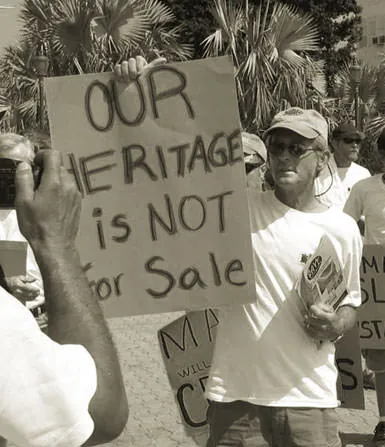
The Science of Coral Conservation
September 9, 2007
NOAA Case Study Attributes Nutrients
A NOAA Case Study attributes nutrients to the destruction of Looe Key. This is important, because if as the United States is officially recognizing the role of nutrients in coral reef destruction, the issue is making the rounds in the press around the world. Even as global warming remains an easy scapegoat for coral reef destruction, the word on development nutrients is gaining ground in the press and in broader scientific circles.
08.05.07
The Abaco Parrots and Endangered Species
Abaco parrots are a subspecies of the rose-throated parrot (Amazona leucocephala). The species exists only in Cuba, the Cayman Islands, in Abaco's southern pine forests, and on Great Inagua. The species is threatened, and the Abaco population is very small. It is a population that needs to be protected.
In Abaco, more and more attention is being paid to the parrot's protection, particularly through groups like Friends of the Environment, who encourage education about the parrot.
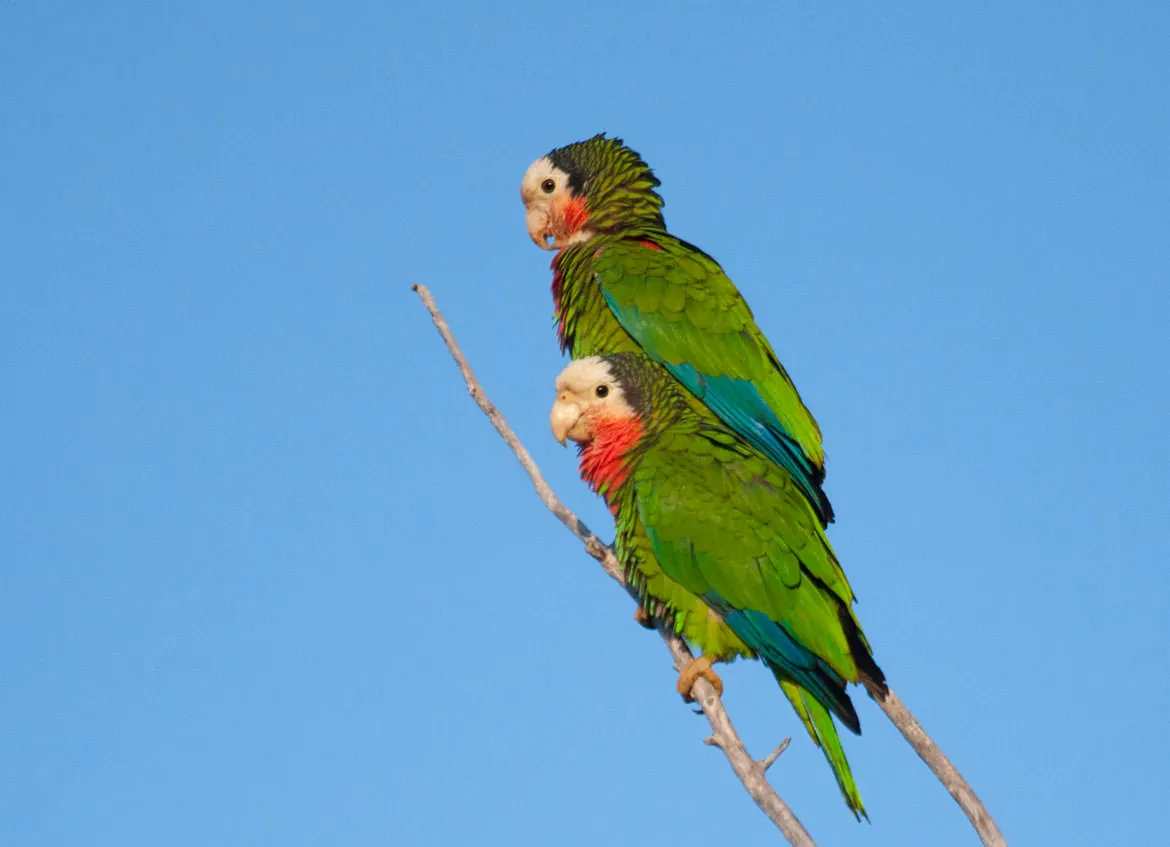
Abaco Parrots (subspecies of Cuban Parrot)
During the hurricane in Spring 2005, the parrot population left the pine forests of the southern mainland and headed out to the cays of the Abaco Sound. About 20 were reported on Man-O-War Cay, presumably because hurricanes devastate the foragable fruits of the forest to such a degree, the parrots must take flight in pursuit of temporary nourishment. The cays have flora that doesn't exist on mainland Abaco, and it is possible the birds visit these islands because the fruits and their host plants are literally tougher and hardier than inland fruiting species.
It is possible that the parrots have developed this survival trait over time. It is also likely that a large number of these parrots inhabit the Bakers Bay land — the largest previously undeveloped outer cay terrestrial space in the Abaco Sound. Overdeveloping Bakers Bay is not wise, and not just for the threatened Abaco Parrot. Several threatened and endangered species are at risk because of the Bakers Bay Club.
None of the following is exaggeration. Not every megadevelopment happens to threaten endangered species. But if you terraform land that is a critical area ripe with endangered species, you will threaten them. Such events are extremely rare — Discovery Land Company's audacious plan would never happen in almost any circumstance anywhere in the world.
The primary endangered species threatened by the Bakers Bay Club are the elkhorn and staghorn corals which form the barrier between Guana Cay's coral reef and the land slated for a golf course megadevelopment. Staghorns and Elkhorns are gravely endangered in the Caribbean. Elkhorn coral is considered one of the most important reef-builders in the region, but in the 1980's and 1990's, almost 95% of all elkhorn corals were lost throughout the Caribbean and the Florida Keys. White-band disease and human development and activity were dually to blame. Now, any healthy elkhorn reef should be viewed as critical habitat. But Bakers Bay Club is ignoring the requests of hundreds of scientists, who are predicting the collapse of Guana's Elkhorn and Staghorn structures, due to the size and scope of the development. The primary cause of coral destruction is likely nutrient and pollutant changes in the water.

Critical Elkhorn Coral habitat is threatened by the Bakers Bay Golf & Ocean Club. Stock Photo.
Perhaps most terrifying is the Bakers Bay Golf & Ocean Club's attitude towards the nesting and breeding sea turtles which use the Atlantic side beaches year round, and particularly in the summer months.
Although Bakers Bay Club claims to have a monitoring program for the sea turtles, there is little evidence of any real conservation. The huge increase in population, the degradation of the coral reef, the six lots being sold at Gumelemi Cay — a critical nesting location — will all severely reduce the populations of the endangered species.
There are so many intertwined issues with the Bakers Bay Club — human rights issues, environmental issues, legal issues, economic issues — that it is easy to forget that the Bakers Bay dilemma is also one about saving species from uncontrolled development.
05.21.07
The Birds of Great Guana Cay in Danger
The beautiful Glossy Ibis forages in Guana Cay's mangrove systems. But those mangroves are almost gutted by Discovery Land Company.
We have discussed some of the obvious threats that Discovery Land Company poses to specific species. The 3 species of sea turtle that nests on the beaches of Bakers Bay are an obvious example. But we have avoided discussion of the birds. This has not been intentional; because Great Guana Cay is also an important bird-nesting site.
Remember that Great Guana Cay sits on the northern edge of the Bahamas and Atlantic; many of the other barrier islands in the area are already developed, or never had the same forested area as Bakers Bay.

The short tailed hawk is one of many species under threat from the Discovery Land Company.
Several key species nest in the Bakers Bay area; when construction is complete, this habitat will be gone forever. The Bakers Bay Club EIA mentions some of the threats to these birds, but there are no solutions. The birds are conveniently forgotten.
White-tailed tropicbirds and Audubon's Shearwater both nest on Great Guana Cay. The following list is an amalgamation of two birder families' lists. It is an impressive list for such a small area.
The threats to the birds of Great Guana Cay are immense. Discovery Land Company simply plans to terraform almost all of the native habitat on the forested northern 2/5ths of the island. This insane project is destroying very unique and crucial bird habitat. If you have ever viewed a North American birding book, and examined a good West Indian birding book, you'll know that the migratory patterns of many species specifically involve the Bahamas, or even more specifically, the out-islands of Abaco.
Thank you to the families who provided the lists for this Guana Cay Bird List:
American Oystercatcher
White-Cheeked Pintail (Bahama Duck or Bahama Pintail) * Discovery Land Company actually advertises that they will provide hunting grounds to hunt this species. It is illegal to hunt this species in the Bahamas.
Bahama Woodstar
Bananaquit (Bahamas subspecies)
Barn Swallow
Belted Kingfisher
Black and White Warbler
Black-bellied Plover
Black-faced Grassquit
Black-throated White Warbler
Bobolink
Brown Pelican
Cape May Warbler
Common Yellow-throated Warbler
Cuban Emerald Hummingbird
Double Crested Cormorant
Eastern Kingbird
Glossy Ibis
Great Blue Heron
Great White Egret
Great White Heron
Green Heron
Ground Dove
House Sparrow
Key West Quail Dove
Killdeer
Laughing Gull
Little Blue Heron
Magnificent Frigatebird
Mallard
Mangrove Cuckoo
Bahama Mockingbird
Northern Mockingbird
Northern Parula Warbler
Ovenbird
Palm Warbler
Pine Warbler
Prairie Warbler
Prothonotary Warbler
Red-legged thrasher
Red-winged Blackbird
Ring-billed Gull
American Robin
Ruby-throated Hummingbird
Ruddy Turnstone
Sanderling
Short-tailed Hawk
Smooth-billed Ani
Snowy Egret
Starling
Turkey Vulture
West Indian Red-bellied Woodpecker
White-crowned Pigeon (formerly nesting on Bakers Bay property)
White-tailed Tropicbird* (formerly nesting on Bakers Bay property)
Willet
Wilson's Plover
Yellow-crowned Night Heron
July 6, 2006
Jean-Michel Cousteau comes to the assistance of the Great Guana Cay Residents
Jean-Michel Cousteau, who recently helped convince President Bush to protect 1200 miles of Hawaii's coral reefs in one of the boldest environmental moves of history, has just come to the aid of the Great Guana Cay native residents. Cousteau urges the island nation of the Bahamas to reconsider the Bakers Bay Golf and Ocean Club.
He writes, "...the Discovery Land Company Bakers Bay Golf and Ocean Club development may undermine the environmental health of the region; specifically affecting the nesting sea turtles of Gumelemi Cay and to the north, and impacting the neighboring reefs adjacent to the proposed golf course. Knowing from experience that ecological consequences of very large developments that do not have strict environmental safe guards can have far reaching consequences, I urge you to review the environmental impact of this development and consider the consequences for future generations of your citizens." Read Jean-Michel Cousteau’s full letter.
Island Development Conflicts
September 15, 2012
Bimini's Mangrove Trouble Continues
The following photographs from the Bimini Marine Protected Area Facebook page show the North Sound area before development:

And after land had been cleared for development.

Locals fought to protect this area from the Bimini Bay Resort's large footprint, and won. However, new plans have the Bimini Bay Resort guaranteeing the completion of a golf course. This is unfathomable. Conservationists and Bimini stakeholders must once again come together to halt the Bimini Bay Resort.

A sales associate confirmed that the development plans a golf course.
November 11, 2010
Bimini Bay Resort is in Trouble
A lot is going on in the world of unsustainable golf developments. The biggest news, of course, is that big golf development are failing. For example, here is some news from Bimini. Bimini Bay Resort, the golf and marina resort that would have swallowed up much of North Island's mangroves, was, at least for now, successfully restricted from doing so.
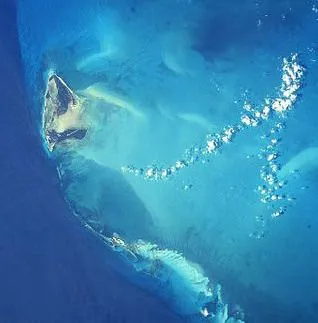
Now that the resort is up and running, it appears not to be doing very well. An article in today's Tribune supports this view with this article. The article begins, "The luxury resort Bimini Bay has laid off 31 people from its 119-member staff because of low occupancy, Minister of Labour Dion Foulkes confirmed yesterday."
The article also says, "tourists are favouring smaller properties like Big Game that give them a Family Island experience." The Tribune has it spot on here: mega-mansion resorts are a thing of the past. While its always sad when real people lose their jobs, the bigger story is that developments like these destroy island economies, and that in the long run, the good folks who lost their jobs at Bimini Bay Resort will be better off in a healthier economy free of big megaresorts like this.
Here are two excellent videos explaining the Bimini Bay Resort's impact on the environment:
June 18, 2012
Mexico Cancels Golf Course and Marina Megadevelopment over Coral Reef Fears
"...This type of tourist development, based on mass scale and golf courses, is no longer acceptable in Mexico..."
A stunning victory for the North American Pacific's third largest coral reef was handed down by the Mexican President this weekend, sending shockwaves and making page one headlines around the world.
Mexican President Felipe Calderon cancelled the Cabo Cortes Megadevelopment project, stating that the project failed to prove that it would not damage the environment.
The Cabo Cortés Megadevelopment project, which has striking similarities to the Bakers Bay project in the Northern Bahamas, was a proposed large golf and marina megadevelopment project with densely-packed housing. Construction would have been adjacent to a rare west-coast coral reef, which has been championed worldwide for its response to conservation projects after over-fishing has severely depleted life at the reef.
Articles:
"...However, several years ago, the Spanish real estate developer Hansa Urbana laid out plans for the Cabo Cortés real estate and tourism complex. The company planned to construct 13,000 housing units, 3,655 hotel rooms (together this is equivalent to about 30,000 rooms), some 2 million square feet of office and commercial space as well as a 490-slip marina, a "private" jet port, schools, and at least two golf courses....
In response to Cabo Cortés threat, local groups organized and took action. Regional and national groups joined the fight, and created a vibrant coalition called Cabo Pulmo Vivo. When Hansa Urbana stepped up its pressure on the government to approve the project, this coalition did not back down.
Instead, they reached out to international groups, such as NRDC, to help protect Cabo Pulmo. Together, we made the legal, scientific, environmental, social and financial cases against the project:" — NRDC Article
"The Cabo Cortes project was not only unsustainable, it was also illegal," said Greenpeace Mexico Executive Director Patricia Arendar. "Mexico needs accountability, transparency in the authorization of projects of this kind, and guarantees that environmental rights will be respected."
BusinessWeek Article: "This sets an important precedent and sends an important message to Mexican and international investors, that this type of tourist development, based on mass scale and golf courses, is no longer acceptable in Mexico," Vidal said.
"...Instead, Calderon says, the government will help the nearby former fishing village of Cabo Pulmo improve its services in a small-scale, sustainable way. The village now has a couple of fish joints and three dive shops, some sandy roads and a few rustic inns, most without AC. The town runs on solar power, just enough to keep the beer cold." — BBC Article
Miami Herald Article: Speaking from his official residence, President Calderon said that "because of its size we have to be absolutely certain that it wouldn't cause irreversible damage, and that absolute certainty simply hasn't been proved".
"...The environmental and natural resources secretariat under Calderon had drawn withering criticism from foreign scientists for giving an initial green light to the project. And Greenpeace Mexico has basically suggested that payoffs may have led the secretariat to let the project continue until today, approving it at two levels..."
April 4, 2012
Bontang, Indonesia Reefs Damaged
An article from the Jakarta Globe explains the role of coastal factors on the decline of coral reefs off Bontang:
Laode said that in the 1990s, the condition of Bontang's coral reefs were excellent. This all changed, he said, when big businesses began to enter Bontang, famous for its rich gas reserve and coal deposits.
Bontang is also home to Indonesia's biggest state-owned fertilizer company, Pupuk Kaltim.
March 20, 2012
Thailand Coral Reefs destroyed by Coastal Development
An article about coral reef destruction near Phuket, Thailand:
Boonchop Sutthamanaswong, director general of the Marine and Coastal Resources Department, said he had had many complaints about land development and building of resorts in coastal areas like Laem Singh beach in Phuket.
The construction had released sediment, including sand and cement, into the sea and affected coral reefs and seagrass.
"Many resorts and hotels are now being built in the mountains near coastal areas reserved for the tourist industry. These land development projects are affecting the marine ecosystem. We could not see the impact in the short term but in the long term, these marine resources will be totally destroyed," he said.
To prevent further damage to marine resources, Boonchop said his agency would talk with the Office of Natural Resources and Environmental Policy and Planning about stricter controls under the environmental impact assessment (EIA) for land development near coastal areas.
Read the full article
March 19, 2012
Mexicans Fight Controversial Baja Mega-Development to Save Coral Reef
Environmental organizations, coral reef organizations and concerned Mexican citizens are increasing the heat to cancel a large megadevelopment adjacent to one of only three coral reefs found on the west coast of North America.
Here is a good overview of the issue:
Here is some recent press:
Baja Tourist Project Continues to Catch Heat
Cousteau: Mexican Pacific Mega-Project Would be "Another Cancun"
May 23, 2011
National Geographic on Cabo Pulmo Golf Course
However, Cabo Pulmo is now under serious threat.
In March, Mexico's Ministry of Environment and Natural Resources approved a proposal to develop a mega-resort called "Cabo Cortés." This development would include 15 large hotels with over 30,000 hotel rooms, three to five golf courses, a 490-slip marina, desalination and water treatment plants, a private jet strip, and other infrastructure, adjacent to and directly north of Cabo Pulmo.
Scientists and conservationists believe that the influx of mass tourism and population growth will put unsustainable pressure on the protected reefs — through changes in water quality, turbidity, pollution, fertilizers and chemicals used on the golf courses, and illegal fishing.
According to experts in the region, the environmental impact assessment provided by the developers does not fulfill rigorous scientific requirements.
Read the full post.
March 11, 2011
Greenpeace Joins Fight against Gulf of California Golf Megadevelopment
From the Latin American Herald Tribune: Greenpeace criticized the Mexican government's decision to allow a Spanish real-estate developer build a giant tourist complex near the only coral reef in the Gulf of California. The environmental watchdog, which last August joined with several non-governmental organizations in opposing the Cabo Cortes project, said Thursday that Mexico's Environment Secretariat "is not fulfilling its commitment to protect the environment" by paving the way for the destruction of the Cabo Pulmo reef.
September 10, 2010
A Not So Jolly Harbour in Antigua
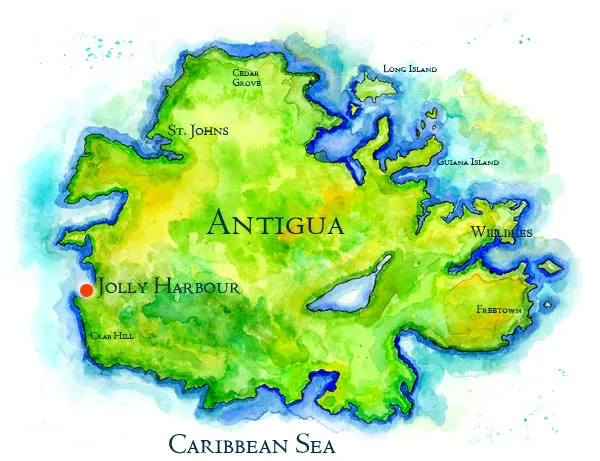
The Great Guana Cay blog seeks to collect examples of the conflicts between natives versus real estate developers in the Caribbean Basin. Almost all of these stories relate to each other, with hauntingly similar endings. A marine scientist working in the Caribbean sent me some information on the case of Jolly Harbour. I will paraphrase from some background material:
In 1988 on the island of Antigua, of the Caribbean Nation Antigua & Barbuda, a foreign developer asked the Antigua government for permission to build a massive megaresort on the west coast of the island. The project was massive, promising 1,500-2,000 rooms.
The government approved the sale of 53 acres of land for a much-lower-than-market-value. The land was mostly salt ponds and mangrove swamps.
In 1989, construction began, and shoreline vegetation and mangroves were removed, and a channel was cut through the area called Mosquito Cove. The salt pond, nearby beaches and mangroves area were rich biologically, but as the area was leveled, that diversity was lost and the land virtually destroyed.
Over 400 citizens in the area signed a petition to protest the sale of the land by the government. The government balked at the petition, stating that the land was useless.
Citizens began questioning why they were not consulted on the project, and why they had no say in the outcome of their community.
Today, the project has failed but the environment has been ravaged. Here is a quote about the outcome of the project from a Wetlands Preservation pamphlet:
How did this affect the environment?
What happened to the villagers?
March 31, 2010
New Details on Wilson City Power Plant
Neil Hartnell of The Tribune adds a fascinating detail to the Wilson City Power Plant issue. Hartnell writes, "It had long been speculated that the BEC project was moved to Wilson City because the Snake Cay site was selected for a tourism development, and these documents, which were filed as part of the Government's defence to the Judicial Review action brought against the power plant by Responsible Development for Abaco (RDA), provide the first tangible evidence of this."
January 15, 2010
Rise Up for Haiti
Dear Readers,
When Save Guana Cay Reef was invited to attend a United Nations conference to speak about their plight, many of them returned to the Bahamas humbled by the event. They were fighting a megadevelopment in an effort to save their reef, but they were speaking alongside groups who were fighting to feed their community or rebuild their towns.
I have always said that Great Guana Cay's issues are not secondary to the issues that seem larger and more immediate. Haiti's layered problems, which led to today's catastrophe are not isolated from the issues we talk about with Great Guana Cay. I have been working to rework this blog to look at Guana's issues in the context of other issues in the Caribbean. I did not expect that one of the biggest events in our hemisphere would change this very conversation.
One of the greatest tragedies has just happened in our backyard. For those of us passionate about protecting the Bahamas, we know that Haitians have enriched our islands with their culture. For those of us passionate about conservation, we know that Haiti's grim history is tied to grave environmental lessons about the Caribbean. For those of us who believe in the Caribbean, this is our moment. There are a million ways to help Haiti now and tomorrow.
We are donating to Doctors Without Borders. We expect to find new ways to help Haiti. A friend of mine, who contributed to the effort to save Guana Cay wrote this today. "It is ironic, but perhaps hopeful, that humans seem to respond to the needs of other humans impacted by dramatic natural disasters in ways that transcend political boundaries and ideologies. So, let us hope that efforts to rebuild Haiti will do more than simply replace the physical structures that were destroyed."
November 19, 2009
Locals in Virgin Gorda Begin Fight against Nail Bay Project
Two articles from Virgin Islands Platinum remind us of how far Save Guana Cay Reef's influence has reached. This latest BVI issue involves the building of a giant $200 million dock. Locals worry about its effect on the nearshore coral reefs, and the island's culture. The locals followed in the footsteps of the Hans Creek objectors, whose successful case against a golf course developer was inspired by Great Guana Cay. Residents Angered at Proposed Nail Bay Development
Public to Have Say on Proposed Development
September 24, 2009
More on Beef Island, BVI Win
BVINews writes,
The Virgin Islands Environmental Council emerged victorious on Monday 21st September 2009 when Justice Indra Hariprashad-Charles handed down a judgment finding the approval of the Beef Island Project illegal.
The two-year legal battle began in July 2007 when VIEC, a group of concerned fisherfolk and residents, filed an application in the High Court seeking judicial review of the Jan 2007 decision by former Chief Minister, Hon D Orlando Smith granting planning approval to Quorum Island BVI Limited to construct a 5 star hotel, marina and golf course on Beef Island. The golf course and marina were located next to and partially within the Hans Creek Fisheries Protected area.
Contrary to arguments advanced by the Government and the Developer, Justice Charles ruled that Hans Creek is a Fisheries Protected area within the meaning of the Fisheries Act.
The Fisheries Regulations provides that no development activity can take place which may or is likely to adversely affect a fisheries protected area. Any contravention of the Regulations is an offence under the law.
Since certain aspects of the proposed development activity are certain to adversely affect the protected area, the planning approval is thereby rendered illegal.
September 16, 2009
Judicial Review threat to $105m power plant
By NEIL HARTNELL, Tribune Business Editor. An attorney will this week write to all government agencies involved in the permitting process for BEC's $105 million Wilson City power plant to demand that his Abaco-based clients be involved in "meaningful consultation" on the project, with moves for a Supreme Court injunction to follow if construction recommences.
Fred Smith, a Freeport-based partner in the Callenders & Co law firm, also warned that he would launch a Judicial Review challenge in the courts — similar to the one he instigated against Discovery Land Company's Bakers Bay Golf & Ocean Club project on Great Guana Cay, which has reached the Privy Council — if BEC attempted to have the necessary construction permits "rubber stamped and retroactively applied" so the power plant could proceed.
Accusing successive governments of failing to heed the warning given by the Guana Cay situation, when it came to following statutory and due process and consulting with all affected parties, Mr Smith said both the Christie and Ingraham administrations had "put the cart before the horse" when it came to the BEC power plant.
Arguing that the Government had delivered "a slap in the face" to democratic institutions and their processes through their handling of the Wilson City project, the Callenders & Co partner said the administration itself had been responsible for generating opposition by its decision to "proceed clandestinely, secretly and without permits". Informing Tribune Business that he represented a number of Bahamian and foreign homeowners on Abaco, Mr Smith said of his clients: "They are up in arms about the lack of consultation through the local government process, or through the permitting processes of central government agencies.
This is probably the single largest capital expenditure by government in Abaco." The Wilson City power plant project was instigated under the former Christie administration, which initially looked at a site at Snake Cay.
That was ultimately rejected, due to its proximity to a planned National Park and environmentally/ecologically sensitive area, Wilson City being chosen as the alternative. Criticising both governments for their failure to involve Abaconians in the consultative process before construction started, Mr Smith said this had created negative instead of positive energy in the community's attitude towards the Wilson Cay plant. "Instead, they proceeded clandestinely, secretly, without permits, not giving information....
They put the cart before the horse," Mr Smith told Tribune Business. "This all goes back to issues of central government feeling it can do what it wants in the Out Island colonies. It is Nassau treating the Family Islands as if they have no say.
It is a central government dictatorship once again." Generally, government departments go ahead with their development plans before they get permits. This is something that should not happen. It's a slap in the face to democratic institutions.
It demonstrates that statutory mechanisms for local government permitting, health and safety, the environment, are meaningless.
This is a repeat of the Guana Cay fiasco, and I beg the FNM to proceed differently in the future." Dr Earl Deveaux, minister of the environment, acknowledged in this newspaper yesterday that government departments and utilities often went ahead with their development/construction plans without first obtaining the necessary permits and approvals, unlike private developers, who were required to go through the proper processes and channels. When asked why the Government appeared not to have learnt anything from the Guana Cay case and public reactions to other controversial developments, Mr Smith replied: "I don't think they're slow learners.
They haven't learnt at all." What is surprising is that the Government would again risk incurring the wrath of Abaconians, a generally well-educated population well aware of their rights and statutory processes, given what had happened with the Guana Cay development. Pointing out the hypocrisy of requiring private developers to abide by the laws and statutory processes, when government departments were not, Mr Smith said: "The Government is not a law unto itself.
Each department, statutory authority, BEC and BTC, are statutory corporate institutions that are subject to the law like any private developer." The Government appears to have anticipated Mr Smith's possible legal challenge to the Wilson City power plant's continued construction, having placed all building on hold until the necessary permits and approvals are obtained. The Callender's & Co partner said he had been instructed by his clients to write to all the relevant government departments and agencies objecting to the lack of consultation, and request that they now be involved in a meaningful process.
Failing that, Mr Smith said he would seek a Supreme Court injunction to prevent construction on the Wilson City power plant from proceeding until all the required permits were in place and his clients "had an opportunity to participate in a meaningful consultative process". "It's a question of the process by which the permits were applied for, considered and approved," Mr Smith said, adding that the issue went beyond the permits themselves. "If they simply rush to get the permits rubber-stamped and retroactively applied, such permits will be challenged under a Judicial Review," he said.
"In the 21st century Bahamas, it is high time that government institutions respected the relevant laws and processes." Mr Smith said he and his clients would soon have to assess whether work on the Wilson City power plant had stopped, as the Government had said.
He told Tribune Business that the last time he went to the site, he was barred from entering, and a row with security guards broke out after he subsequently started taking photos outside the fenced-off site. To prevent such situations from occurring again, Mr Smith said it was incumbent on all private and public sector developers to "be accountable and transparent, provide the information and interact with a meaningful consultation process".
He added that while BEC's general manager, Kevin Basden, had asserted at last week's Town Meeting that three Environmental Impact Assessments (EIAs) had been conducted on Wilson City, this was relatively meaningless if local residents were not given an opportunity to comment, and their concerns made a part of the process. His clients' main concerns, Mr Smith said, were the location of the power plant; whether Bunker C fuel was the correct one and the implications arising from its use; whether government had properly explored wind, solar and other alternative energies; and environmental and health and safety issues.
September 9, 2009
The Good and the Bad
It's been a month and a half since I last posted news on Great Guana Cay's battle against a California golf development. I will be covering Guana Cay in detail in the coming months. Here are some updates.
Privy Council
Arguments ended in the morning of July 9, 2009. The Lords have reserved judgment. There is no timeline on when this judgment will be known.
Bahamas Finally Protecting Sea Turtles
After years of fighting for sea turtle laws, Bahamian environmental groups have now secured an amazing victory — protection for all marine turtles. All seven species of sea turtles are endangered or threatened around the world. Five exist in the Bahamas, but hunting them for their meat and shells is common, including in the Abacos where Bakers Bay Club now threatens one of the areas breeding grounds for nesting loggerhead and green turtles.
Fabien Cousteau Bimini Video
Although Bimini has made a major win against the Bimini Bay Resort & Marina by convincing the Bahamian government to restrain the development's size, the project is still unsustainable and causing problems for the Bimini environment. Here is a 2008 video created by Fabien Cousteau. Cousteau covers corruption issues which closely tie into events at Great Guana Cay. It's a very well made video:
Bimini Bay Resort Youtube Video
Beef Island Update
Guana Cay's fight against Bakers Bay Club has inspired other groups to protect their critical habitats. Here is the latest on the Beef Island story:
Link to Beef Island
May 21, 2009
Another Massive Golf Anchor Development, Four Seasons at Emerald Bay Fails...500 Bahamians lose their job as a result.
The Exumas are being hit heavily as the Four Seasons at Emerald Bay shuts down within two weeks.
Employees were given little notice of the impending collapse of this massive anchor project with a Greg Norman golf course. Notes from the Road has made the case for years that the anchor development projects of the Christie Administration made no sense for the Bahamas, that golf developments are not sustainable, and that megadevelopments are quickly falling out of favor with tourists, and should not be built.
Now, in 2009, we watch as nearly all the big anchor projects are either failing, in dire straits, or closing shop for good. In the case of Bimini Bay, the locals have successfully limited its scope; a historic move in the Bahamas that should set a precedent for local environmental fights in the future.
The question remains, is Bakers Bay next? Sales are extremely slow at Bakers Bay. Only 57 lots are reported as being sold (the developer claims they have sold 67.) But the developers had said as early as 2005 that they expected the project to sell out quickly.
Construction has slowed down considerably, and only a paltry 60 workers are at the site now — a sign that Bakers Bay may be operating on a shoestring budget in preparation for more bad news. It is a tragedy for the Bahamas how many families have been affected by the rise and fall of these megadevelopments, which in almost every case, exact huge tolls on local environments. Notes from the Road has argued a different path for Bahamas tourism: promote Bahamian-ownership of smaller developments.
Promote the Bahamian wilderness, eco-developments, small-scale tourism, second-home ownership.
January 26, 2009
Historic Win for Bimini Bay Mangrove Fight
Notes from the Road has been reporting on the Great Guana Cay development battle for years as well as its sister issue: the island of Bimini has been fighting the expansion of a Hilton golf project that would threaten the island's biodiversity. After years of fighting to protect their island, Bimini has achieved a dramatic and historic win.
The news was reported by the Washington Post on January 23. Here is a quote:
The reserve, which will be protected from most fishing and other "extractive activities," is home to endangered species such as the Nassau grouper and the Bimini boa, as well as a vibrant nursery for lemon sharks.
The decision — approved by the Bahamas cabinet Dec. 29 but announced last week — is a setback for the Bimini Bay Resort and Marina, which has been clearing some of the island's mangroves to build a hotel, a golf course, a casino and two marinas, some of which have already been constructed.
I will be updating news on this historic win for Bahamian conservation with photos, illustrations and links to articles.

January 6, 2008
Steel Wall of Secrecy Undermines Bahamas Resorts
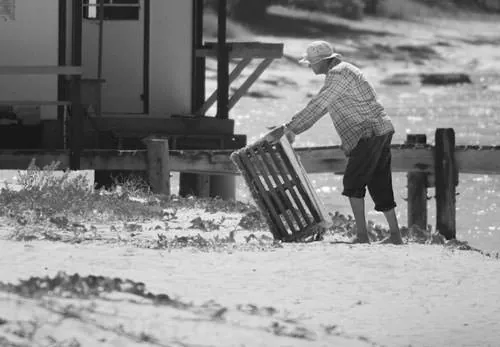
A Bahamian brings crustacean traps ashore. Locals are kept in the dark while developments are constructed in their backyard.
Bahamas B2B.com posted an excellent article on the awkward process that Bahamian government goes through in approving developments.
Save Guana Cay Reef attorney Fred Smith is quoted: "It pits communities against developers, and creates unnecessary friction through lack of participation and transparency. That is everything that the Save Guana Cay Reef Association has been complaining about. It is so important to begin the process in a community-friendly way, so that there can be a union between the locals and the developers."
The article also argues the importance of real environmental laws in the Bahamas.
Read the article here.
Updated December 27, 2008
Bahamas National Trust on Bimini Bay Resort
The Bahamas National Trust has issued a document on the Bimini Bay Golf Resort.
Here is a quote:
The Trust is deeply concerned that further development at Bimini Bay will lead inevitably to the loss of vital ecological functions that would be irrecoverable. It is our considered view that no second phase development should be approved without a further EIA undertaken by independent consultants.
Based on our review of the first phase EIA, we agree with the finding by Black and Veatch that it impossible to accurately assess the potential impact of any part of phase 2. The Trust has also identified a direct conflict between the golf course planned for Phase 2, and the government's proposed marine protected area for Bimini.
The proposed boundaries of the MPA overlap and encompass most of the second phase area authorized under the heads of agreement.
It is our considered opinion that construction of a golf course would be at the expense of large areas of mangroves, and at the expense of the ecological integrity of the marine protected area. We strongly recommend that the golf course NOT be approved, and that the government move quickly to declare the promised MPA.
November 27, 2008
Sir Richard Branson joins efforts against Virgin Islands Golf Course
Read this article in The Independent
In a case related to the Great Guana Cay Privy Council case, Virgin CEO Sir Richard Branson backs the locals in a fight against an audacious golf megadevelopment nearly as dangerous to the environment as the Bakers Bay Golf & Ocean Club. This development dispute is on Beef Island in the Virgin Islands.
From the article:
The case, which is to be heard in full next year, is expected to have far-reaching consequences for the protection of the fragile Caribbean environment. Sir Richard, head of the Virgin group of companies, has paid for a team of barristers, led by the former chairman of the Bar Stephen Hockman QC, to fly to the group of islands and seek to stop plans to build a marina, five-star hotel and golf course in the British overseas territory.
Sir Richard Branson's involvement in the Beef Island case resembles, and exceeds, celebrity involvement in the Caribbean environment cases.
The article continues:
A council spokesman said: "This is a landmark case that addresses a number of important issues which will impact on the future of environmental law and practice throughout the Caribbean. The outcome of this case will definitely impact the way other large projects currently under planning review are dealt with, leading to a more sustainable future for the BVI."
November 15, 2008
Beef Island Locals Wins Another Appeal Against Golf Development in Court
Beef Island is a beautiful island in the British Virgin Islands. A golf and megayacht development was slated to consume environmentally integral portions of the island. According to an email from the locals opposing the development:
"The judges ruled in favor of VIEC stopping developers from turning Beef Island's Hans Creek, salt pond, and mangrove shore into a mega-yacht marina with cement shore, golf course lacking coastal setbacks and cabana-ed artificial beach."
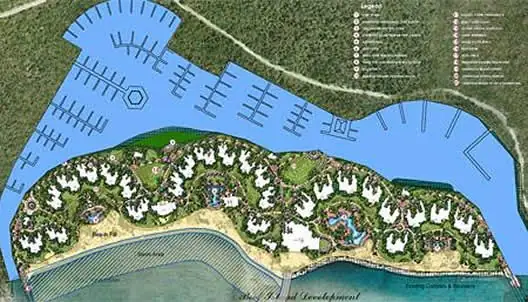
According to the newsletter, the endangered Beef Island area was the island's "last pristine salt pond, creek and mangrove shore with coral reefs frequented by roseate flamingoes, endangered white-cheeked pigeons, turtles and fish."
Beef Island's development problems are far from over, but the news of another appeal is welcome news for the local's attempting to save their island's ecosystems.
September 19, 2008
Rum Cay Development Fails
The Bahama Journal announced today that the Rum Cay project has failed. Quoting Bahama Journal, "Work on the much-touted $700 million Rum Cay Resort Marina supposedly being developed by Montana Holdings on remote Rum Cay in the southern Bahamas has stalled completely, leaving a gaping hole in the island's economy, and leading to migration away from home once again for many who had returned in anticipation of work."
Rum Cay was a Bakers Bay style megadevelopment criticized by environmentalists for being dangerous to the local nearshore environment. Rum Cay's failure is another in a long string of collapses of the failed 'anchor megadevelopment policy' of the Christie Administration.
June 2, 2008
Fabien Cousteau Video on Bimini Bay
Great video from Ocean Future's Society on Bimini Bay covers many of the issues from Great Guana Cay.
Fabien Cousteau Video
June 2, 2008
Jean-Michel Cousteau Slams Bimini Bay
World renowned marine conservationists Jean-Michel Cousteau slams Bimini Bay for all the reasons the opposition to Bimini Bay and Bakers Bay have been making for the past several years:
"...Allowing Bimini Bay to continue with phase II would certainly strip this inland paradise of its precious natural riches. Over time, visitors and residents alike will suffer the decline of economic, social and environmental prosperity..." Read the article:
Nassau Guardian Article
May 11, 2008
SharkTrust on Bahamas Mangroves Destruction
Message to Prime Minister, "When can we expect your government to demonstrate that it is primarily interested in its first responsibility: the Bahamian people, their natural heritage and their future?"
SharkTrust, the Bimini-based shark and mangroves research institute, issued a press release warning to the Bahamas government about further destruction to the mangroves. Mangroves Action Network followed the press release with a letter to Prime Minister Ingraham, which is posted here:
Dear Prime Minister Ingraham,
I would like to also draw your attention to a press release we at Mangrove Action Project have just sent out. The old adage that warns us "If the lessons of history are not learned, then history is bound to repeat itself," needs to be heeded in the Bahamas today! Developments that destroy your nation's mangroves, such as seen at Bimini and Guana Cay, prove beyond a doubt that your government is not learning those lessons.
Towards A Future With Mangroves,
Alfredo Quarto, Mangrove Action Project
Here is the Press Release from SharkTrust:
Dear Prime Minister Ingraham, I am sure you are aware of the disaster that has recently struck Myanmar (Burma).
What you may previously have been unaware of is the considerable contribution to the scale of the devastation and loss of life there due to the clearing of the mangrove forests that previously provided a protective buffer against the worst storms.
In the case of Burma the poverty and circumstances of the people contributed to the clearing.
In the case of Bimini in your own country, the intended — and well-underway — destruction of the mangrove forests of the North Sound is being allowed, without legal foundation, so that a foreign developer can make his fortune.
And ignorance of the potential calamity should a hurricane strike Bimini is not an excuse as you are now informed of the threat: LOE, Wall Street Journal, Scientific American, ABC Mangroves. Furthermore, should a storm surge enter the North Sound once the northern lagoon is built up as part of this monstrously inappropriate resort, the resultant flooding of Alice and Bailey Towns to the south-west are another considerable and dreadful possibility. Let me ask you this Prime Minister: if a hurricane indeed hits Bimini after its vital mangroves have been cleared by the Capo Group and the flow characteristics of the North Sound have been altered and the resulting devastation (and loss of life?) is as expected, who will be held responsible for the fiasco?
Every genuine mangrove scientist will confirm the risks being quietly allowed on North Bimini for the development of the Bimini Bay Resort with its gigantic golf course, oversized Marina, Hilton Hotel and Casino.
I certainly hope the Press of the Commonwealth of the Bahamas takes up this scandal once again and makes abundantly clear to the Bahamian people what is going on on the tiny and once charming island of North Bimini.
Your predecessor, Mr Christie, demonstrated that his interests lay not with the islanders of Bimini and their island but with the Capo Group and its ambitions.
Conservationists, scientists and ethical tourism NGOs greeted your recent election victory with enthusiasm because we presumed that you would act rapidly and decisively on your re-election promises to right such blatant wrongs.
When can we expect your government to demonstrate that it is primarily interested in its first responsibility: the Bahamian people, their natural heritage and their future?
Yours sincerely
Jeremy Stafford-Deitsch
May 07, 2008
Anti Ara Macao Group Wins Suit
From Channel 5 Belize:
Ara Macao: that was the development project that proposed to build a two hundred and sixty room hotel, four hundred and sixty condos, a hundred thousand square foot casino and an eighteen-hole golf course on the northern end of the Placencia peninsula.
And while years of public controversy, regulatory red tape and uncertain financing have mired the initiative in the sand, today's case in the Supreme Court had nothing to do with environmental compliance or economic impact. This morning in the Supreme Court chairman of the Ara Macao Development Company, Paul Goguen, sued the group Placencia Citizens for Sustainable Development for damages, asserting that separate articles that appeared on its website in June 2006 libeled him personally and embarrassed his company.
During the proceedings, Goguen's attorney, Elson Kaseke, argued that the stories, entitled "A reality check for Ara Macao" and "Setting the Record Straight from the Peninsula's Perspective" contained defamatory statements.
But when he rose to address the court, the lawyer representing the citizens group, Oscar Sabido contended that the statements were fair comment and protected as free speech.
When he made his ruling, Chief Justice Abdulai Conteh maintained that he had read both articles in their entirety and while they were (quote) "not friendly" or "welcoming", only (quote) "a heightened sensitivity would have read between the lines to find they are truly defamatory".
In short, case dismissed. As Goguen and Kaseke left the courtroom, they expressed surprise at the Judges decision.
Learn more at these links:
Ara Macao Notes
Also, Mary Toy was quoted by Channel 5.
"I didn't look at this as so much a vindication of our work against Ara Macao or about Ara Macao but the right of Belizeans to express their beliefs and their opinions. If what Mr. Kaseke had been proposing, that only comments could have been given to NEAC and nothing could have gone on television or newspapers, what would that have done to our society because if that had been accepted, it would not have been confined to environmental problems, it would have gone to social issues, things like AIDS and abuse of women.
Its just a vindication of the Belizeans right to say what they want to say in a legitimate way."
March 24, 2008
Bimini, An Island Ignored
People from Bimini, and around the world, have been calling for the preservation of this beautiful island for years. Back in 2000, we were told that our precious home was designated as the highest-priority site in the Bahamas for a Marine Protected Area, yet here we are in 2008 with no MPA. Bimini's MPA is widely supported, locally and internationally, and its implementation is a key factor to the economic and ecological future of the island, long-hailed as the Big Game Fishing Capital of the World.
Just a few days ago, a news report suggested that the government is holding off on designating Bimini's MPA because of a perceived apathy from Bimini, rather than recognizing that for us here, this issue should have already been settled years ago. I am never one to take a defeatist's attitude but I can see why there appears to be a sense of apathy amongst the people of Bimini. There have been inquiries, investigations, committees, surveys, studies and promises for years in regards to the current development on North Bimini and their wanton destruction and impact on the environment and ecology.
We have talked to administrators, MP's, lawyers, church leaders, heads of state, scientists, and environmental groups. We have had meetings, forums, educational fairs, flyers, and petitions voicing our desire to have the project stopped and preservation of the wetlands implemented.
And through all of this do you know what the general belief of Biminites is...? We feel that it doesn't matter what we do because the government leaders do not have our best interest at heart, only profit — personal or otherwise.
Our desire to preserve the natural heritage of Bimini for the future of Bimini, the very thing that brings people like the Bimini Bay developers to our islands, is for sale to the highest bidder.
In the end our fate is not in our own hands but in the hands of a small few who know nothing of daily life in Bimini and the tragic effects that this development, even in just its beginning stage, has had on the economy and ecology of the island. Most people feel this way and have adopted the attitude toward our leadership of "they're going to do what they want to do no matter what we say, so why waste your breath".
I know it's unfortunate but it's a product of being let down by the same people for so long. So when the government says that the people of Bimini have not shown that they want a Marine Reserve or National Park, it's not true, we do.
The people of Bimini have been ignored for too long, and for many their hopes for a better tomorrow have waned. I say shame on the leaders of our nation if they plan to use the plight of a weary community as their excuse to do the wrong thing.
Establishing Bimini's MPA and preserving what's left of Bimini will ensure that Biminites, tourists, and even foreign developers can enjoy this island jewel for future generations.
Marty Weech, Biminite, Born and Raised
February 26, 2008
Fabien Cousteau backs Efforts at Bimini Bay
Very good news for Bimini. It looks like the efforts to restrict the scope of the Hilton project are becoming very real. The new attention being brought to Bimini by Fabien Cousteau, Jean-Michel Cousteau's son, seem to be helping the efforts greatly.
Following is a piece from the Bahama Pundit. In it, Neil Sealey is quoted as saying, "The people of Bimini are now trapped behind a wall while most of their island has been taken over by a developer who wants to knock golf balls around. The North Sound and the entire mangrove area to the east are clearly deserving of some sort of protected status — it's an oasis in a vast expanse of water."
Very nice of Mr. Sealey to say. However, Sealey is the husband of the environmental monitoring team leader of the Bakers Bay Club, Kathleen Sullivan-Sealey. He was an early supporter of the environmental qualities of Bakers Bay. Ironic, how cronyism can lead us to say one thing in one place, and the opposite somewhere else. Here is a Neil Sealey letter defending Bakers Bay Club, with comments by me.
Fabien Cousteau was attracted to Bimini by Cindy Slater, a Floridian who has been visiting the island since childhood. She is devastated by what is happening there, and set up the Save Bimini Association to fight back: "You can tell the people who live at Bimini Bay," she says, "as opposed to those who come to enjoy the real Bimini — they wear high heels instead of flip flops. The resort should stop where it is now — there is no need for a golf course to fill in the mangroves."
Cousteau and Slater were in Nassau last week to meet with a variety of politicos, environmentalists and media folks. Slater said no one they spoke to could understand why the Bimini Bay development is allowed to continue in its present format: "Even Capo could turn this around and have a resort that draws on a marine park. Bimini's resources for ecotourism are huge."
According to Bahamas National Trust deputy president Pericles Maillis, Bimini Bay is one of a handful of development "anomalies" in the Bahamas, and the government has had the grace to admit it was a mistake. He noted that the project was on the upcoming BNT council meeting's agenda, and there are expectations that some sort of "green line" will be drawn to stop further development.
"I can tell you that there is a joint initiative right now between the BNT and the government to look at the agreements and the extent of compliance and to see how we can ameliorate the situation. But," he warned, "in a democracy, things that are done are not often undone."
Some say the future of Bimini is in the hands of those who live there. Environmentalists can point out what's wrong, but it's the local folk who must force the politicos to act. As one Biminite said in Cousteau's video, Paradise in Peril, "Bimini is the fishing capital of the Bahamas. If you gonna come to Bimini to play golf, then you going away from what Bimini is all about."
January 20, 2008
Donald Trump Golf Course Draws Fire
Link to National Geographic Video
Conservationists in Scotland are now fighting alongside local residents against a proposed golf course by Donald Trump. His plan will destroy a 4,000 year old dune system, habitat for seven rare bird species.
Watch the interview of George Sorial, Trump's managing director for international development. This guy looks like a real winner, and reminds me of the suits hired by Discovery Land Company to spin their golf course green.
In other interviews, Sorial's patronizing attitude towards anybody concerned about the adverse effects of Trump's development shows. In the Guardian, he writes, "There's a view we are arrogant. We are not arrogant. We set certain standards. It may be incomprehensible to smaller minds, but we have always set high standards. We presented them with a plan and hoped they could open their minds, but it was too much for them."
But the Trump issue is becoming more complicated, and more and more, it is resembling the crisis at Great Guana Cay, where locals are feeling that Trump mercenaries are harassing them and attempting to meddle with Scottish environmental law. This January 6th article from the Seattle Times helps illustrate that. Redshanks are one of 7 species threatened by the Trump development.
In an eerie similarity to the Bakers Bay project, high level Scottish officials had met with Trump officials before decisions were made:
The Seattle Times writes, "...The battle has led to the firing of the local infrastructure committee chairman who rejected the project and recriminations against all seven committee members who voted no. It also has sunk the Scottish government in a "sleaze" quagmire. After newly elected Scottish National Party ministers rescued the project by declaring it a matter of national significance, newspapers revealed that party officials had held meetings with senior Trump Organization officials on the eve of the decision. "The pressure that was put on the council was absolutely unprecedented," said Martin Ford, the committee chairman who was ousted after casting a tiebreaking vote against Trump."
December 21, 2007
News on the Bimini Bay Resort & Casino
I received this amazing list of media and organization supporting the fight against the Bimini Bay Resort & Casino. The list of opponents of this development is astounding; the scientific evidence against this development is compelling, and the movement to restrict the size of the development in Bimini is growing by the day. Godspeed to them.

Cinemaquatics "Saving the Sawfish" https://www.youtube.com/cinemaquatics or http://www.cinemaquatics.com/saving-the-sawfish.html
National Geographic Magazine, March 2007, "An Eden For Sharks" "As recently as 2002, plans were in motion to set aside five marine areas to preserve the economic and ecological lifeblood of the Bahamas, with Bimini rated as the highest priority.
But a change in government put off the project, and there's been no movement toward protection, despite angry prodding and accusations of corruption.
Instead, giant resorts such as the one being built on Bimini have grown up on several outer islands."
National Geographic Traveler Magazine, "Out Islands Are In" — "The Government got screwed, Mr Capo lied to them." http://www.savebimini.org/ngarticle.htm
The Washington Post, August 24, 2005, "Wave of Marine Species Extinctions Feared" — "BIMINI, Bahamas — The bulldozers moved slowly at first. Picking up speed, they pressed forward into a patch of dense mangrove trees that buckled and splintered like twigs. As the machines moved on, the pieces drifted out to sea."
The Save Bimini Association www.savebimini.org
Save the Bahamas Coalition www.restrictbiminibayresort.org
PEW Institute for Ocean Science, "Bimini Beseiged" — "If allowed to proceed unchecked, the complex will consume the mangroves of the North Sound and east Bimini, together with all of the animals and plants that live there"
Bimini Biological Field Station, "Protect Bimini" http://www6.miami.edu/sharklab/news_protectbimini.html
Award Winning Author Lynne Cherry: "Why was Mr. Capo given a permit when the whole area of mangroves was designated the #1 priority area and was supposed to be protected as a Marine Protected Area?"
Earth Island Institute, "The Bimini Bay Development, An Ongoing Environmental Disaster"
Mangrove Action Project http://www.mangroveactionproject.org/
Miami Beach Rod & Reel Club, "Bimini Destroyed"
Photographer Brian Skerry, "Photographer Brian Skerry's Concern For Bimini" — "I saw something in Bimini that disturbed me as well. Large areas of mangroves were being bulldozed"
MythBuster Jamie Hyneman: "We should not allow huge developments to come in and wipe out these areas — this is what is happening in Bimini right now."
Tourism Concern (UK), "Save Bimini" — "Water supplies are being used for the tourism development resulting in water to local communities being frequently turned off"
Global Response, "Protect Mangroves & Shark Habitat" — "The Bimini Bay Resort & Casino complex has already destroyed large areas of Bimini's pristine habitats on land and sea"
The Shark Trust http://www.sharktrust.org/content.asp?did=26543
The Bahamas Journal of Science, Bimini Special Issue, Volume 9, No. 2, May, 2002
NBC 6 — South Florida, May 9, 2005, "If the resort is fully built as it's planned, not only will the sharks disappear from this island, but the very fish and conch and lobster that populate the reefs out here will be gone"
Earth Action Network, "Bimini Bay Resort, Marina and Casino will be devastating to the Biminites and, with the natural wonders of Bimini destroyed, the very reasons for visiting these charming islands will be lost."
Ecumenical Coalition on Tourism, "Gerardo Capo obviously feels little or nothing about the Biminis and its people and environment."
Wet Pleasures Dive Outfitters, "Of critical concern is the ongoing construction of a mega-development on North Bimini. Known as the Bimini Bay Resort and Casino"
Bahamas Government Minister Tommy Turnquest, "We Should Not Have Approved Bimini Bay," July 17, 2007
Bahamian Ecologist Romauld Ferreira, "For example, look at what happened in Bimini — the total clear-cutting of that portion of Bimini (being used for Floridian Gerardo Capo's development). Disaster. Well what's the penalty for that? What penalty should be applied for someone who does that? I'm sure BEST Commission did not give them permission to do that."
Ruba Marshood, Duke University, Honorable Mention, 2005 Citizen Science Writing Competition, "The North Sound Lagoon vs. The Bimini Bay Resort & Casino"
Dive Magazine (UK), "Lemon Sharks Under Threat" — "Although the Bahamian Government announced its intention to declare the site a marine reserve in 2000, it is now under serious threat from these proposals."
Florida Sportsman Magazine, "The Changing Face of Bimini" — "If you love sport fishing, diving and the natural world, then don't buy into Bimini Bay."
Shark Diver Magazine, "Bimini Beseiged", March 2, 2005
Nassau Guardian, Feb. 13, 2003, "Bimini Resident Over Undelivered Promises" — "the only thing they came in here to do is to destroy Bimini."
Nassau Guardian, July 22, 2002, "Bimini Under Attack" — "if there is going to be long-lasting environmental damage to the Bimini Islands, then this sort of development should not continue."
Nassau Tribune, Feb. 12, 2004, "Legislation Hopes After Bimini Bay" — "has run into several financing problems and criticism from locals concerned with the destruction of their environment."
Bahamas Tribune, April 8, 2002, "DREDGING KILLING FISH CONCERN AS BIMINI WORK RESUMES" — "unprecedented ecological disaster in the North sound lagoon of Bimini via the Bimini Bay development"
Nassau Tribune, December 23, 2003, "Anger as Minister's Name Appears on Developer's Gift Card" — "Bimini Bay Resort development has caused rage and resentment on the island"
Grand Bahamas Newsletter, "Biminites Fight Back" — "a tourist development that will destroy one of the country's most productive marine ecosystems: the mangrove forests of the Bimini islands"
Nassau Guardian, "Few Benefits for Bimini" — "Bimini Bay is not good for Bimini."
Divester.com, "Bimini Bay Resort: Beautiful, Luxurious…and Destroying the Environment" — "the development is busy filling in the only mangrove ecosystem in the Northwestern Bahama Bank"
Nassau Guardian, March 26, 2006, "Environment will be Threatened By Resort" — "Bimini Bay Resort has already removed a large area of mangroves, including an area with the largest species diversity of marine life in the North Sound."
Nassau Guardian, July 14, 2005, "Capo defends his hiring of Mexicans" — "His argument was that the Mexicans could have the project completed in half the time it would take for Bahamian construction workers to do it."
Nassau Guardian, August 25, 2004, "Wetlands Policy May be too Late for Bimini" — "despite the importance of Bimini's wetlands, that community has not been slated for consultation meetings."
Nassau Guardian, December 8, 2004, "Bimini Bay Project Under Fire Again" — "further degraded and destroyed by this extremely short-sighted and unsustainable development plan."
Nassau Guardian, June 23, 2005, "Concerned For Bimini's Wetlands" — "this development is a disaster waiting to happen."
Nassau Guardian, February 3, 2003, "Government to meet with Bimini Bay developer" — "it seems inappropriate to impact the most important resource of the Biminis to obtain cheap fill."
Nassau Guardian, June 10, 2005, "Bimini Residents Demonstrate" — "residents still have great environmental concerns about the project. She alleged that despite the project's developer's denial, "they are filling in the wetlands.""
Nassau Guardian, March 12, 2004, "Bimini Project Gets the OK" — "Mr. Capo admitted that he was at first reluctant to work with the BEST Commission."
Nassau Guardian, June 21, 2006, "The FNM on 'This and That'" — "the Minister responsible for Financial Services and Investment, Vincent Peet, sought to shed any and all responsibility for developments at Bimini Bay"
Nassau Guardian, June 10, 2005, "Protest Planned in Bimini" — "They might be creating jobs for the future for the Biminites, but very soon there will be no fish on this island."
Nassau Guardian, July 23, 2003, "Bimini Project off the Ground" — "Although it is unclear as to whether environmental concerns over the Bimini Bay project have been resolved, the first phase is well underway."
Nassau Guardian, February 17, 2005, "Bimini to Re-establish itself as the 'Gateway to the Bahamas'" — "an island-wide controversy with residents and environmental groups calling for the project to be shelved."
Nassau Guardian, June 10, 2005, "Bimini Demonstration" — "residents of the island staged a massive protest to publicly voice their concerns about the project."
Nassau Guardian, September 18, 2006, "Government and Partners" — "The developers of Bimini Bay Resort have repeatedly come under fire with regard to the alleged environmental disorder that is being created with the elimination of the mangrove swamps and the creation of a golf course."
Nassau Guardian, June 16, 2005, "Letter to the Prime Minister to save Bimini Islands from disaster" — "over 400 signatures…These people expressed their concerns about the environment of Bimini."
Nassau Guardian, October 24, 2005, "Bimini Residents Feel Betrayed" — "the protest would be only one of several times the Council and residents of Bimini have taken government to task over the development's unfavourable terms."
Nassau Guardian, February 14, 2003, "Bimini Resident Upset Over Undelivered Promises" — "blames the Bimini Bay project for the destruction of a large piece of land, which resulted in the clearing of cedar trees, "destroying nature.""
Nassau Guardian, June 11, 2004, "Bastian says development ruining islands' environs" — "were concerned about the Bimini Bay Project, and the damage done to Bimini."
Nassau Guardian, June 10, 2004, "Let's Remember the Environment" — "The destruction of the wetlands due to urban encroachment or resort developing will do more harm than good."
Nassau Guardian, September 9, 2005, "Road Safety" — "the developers of Bimini Bay Resort and Casino… say that they are demolishing "non-sensitive" mangroves."
Nassau Guardian, June 10, 2005, "The Pitfalls of Political Lies and Legends" — "Surely the abuse and excess of a few developers, most notable Bimini Bay and Hall's Pond"
Nassau Guardian, April 14, 2003, "Scaled Down Bimini Project 'unstopped'" — "Asked to comment on concerns expressed by environmental groups, including Bimini residents, Mr. Grimes said: "We are unaware of any negative impact that the project has caused to the environment.""
Nassau Guardian, June 16, 2005, "The PLP Doesn't Seem to Understand Conflict of Interest" — "The Residents of Bimini always had problems with the Bimini Bay project."
Nassau Guardian, February 8, 2005, "Stealing from the Future?" — "A giant resort like the Bimini Bay resort will keep Bahamians employed at low wages, without improving the living conditions of local Bimini residents."
Nassau Guardian, July 28, 2003, "Bimini Water 'Dry'" — "There were rumours that the water shortage was due to the large amount being used in the Bimini Bay project."
Nassau Guardian, September 9, 2005, "Business Plan Goes Awry" — "That development will destroy the only fish nursery on the eastern Gulf Stream"
Nassau Guardian, September 9, 2005, "Sharks May Be In Danger" — "Reyes said, adding that he is demolishing mangroves in a place that is "basically not a sensitive area"."
Nassau Guardian, July 7, 2006, "Behind the Property Boom in the Bahamas" — "claims the Bimini Bay Resort & Casino will destroy mangroves that help protect marine life."
Nassau Guardian, January 12, 2004, "Elevating Bahamians Through Sustainable Development" — "Another example of this kind of visionless strategy is the Bimini Bay development of Geraldo Capo"
Nassau Guardian, April 29, 2004, "Consumers & Earth Day Reflections" — "We may have to take a second look at Bimini Bay"
Nassau Guardian, April 26, 2004, "We're Not Silly Prime Minister" — "In Bimini, the Bimini Bay project, to which the PLP, in opposition, objected so strenuously, suddenly has the approval of its hitherto most vocal objectors…Are we the people silly to be incredulous and to wonder to what could we attribute this startling spontaneous reversal, which was accompanied by no explanation or justification whatsoever by him or his senior colleagues?"
Nassau Guardian, December 7, 2004, "Bimini Bay Project Still Causing Worries" — "tearing apart a viable and important eco system that produces huge amounts of benefits for the local people and the local coastal environment"
Nassau Tribune, December 24, 2003, "Anger as developer's name appears on minister's gift card" — "There have been a lot of complaints about this, but he [Bimini Bay developer Gerardo Capo] just goes ahead without being stopped"
The Bahamas Tribune, April 8, 2002, "Dredging Killing Fish Concern As Bimini Work Resumes" — "Bimini Bay development continues to wreak havoc on the ecosystem there, compromising Bimini's culture and environment."
"Biminites Take a Stand For their Land", May 23, 2005
Nicki Kelly, The Punch, Bahamas: "aberrant projects that should never have seen the light of day. One of these is Bimini Bay."
Nassau Guardian, August 16, 2007, "Claims of Slave-Like Conditions in Bimini" — "There have been a number of complaints from Bahamian employees."
El Universal, August 11, 2007, "Drug Trafficking Ring Explodes to Mexican in Bahamas" — "they were going to command us to a jail"
El Universal, August 11, 2007, "They Denounce Network That Traffic Mexican in Bahamas" — "dozen of workers managed to flee from the place in where they were retained: the Bimini island Bay, in Bahamas."
Bahamas Pundit, "Tourism & Anchor Projects in the Bahamas" — "It is perhaps the most tragic example of mistaken development in our history."
ReEarth, "Environmental Issues in the Islands of the Bahamas", "Restrict Bimini Bay Resort", www.reearth.org
Neil Hammerschlag, http://www.neil4sharks.org/pdf/Bimini_ActionAlert.pdf
Environmental Law Alliance Worldwide, "Bulldozing mangroves on Bimini Island, Bahamas, to make way for the Hilton Group's Bimini Bay Resort and Casino"
Freeport News, January 28, 2003, "Decries Ecological Damage to Bimini" — "Control of the potable water supply, an especially important, sovereign right in The Bahamas in general and Bimini in particular has been allowed to be taken over by foreign interests."
Bahamas B2B, March 24, 2005, "Furor Over Bimini Bay" — "Mr. Reyes said screening occurs at the gate because there is a concern about nighttime access. "Also in recent times, there have been many police-related incidents involving alleged theft of construction materials and the alleged trafficking of people and narcotics," he added."
Freeport News, May 25, 2005, "Residents Upset by Capo's Theft Claims" — "Mr. Capo insisting that he wants to prohibit Biminites from accessing his project because they have stolen material from the site."
Nassau Guardian, May 28, 2005, "No Gate" — "Mr. Capo denied that residents were turned away from the area. "We never closed the gate to any Bahamian," he stressed."
Global Coral Reef Alliance, http://www.globalcoral.org/
Global Anti-Golf Course Movement: "It is inconceivable as to how such indiscriminate destructive activities can continue to take place." On behalf of the Global Anti-Golf Course Movement's (GAG'M) coordinating groups: Consumers Association of Penang (CAP), Malaysia; Friends of the Earth (FoE), Malaysia; Global Network for Anti-Golf Course Action (GNAGA), Japan; Tourism Investigation & Monitoring Team (tim-team), Thailand; Third World Network (TWN). Additional signatory: Forest Peoples Programme (FPP), United Kingdom
Black Belt News, Bahamas, February 2005: "The project has destroyed the mangroves, the seabed, the fishing experience for tourists and the ability for the government and Biminites to expand their need for housing developments."
MP Kenneth Russel, "MP Reports Minister to Police", The Tribune: "I have to conclude that the only reason they came to Bimini was because Capo instructed them to and he probably told them what to say when they got there."
The Tribune, Bahamas: "Visitors' concern at Bimini building" — "Long-time visitors to the Bahamas have raised concerns that the controversial Bimini Bay Resort will keep environmentally-minded tourists from coming to the island."
The Tribune, Bahamas, September 2007: "Capo Moves to 'Muzzle' Bimini Bay Resort Critics" — "This is not the kind of investment that is good for the future of the Bahamas."
David Jennings, "Effects of Large-Scale Anthropogenic Development of Juvenile Lemon Shark Populations of Bimini, Bahamas": "Our results suggest that the development thus far has had a negative effect on both first-year survival rates of neonate lemon sharks and the habitat structure of the North Sound."
The Bahamas Journal, September 24, 2007: "development in Bimini Bay has for many years now been a bone of contention, not only because of its size and potential for social dislocation, but also because of environmental concerns associated with the dredge for the marina, the backfilling of wetlands and the development of a major golf course," Minister Symonette said.
Global Insular Conservation Society: "The destruction of the native mangrove forests and sea grass in the name of development has catastrophic potential for the future of many species of animals, sharks, shell fish, birds, reptiles etc... that rely on these forests (both above and below the water) for their survival and very existence."
The Tribune, November 2, 2007, "New Laws to be Introduced on Building in Low-Lying Areas": Prime Minister Ingraham, "The filling in of wetlands is a thing that has to come to an end, it has to stop."
The Tribune, October 2007, "Environmental Signs In Bimini": "there are still mangroves which can avoid future "death" and be saved from this unfair destruction, if phase II and III of Bimini Bay Project is stopped and the Marine Protected Area is established."
The Petition Site, Sponsor Holly Cooper, "Save the Mangroves at Bimini": "This is an ecological disaster in the making."
11.22.07
Fisherman Fights Donald Trump on Golf Development
From ABC News: "...Trump wants to develop a $1 billion luxury golf course and hotel resort in Menie Links, stretching along the North Sea from the Scottish Heritage sand dunes in the north, to the town of Barmedie to the south..."
Link to Article
Time Online article on subject:
"To say that Mr Forbes, 55, is a thorn in Mr Trump's side is an understatement. His 23 acres of land sit directly between the tycoon's two proposed 18-hole golf courses and a planned 450-bedroom five-star hotel. A golf academy and driving range would be next door. Just a few hundred feet away would be the majestic sweep of Trump Boulevard, the main access road to the £1 billion resort.
"I'm right in the middle, you see," Mr Forbes said yesterday. "I wasn't against the golf course from the start, but then they just went mental because I wouldn't sell. They said they'd make my life a misery and they are..."
The threats and underheaded business practices in this story are being waged by golf course developers across the world — from the Bakers Bay Club on Great Guana Cay to the Bimini Bay Golf Course to the Tehama Resort in California. Those of us who oppose these golf courses commend fisherman Michael Forbes for his bravery against another golf developer creep.
This article in CNN shows some of the comments Trump has made about the fisherman, reminiscent of comments made by Bakers Bay Club directors and employees about the local residents of Guana Cay.
This article from the Daily Mail quotes Forbes: "...To me, you can't put a price on it. I won't sell and he knows that...All my family come from here. My grandfather fished here, my uncles fished here and I've been fishing here 40 years — I'm the last in line and will see it out."
11.21.07
Bahamas Four Season Golf Course Floods
New photos show the Four Seasons Resort golf course flooding. Hurricanes and tropical storms are a fact of life in the Bahamas, but golf courses in the Bahamas are often built with little regard for the local conditions.
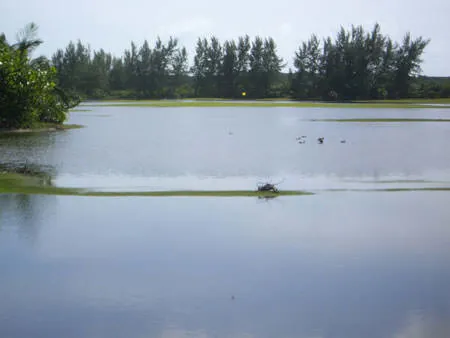
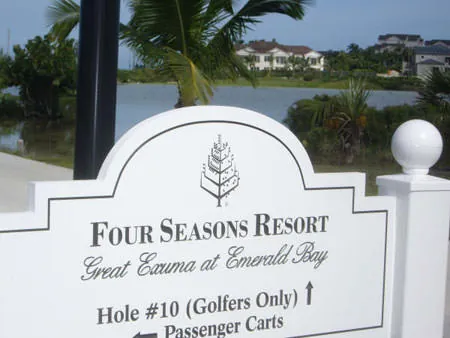
The impact of fertilizers and herbicides soaking into the bay can be devastating to the marine environment. The Nassau Guardian covers the issue here.
09.22.07
Saving the Sawtooth
Like Great Guana Cay, Bimini is facing its own development issues. This youtube video is an outstanding look at the issues facing Bimini. The video is a fast seven minutes. Its production is superb and it concisely explains the big picture at Bimini.
Link to Video
Like Guana Cay's Bakers Bay, Bimini Bay Resort has many critics. This month, the developer has allegedly attempted to muzzle those critics' voices through SLAPP tactics. Several letters went out to critics of the development threatening legal action if their criticism continued. Apparently, the tactic has backfired on the developer, as the Bahamian press has not responded kindly to Capo's tactics.
09.10.07
Two Scientists Central to Guana Cay Fight Create Florida Victory
Dr. Mike Risk, the coral ecologist who wrote the original response to the Bakers Bay golf course and marina plan, and Dr. Tom Goreau, who has argued against the Bakers Bay Golf and Ocean Club independently of Dr. Risk, have joined forces in Florida for an amazing victory for the state, and coral reefs.
The City of Lake Worth had planned to pass a permit that would allow the city to build a desalinization plant and dump the residue into the ocean through an old underground pipe. The plan was designed to address a concern in the city that freshwater was being contaminated by saltwater.
But Tom Goreau and Mike Risk made a very public and very critical assessment of the plan, which they argued would increase the nutrient levels of horseshoe reef, a mile from the desalinization plant's output.
The issue is the same as that on Great Guana Cay; the large input of nutrients created by the Bakers Bay Club is killing Guana Cay's reef.
Here is a quote from the Sun-Sentinel:
However, the environmental coalition presented two nationally recognized experts in ocean sciences to refute the state's assessment.
Thomas Goreau, the Harvard-educated president of the nonprofit Global Coral Reef Alliance, and Mike Risk, professor of environmental sciences at McMasters University in Canada, vehemently argued that there is no such thing as "a safe level" of ocean contaminants. "Every time you get more nutrients into the coral, it expands and kills more coral," Goreau said.
"Nutrients act like a fertilizer." After hearing their arguments, city commissioners unanimously denied a request to hire a lobbyist to negotiate with a state agency for a permit that would allow the city to dump 4 million gallons of reverse osmosis concentrate near the pristine coral reef.
The Lake Worth mayor credits the efforts of Goreau, Risk and other scientists, divers and environmentalists with saving the Horseshoe Reef.
The expert testimony of Risk and Goreau was crucial to the Florida victory. Reefs in Florida are severely degraded.
09.09.07
Costa Rican Corals dying from Hotel Fertilizers
A recent Reuters article attributes hotel golf course fertilizers and bad sewage systems to the destruction of a crucial Costa Rica coastal reef. The article backs the claims of scientists who criticize Bakers Bay Club's plan. Here are some quotes from the article:
"A tropical algae thriving on fertilizers from hotel golf courses and badly treated sewage is killing one of Costa Rica's most important coastal reefs, scientists say."
"The green, feather-like algae is spreading along the reefs of Culebra Bay in Costa Rica's northwestern Gulf of Papagayo, a popular scuba diving spot and home to a rare species of coral. The algae blocks the sunlight and suffocates the reefs."
"A tourism and construction boom along the palm tree-lined beaches is creating nitrogen- and phosphate-rich waste that feeds the algae, known as Caulerpa sertularioides, and Costa Rica is only just becoming aware of the problem."
"Scientists say about 80 percent of the reef area, which stretches for about a mile and a half (2.4 km) along the coast line, is covered in the algae."
The article pays tribute to the multiplying effect coral issues can have on nearshore environments:
If left unchecked, the algae could also severely damage the ecosystem of the bay, allowing non-native species of fish to come in and displace the native species.
Costa Rica is facing the same dilemma as the Bahamas:
"The algae is the latest challenge facing Costa Rican authorities as the Central American country struggles with conserving its unique tropical biodiversity while attracting tourists and marketing itself as an ecotourism paradise."
08.31.07
New Development to Remove Coral Reefs
A new development will remove coral reefs and place them elsewhere. More insane plans in the Bahamas, according to an article from The Bahama Journal.
08.28.07
The New Golf Wars
This article appeared in the recent issue of the Northern California Golf Association magazine, along with an opposing piece. The article was written by Alfredo Quarto, a mangroves expert who has seen too many mangroves areas destroyed by golf courses. By Alfredo Quarto, Executive Director, Mangrove Action Project
This may be an epitaph for Bimini Island — that 'Island in the Stream' made famous by Ernest Hemingway in his book by that title. Or perhaps an epitaph for Guana Cay, another Bahamian island pearl which is also losing its mangroves and its unique tropical island beauty, succumbing to mega-development, crooked politics, and the game of golf. Throughout the world this same scenario is being repeated.
Too often, tourism is a booming and busting industry, bringing immense investment dollars and relentless development pressures. In the last three decades the tourist industry has written its recipe for mega-development in mortar and stone and trim, green fairways.
Throughout the tropical and sub-tropical regions of the world, tourists can vacation in luxury resorts, and play golf on neatly manicured, multi-million dollar courses laid out with beach front and ocean view enough to take one's breath away. But what else is being taken away in the process?
What is clear is that the once seemingly innocuous game of golf has not taken to its new fairways in a fair way, and its greens are not really so green after all. Many of those places where all-out "golf wars" are being waged are now wracked with environmental ruin and social disruption.
What exactly is it about this game of golf that seems so off course?
A Hole-in-One's History
Golf's origins in Scotland around the 10th Century seem humble enough. Over the passing millennia, golf spread slowly to new regions around the globe. In the last 50 years, this growth became exponential, with thousands of new golf courses constructed. Golf's newest growth spurts were especially felt in the last two decades when it became a near US$25 billion industry. In 2005, Golf Digest estimated 32,000 golf courses existed (half of these in the US catering to over 26 million golfers).
Golf has become popular in the Asia-Pacific region, taking hold first in Japan and expanding rapidly throughout Asia. Its rampant spread fomented opposition by both environmentalists and affected local communities against the multi-billion dollar land-grab tied to the apron strings of the greater tourism industry.
Too Many Tee'd-off to Ignore
In 1993 the Global Anti-Golf Movement (GAG'M) formed in Penang, Malaysia. Its mission was to halt destructive golf course development worldwide, while appealing "to golfers to be fully informed and aware of adverse environmental, health and social impacts of golf tourism." GAG'M commemorates a "World No Golf Day" on 29 April every year.
Mounting global opposition to golf is directed not so much against golf as a sport itself, but against the rapid expansion of the game as an industry.
This is an important distinction, which if properly addressed could offer an opportunity for golf lovers and those opposing golf course expansion to work together towards conflict resolution.
One step towards peaceful accord involves halting further expansion of the industry, as there are already ample golf courses around the world to satisfy demand.
A second step is to remove improperly sited golf courses from economically and environmentally important areas, such as once-productive farmlands, forests, and wetlands, including mangroves and salt flats. Restoring these areas to their prior productive capacities would be of great service.
Illicit development of golf courses on agricultural lands and ecologically sensitive areas has led to massive losses of valuable food production and complex wetland services. Conversion of mangroves to golf courses causes loss of vital functions such as nursery grounds for commercial and recreational fisheries and buffer zones against hurricanes and storm surges.
Falling into the Toxic Trap with no Easy Way Out
The maintenance of golf courses involves wide-scale application of a chemical cocktail to preserve the greens, poisoning both land and waterways in the paths of the effluent, affecting both targeted and non-targeted species.
In addition to toxic runoff, there is massive water use and wastage. On average, 18 million gallons of water per year maintain one golf course, conferring its own negative impact on surrounding countryside, wildlife, and neighboring communities. This can cause problems for affected nearby residents dependent upon the same water resources.
Worldwide, there are approximately 2,500,000 acres of lands converted to golf courses. Multi-purpose, mixed-value resource zones of high biodiversity are lost to low-value, non-native, monoculture production of restricted use — impeding ecological corridors for migratory birds and other wildlife.
Our offspring may well ask us, and we must answer them truthfully, "A golf course, or a living future…please tell us, who chose the golf course?"
08.18.07
Claims of slave-like conditions in Bimini. Men fed Rice and kept in a Shed with Dozens
Things keep looking worse in Bimini, where the Bimini Bay Resort and Marina is literally ruining the tiny island. Here are a couple recent articles on Bimini Bay. First, a recap of the project:
The Conrad Bimini Bay Resort and Casino is part of an overall new seaside village, the Bimini Bay Resort. The hotel, which will be built in the second phase of the development, will offer 250 luxurious guest-rooms, several fine restaurants, an elegant marina, a spa and a casino.
An additional wing of 160 residences will be constructed adjoining the hotel. In a first phase, The Bimini Bay Resort will comprise 320 residential units, 150 marina berths, assorted retail and several restaurants.
The subsequent phases will also include an 18-hole Robert Trent Jones golf course and residential villas. Overall, the resort will have 1,590 residential units spread over 700 acres, 500 marina berths, and five miles of white sand beaches.
Read the full story at The Nassau Guardian
"Bimini's Labour Department is investigating claims of labor abuses after several expatriate former construction workers of the Bimini Bay Resort and Marina, who claim they had been working in "slave-like" conditions, publicly criticized the company following their return to Mexico.
An article published in Saturday's edition of El Universal, a Spanish-language newspaper, brought attention to the plight of the seven men who managed to "escape" Bimini after three months of allegedly working in relative servitude.
According to the former employees, an additional 100 workers from Queretaro, Noble, Chiapas, and Federal District remain on the island. The men were reportedly lured to Bimini with false promises only to find less-than-savory conditions when they got there.
Mauricio Holy and David Alejandro claimed that they were paid less than minimum wage, worked 11 hours a day, received paltry medical attention, and were without any form of communication during their three-month employment span.
The men further alleged that their documents were taken from them when they arrived in The Bahamas and they were given work permits so that they could move freely about the island; however, according to one employee who spoke to The Guardian on the condition of anonymity, the Mexican workers are not even allowed to leave the compound on weekdays.
The employees claim they make about $3 a hour, which is $2 less than what most Bahamian employees make at the company. And sometimes, one worker indicated, they are not even paid on time....The men claim they were overworked and mistreated. Their work began at 7 a.m. each day and ended around 5:30 p.m. They were fed only rice with beans and were forced to sleep in a shed with up to 70 people."
Read the full story at The Nassau Guardian
08.18.07
Bimini Bay Draws Concerns
Here are some more quotes from another recent Bimini Bay article from the Nassau Guardian:
Bimini business owners say they'll be "catching hell" as an all-inclusive project prepares to open for business. Most locals agree the Bimini Bay development has helped increase employment, a positive impact on the seven mile island. Biminite business owners, however, feel the project poses a threat to the future income of locals.
"It's gonna dominate Southern Bimini," said Webster Duncombe. "It's of no help to Bimini in the long run."
The multi-million dollar project, which sits on the northern tip of the tiny island, is designed to be all-inclusive, leaving visitors with little or no reason to venture off the grounds. Bimini establishments are clustered toward the southern end of the island. While many locals fish for a living, there many depending on profits from privately-owned businesses.
Sarah Lee Pinder, employed at a local beauty salon, said tourists don't visit in town as much as they did before. "The project isn't benefitting Bimini at all," she said. "But it is benefitting Bimini Bay. You can't fight government hill. But the whole development affects each and every person."
08.16.07
Cayman Islands Coral Reefs are Dying
Shurna Robbins wrote an article for Reuters in May 2007 that eloquently explains how quickly coral is being destroyed in Caribbean countries. While the article focuses on climate change, it also discusses the anchor projects associated with cruise ships.
As my readers know, the Bakers Bay Club rests on a former Disney/Premiere cruise ship anchor development.
The development, which was owned by the Treasure Cay developer at the time, destroyed much of the coral cover on the Sea of Abaco side of the island, and degraded the quality of the Atlantic side reefs, because of dredging operation.
To coral reef-driven tourism industries like those of the Cayman Islands, there could be a greater cost in ignoring climate change than fighting it.
Ranked among the top 10 scuba diving destinations in the world, the reef system of the western Caribbean territory has lost 50 percent of its hard corals in the last 10 years in spite of strong environmental laws, scientists say.
"We are at a very critical time in the history of coral reefs," said Carrie Manfrino, president of the Central Caribbean Marine Institute on Little Cayman island.
"It is like working with a sick patient. How well we treat that patient will determine if that patient survives. We could potentially see the end of hard coral reefs in our lifetime."
The Caymans tourism industry, which represents about 50 percent of the colony's gross domestic product, was kick-started in 1957 when dive industry pioneer Bob Soto opened the first scuba diving operation in the Caribbean.
Fifty years later, about 2 million visitors arrive every year, with most either diving or snorkeling on famous sites like the North Wall or Stingray City.
The sport helped transform a sleepy territory of 8,500 people subsisting on fishing and seafaring into a luxury tourism destination and sophisticated offshore banking center whose 52,000 people have the highest per capita income in the region.
A UN panel — the Intergovernmental Panel on Climate Change — has warned that the world must make sweeping cuts in greenhouse gas emissions to avoid a rise in temperatures that could inundate islands and coastlines under rising seas, and kill off the world's temperature-sensitive coral reefs.
In a report issued on Friday, the IPCC said keeping the increase in temperatures within 2 degrees Celsius (3.6 Fahrenheit) would only cost 0.12 percent of the world's annual gross domestic product.
To Cayman residents who depend on tourism, that would be a small investment if it were enough to save the coral reefs.
Global warming is heating sea water, which leads to coral bleaching, an ailment that causes normally colorful corals to turn white, and white plague, a disease sweeping and killing coral around the world.
PROTECTING THE REEFS
Another threat in the Caymans comes from cruise ships, which have damaged large areas of living coral with their anchors and chains, said Gina Ebanks-Petrie, director of the Cayman Islands Department of the Environment.
Yet cruise ships are an important and growing part of the Caymans' tourism industry. Thirty-six percent of tourist revenue comes from 1.7 million cruise ship passengers who visit each year, and more ships are making the islands a port of call.
Even with a 50 percent decline in hard corals, Caymans' reefs are still considered among the healthiest in the Atlantic. Scientists say the islands are geographically isolated by surrounding water 6,000 feet (1,830 metres) deep, which minimizes the impact of pollution from other countries.
The Marine Conservation Law passed in 1986 established the marine park system and has played a key role in protecting Caymans' reefs. But Ebanks-Petrie said it has struggled to adapt to rapidly changing environmental conditions.
The dive industry worries that without a coral reef, the Cayman Islands will not have anything different to offer tourists than the rest of the Caribbean.
"If the coral reef dies, the algae will go, and the tropical fish will go. Then there will be nothing left to see," says Nancy Easterbrook, operator of Divetech.
Manfrino said hope is not lost.
"We can't give up," she said. "Science is always coming up with major discoveries, so we may find a way to save our reefs."
08.05.07
Government Regrets Bimini Bay
The Government of the Bahamas has apologized for approving the Bimini Bay development in Bimini. The opposition to this development is the sister-opposition of Guana Cay. The two developments are equally unacceptable.
After seeing Bimini — two tiny islands — destroyed, the Ingraham Government, which approved the development before the Christie Administration came to power in 1999, now looks back at the giant mess they have created. The apology is a step in the right direction.
But here is a great article by Nicki Kelly, who opposed the Bimini development from the start, and was ridiculed by the same administration for her words:
06.18.07
Creepy California Golf Course uses Bakers Bay Tactics, but Project Gets Halted
The website looks like a DLC website
Some interesting news from the home state of Discovery Land Company. A planned megaresort golf development on the Monterey Peninsula, which used Clint Eastwood as its spokesman, was halted this week by the California Coastal Commission.
The development, and the strange tactics it used to paint itself green, remind us that golf developments around the world use deceitful practices to persuade the public or to woo public officials to approve yet another golf course in a place a golf course should never have been built.
This is not to say Discovery Land Company isn't particularly bad — their environmental practices are probably the lowest in golf history. But they are not alone. About a year ago, I remember speaking with some officials at the PGA's green division. One of them, angered with my many questions, said, "People just hate golf!"
What he meant was, the public was irrationally against golf for no good darn reason. Looking back at that comment, I cannot disagree more. People don't hate golf, people hate the golf industry when it acts deceitfully. Before I continue, let me quote from the Antigolf Manifesto, an Italian movement to reconsider golf development around the world. This website and manifesto is a reminder that there are existing arguments out there to begin to immediately question all golf course proposals:
1. An immediate moratorium on all golf course development.
2. An open and public environmental and social review/audit of existing golf courses.
3. Existing golf courses should be converted to public parks, and where they lie in forest areas, wetlands and islands, there should be rehabilitation and regeneration of the land to its natural state.
4. Investigations into illegalities in the golf industry, including illegal occupation of public lands and encroachment into protected forests, diversion of water, violation and evasion of corporate regulations and corruption. We call on governments to prosecute the violators.
5. Laws should be passed to prohibit the advertising and promotion of golf courses and golf tourism.
6. Overseas development assistance, from countries including Japan Australia and European public funds should not be used for the promotion of golf courses and golf tourism or the construction of infrastructure related to such development.
The story of Tehama By the Sea is an amazing tale that parallels Bakers Bay Golf & Ocean Club in so many regards. Here are some important links on the subject:
Salon: Poisoned Fairways. My apologies to Jake Tapper for quoting liberally from his wonderful piece for Salon. I much prefer you read his full story in the link provided.
But there is reason to doubt the authenticity of the Pebble Beach Company's version of any "story." In November 2000, Monterey County voters had the chance to vote on Measure A, a ballot initiative pushed by Pebble Beach Co., that amended, for the second time, their 1992 request to build the Forest Course.
Since the company was asking for permission to build fewer homes, and chop down fewer trees, than its previous two requests, the company figured it could sell Measure A as a pro-environment move. Voters were besieged with glossy fliers. One sent by a company-funded group called the "Committee to Preserve Del Monte Forest" featured lovely nature shots and language urging locals to "vote for the environment ... preserve the Del Monte Forest."
One word that never appears in the flier? "Golf."
Nothing about the minimum 9,000 Monterey pines that will be chopped, or the mountain lions, black bear, great horned owls, coyotes, deer or gray foxes that will be turned out of their homes. Even many pro-golf types roll their eyes when discussing the insatiability of Pebble Beach Company execs. When it comes to its lust for more courses, so as to accommodate more players and more fees, there's only one green guiding the executives' path.
The Pebble Beach Company sank an estimated $1 million into its campaign for Measure A.
The environmentalists launched a $30,000 counter-effort, but their opponents' campaign included a very public role for Eastwood — who in 1999 bought the company for $820 million with three other major (and myriad other minor) investors: 61-time U.S. PGA Tour winner Arnold Palmer, former baseball commissioner Peter Ueberroth, and ex-American Airlines honcho Richard Ferris.
Omnipresent TV ads featured the 72-year-old actor/director and his 37-year-old wife, Diana Ruiz, a popular former anchor at the Salinas NBC station, standing in the middle of a pine forest selling Measure A as a green move. The measure passed overwhelmingly, by a 2-to-1 ratio.
And read on...
"But disingenuousness is par for the course (sorry). Golf course owners all over the country trot out the claim that their links have been certified by "Audubon International," for example — but they do so assuredly knowing that few people know the difference between Audubon International (funded by the U.S. Golf Association as well as developers like Arnold Palmer Golf Management, Marriott Golf, PGA Tour Golf Course Properties, and the Walt Disney Company) and the National Audubon Society, which unsuccessfully sued Audubon International in 1991 for using its name."
The Independent writes, "In my 20 years of attending the coastal commission's meetings, this is the most egregious example of development trying to circumvent the Coastal Act," Sara Wan, one of the commissioners, told the Los Angeles Times. "It amounts to wholesale destruction of the environment, [and] destroys the essence of the Monterey pine forest."
San Jose Mercury News — well written synopsis.
April 27, 2007
Lawsuit seeks to block Ara Macao resort approval
Notes from the Road has been following the story of the Ara Macao Resort and Marina Development in Southern Belize, an area I wrote about in 2002. This development is as equally repugnant as the Bakers Bay Club, although the scale is a much larger one.
The Placencia Peninsula, easily visible on any map of Belize, is a huge piece of land characterized by a culture rich in Garifuna and Mayan traditions, and a relaxed tourism-based economy. I strongly believe in the development of the Caribbean; but I am against 'Miami Overspill' that forces foreign developers to strong-arm themselves into a community, creating monstrous developments that threaten ecosystems, communities and cultures.
Here is the latest from this closely-related fight:
Earlier this month, the Peninsula Citizens for Sustainable Development (P.C.S.D.) filed a lawsuit asking the Supreme Court to overturn a decision of the Department of the Environment (DOE) approving the Ara Macao Resort and Marina development at the northern end of the Placencia Peninsula in the Stann-Creek District.
The applicants also asked the court to grant an injunction to prevent Ara Macao Development Ltd. from proceeding with the development. The lawsuit is based in part on DOE's failure to comply with Belize's environmental regulations.
The Peninsula Citizens also maintains that DOE unreasonably and irrationally approved the development because it did not have critical information about environmental issues such as downstream beach erosion, effects of the development on the Peninsula's marine environment (such as lobster, conch and coral reefs) and whether Ara Macao and other new developments could quickly use up the water supply that provides Placencia, Seine Bight, Maya Beach, Independence and Big Creek.
The environmentalists also argue that DOE's approval failed to protect the public's access and use of the 66' public reserve on the beach surrounding the development.
It also says the development violates zoning for the area under the Mango Creek/Placencia Special Development Area, as recognised by Belize law.
The Peninsula Citizens for Sustainable Development is a Belize non-profit corporation and grass roots community organisation of Placencia Peninsula residents concerned with the development of the Peninsula.
The group (P.C.S.D.) brings information about proposed developments to Peninsula residents to ensure that all developments are environmentally sustainable with respect to the fragile eco-systems of the Peninsula, its communities and cultures. Donations to the Ara Macao Litigation Fund may be made by depositing funds into the P.C.S.D. account at Atlantic Bank, number 100158838.
Donations may also be made by cheque payable to the Peninsula Citizens for Sustainable Development, General Delivery, Placencia, Belize.
(Note: Justice Awich will hand down his decision on whether PCSD can go ahead with its lawsuit on 4 May 2007.)
Peninsula Citizens for Sustainable Development, Placencia, Belize, info@placenciadocuments.info
Feb 21, 2007
BVI Course Passes Despite Objections
After years of fighting from locals and marine biologists, a high-end golf course is going to be built in an area where it should never have been built.
Link from ENN.com: "The British Virgin Islands has approved construction of a high-end resort and golf course that would take up most of a largely uninhabited island, the territory's government announced. Developers of the Beef Island Golf & Country Club Resort, a roughly 650-acre project, received government approval mid-February after months of sustained debate in the British Caribbean territory of some 22,000 people."
February 12, 2007
Harbour Island Awakens
Recent posts at The Briland Modem suggest the islanders of Harbour Island are following Great Guana Cay's lead, finally, and taking a harder line against megadevelopment on their own shores.
One poster writes, "WE realize that there is a need for jobs for Bahamians and that some people think that we are against ALL DEVELOPMENT we want you to know that we are NOT AGAINST ALL DEVELOPMENT. We are just against the kind of development that is currently taking place on the island right now. THIS KIND OF DEVELOPMENT that allows for politicians hand to be greased instead of injections of cash into the local infrastructure."
November 3, 2006
Dying coral reefs threaten tourist industries
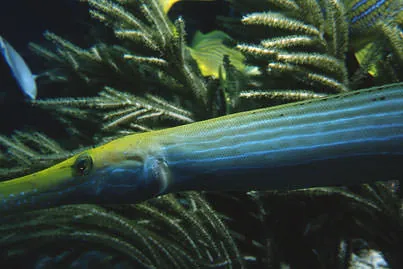
Photo by Erik Gauger. An angelic trumpetfish gracefully swims among delicate soft coral structures in Guana Cay. Guana Cay's reefs are under threat by a California golf developer whose plan was recently backed by the Bahamian Supreme Court.
An Associated Press article today reiterated the concerns of Guana Cay locals, who have been fighting for two years against a golf megadevelopment on their tiny island. An excerpt from the article: Nearly 500 million people depend on coral reefs for tourism income and coastal protection, and about 30 million of those rely on coral reefs for their food, according to a 2004 report on the status of coral reefs worldwide commissioned by the Australian government.
"The people who wash the bed linens in the hotels are starting to realize their life depends on the health of the coral reefs," said Andrew Skeat, executive director of the Great Barrier Reef Marine Park Authority.
Tourism is the fastest growing major industry in the world, and ecotourism accounts for 20 percent of the worldwide market, according to the Australian report.
In the Florida Keys, millions of tourists spend $1.2 billion annually to see or catch fish and other undersea life, Causey said at the meeting in St. Thomas, where nearly 200 researchers from the Caribbean, Florida and U.S. Pacific islands gathered.
"Some of our reefs receive more dives than anywhere in the world," he said. "In South Florida, the environment and the economy are inextricably linked. You cannot separate the two."
September 25, 2006
Edward O. Wilson, in New Bestseller 'Creation' cites Caribbean as Vital Hotspot for Conservation

Wilson warns of further destruction.
In his latest book, 'Creation: An Appeal to Save Life on Earth", Edward O. Wilson calls the Caribbean the second most important hotspot to save in terms of biological diversity. In this appeal to religious America, Wilson describes the reefs as 'retreating worldwide.' He writes, "Those around Jamaica and some other Caribbean islands have largely disappeared."
Corals in Jamaica have declined to about 5% their original cover — it is estimated that in many locations, recovery is impossible. Since so little is known about reefs, the exact causes are unknown. But the rise of megadevelopments and dense hotel construction in the 1970's, 1980's and 1990's.
In parts of Jamaica where development has remained minimal, coral reefs are healthiest. Wilson has been cited as Darwin's natural heir. He is a distinguished researcher, environmental writer and Harvard entomologist.
From "Rise Up Sweet Island" (unpublished, 2005–2006)
Erik never finished this piece for publication — most of it was raw, unedited material unsuitable for the record. But a few passages hold up as real reporting and are preserved here.
An Abaco Mangrove
Written October 27, 2005.
"Contrary to prevalent rumors, Joe's Creek, the mangroves and the Guana Cay bonefish flats will all be preserved and not altered by development." — Advertisement from Discovery Land Company's Bakers Bay Golf and Ocean Club
Below the star-speckled surface, greenish orbs by the thousands pulse in sync. Grand cathedrals of roots rise from this metropolis of the weird. Its woody columns are inlaid in horned shells that move slow, like a golf cart in search of a lost ball. Fishes of many forms pass beneath these spires. As your keen eye wanders upward these spires, you will perhaps find an ivory butterfly form — an encyclia orchid — dangling like an angel, and even higher a green bird with a painted face — a green heron, whose wading demeanor is almost regal.
But all of these things, you will find only in a very subtle context. For this place, draped in layers of green, is so subtle a place that for most of history it was considered the dredges of the world.
This place, this lovely place, is an Abaco mangrove.
Mangroves constitute most of the Bahamian Abaco Islands. Fly over in a plane, most of the island is mostly submerged at high tide. The mangroves so dominate Abaco's "land" that the island has produced a fair trade out of a type of rugged tourism called bonefishing — saltwater flyfishing concentrating on the slim and transparent fish who meander these flats.
A mangrove is a community of salt-tolerant plants and trees that live in the muddy tidal flats of our world's tropical regions. These are a complex ecological buffer zone that serve to stabilize the land as well as feed the sea the bounties of the land. Equally, the mangroves act as the nursery of the sea. Sharks bear their young here. Coral reef fishes begin their awkward lives between the roots of giant mangrove trees. Molluscs grow.
The mangrove is part of a complex triangular relationship with the seagrass community and the coral reef. Perhaps most important, the mangroves absorb excess nutrients before they make it to the nearshore environment. For many of these environments, foremost among them the coral reef, this absorption helps buffer them against their killer — excess nutrients.
Dr. Michael Risk on the Marina Design and Monitoring Gaps
An exchange between Dr. Michael Risk — a coral reef ecologist with nearly 50 years' experience who advises the State of Florida's Technical Advisory Committee on land-based pollution — and a Discovery Land Company representative, over the Bakers Bay marina design and the EIA's monitoring program:
"I have chosen to enter this discussion because I feared it was starting to generate more heat than light.
Allow me to introduce myself. I am a coral reef ecologist with almost 50 years' experience in the field. I have worked in all the world's major reef provinces, and advise several countries (including yours, through CPACC) on reef monitoring and impact issues. I have worked with many NGOs, including Earthwatch. I wrote an earlier report on Guana Cay to which you have referred.
[…] I was concerned about the marina design. Model flushing rates had to be ruthlessly tweaked to achieve even minimal values. Mike 21 is a workhorse model, one of the Delft Hydraulics Lab family. In order to get the results you need, however, it should be run in 3D mode. There are only a few firms with the expertise to do this. Until this is done, the marina design will be questionable.
Reef monitoring is one of my areas of expertise. (Most current reef monitoring projects are based, wholly or partially, on my 1972 paper.) I can state without fear of contradiction that adequate baseline studies have never been done. This is surely a prerequisite to any development.
[…] My understanding of the present situation is that: artificial reefs have been constructed, without sufficient analysis of existing fish populations — I would like to see the justification for even building these in the first place; and reef monitoring data are being taken using volunteers. The present situation is untenable. It would be easy for any person experienced in this field to do you serious damage, if they were ever put on the stand.
Here is the way it should have gone: full-blown baseline studies (corals, fish, nutrients), contracted out via open RFP; a monitoring program set up after consultation with experts — e.g., FMRI, NOAA (I advise both groups); and full data exchange via the web, with arm's-length oversight.
I urge you to reconsider your present position, because you are very vulnerable. The nutrient question is especially vexing. Studies show that nutrients applied to the surface, in soil regimes such as those on Guana, will be on the reef in hours. Your client will be more interested in green grass than green turtles." — Dr. Michael Risk
Dr. Risk also wrote, of the developer's EIA: "Throughout the EIA, mention is made of legislative guidelines and policies in place in the State of Florida. This seems in keeping with the attitude taken by many foreigners coming to Bahamas, that it is not a sovereign nation but an extension of Florida."
Dr. James Cervino and the Nutrient-Threshold Debate
Dr. James Cervino, a coral disease researcher who has published extensively with Dr. Thomas Goreau's Global Coral Reef Alliance, argued by email with a Discovery Land Company representative over the specific nutrient thresholds the golf course's fertilizer program needed to stay under:
"I carefully read through the report you sent to me and there seems to be no approach to controlling the levels of nitrogen and phosphorus that will result from Discovery Land Co. building this golf course. Since you are the chief scientific advisor, are you addressing the concerns of eutrophication as a result of the building of the fertilizer-rich golf course that will result in the growth of smothering algae that will kill this reef? Drs. LaPointe, Risk and Goreau and myself all agree that any building of a golf course will result in this reef's demise."
Cervino cited specific published thresholds: "Biologically available nitrogen (nitrate plus ammonia) needs to be below 1.0 micromole per liter (less than 0.014 parts per million of nitrogen), and biologically available phosphorus (orthophosphate plus dissolved organic phosphorus) needs to be below 0.1 micromole per liter (less than 0.003 parts per million of phosphorus). In addition concentrations of chlorophyll need to be below 0.5 parts per billion. Can you guarantee that this golf course and dredging will not breach these thresholds?"
The developer's representative maintained that the course's seashore Paspalum turfgrass required little to no fertilizer and would be managed with "scientific and monitoring protocols" to control runoff. Cervino was unconvinced: "This will not stop the direct flow of N and P to leach through the limestone substrate. Are you showing these levels in your report?"
Dr. Cervino’s own survey of the reef, made in October 2005, is reproduced in full in Dr. James Cervino’s 2005 Coral Report.
General Golf & Environment Commentary
The golf.html page these dispatches originally lived on has since been rewritten as a standalone article on the science of golf courses and coral reefs. These entries are what's left from the old page that isn't covered there — general commentary on the golf industry and environment, written in real time between 2008 and 2011.
General golf & environment commentary, 2008–2011
January 23, 2008
National Geographic on Desert Golf

The February issue of National Geographic has an amazing article on water management in the Western United States. The article includes a photograph of a golf course peculiarly placed in the Mojave Desert. The caption reads, "Golf courses in nearby Southern Nevada still use 8 percent of the region's water." Discovery Land Company, which owns Bakers Bay Golf and Ocean Club in Great Guana Cay, created five desert golf resorts. All encapsulate that cookie-cutter Taco Bell mega-mansion look popular in Arizona.
February 21, 2008
Americans Giving Up Golf
This is from the New York Times today:
"The total number of people who play has declined or remained flat each year since 2000, dropping to about 26 million from 30 million, according to the National Golf Foundation and the Sporting Goods Manufacturers Association.
More troubling to golf boosters, the number of people who play 25 times a year or more fell to 4.6 million in 2005 from 6.9 million in 2000, a loss of about a third.
The industry now counts its core players as those who golf eight or more times a year. That number, too, has fallen, but more slowly: to 15 million in 2006 from 17.7 million in 2000, according to the National Golf Foundation."
I wonder how this affects golf resort developments that rely on a good U.S. economy and an expanding interest in golf?
March 15, 2009
Travel & Leisure Golf Folds

Travel + Leisure Golf just announced it will be folding. This news comes amid a series of critically bad news for golf destination developments around the world.
July 7, 2009
Day 1 Privy Council: Notes on Golf Courses and Marinas
Today is the first day of court in the Privy Council for the residents of Great Guana Cay versus Discovery Land Company and the Bahamian government. I thought this would be a good time to review some of the primary concerns about the golf course and the marina. First, however, I just received this photograph which shows the construction of lots on the Sea of Abaco side of the island.
Note that palms are being used between the tiny lots. The sheer amount of denuded land is incredible: silting and sedimentation are ground one for reef destruction, and the photos coming in are revealing an entire island side that has been stripped of vegetation.
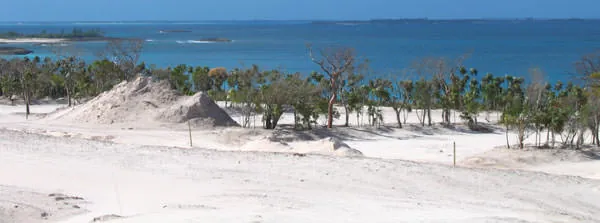
Bakers Bay Club Golf Course
Bakers Bay Club Marina: Sedimentation from Construction Phase and Post-Construction Maintenance Dredging
Dredging would take place during the construction of the marina, posing hazards to the coral reefs and bonefish flats due to siltation. If the marina is constructed, the "second channel" will also require periodic dredging, with attendant risks to the reefs.
Impacts from Occupants of Marina and Associated Marina Operations
Whether or not the Bakers Bay Club marina would ever be occupied at the ambitious levels of the current plan, there will be numerous threats to the marine environment from any yachts berthed in the marina, from the occupants of the vessels, and from the operations of the marina. Pollutants from the vessels include toxic chemicals used as anti-fouling paint, as well as the more obvious sources of pollutants from fuels, lubricants, materials washed from the decks, and various items of trash.
Here are some observations regarding the Environmental Management Plan as described in the EIA.
Regarding the REA for the marine environment, including the coral reefs, Dr. Risk commented:
No research-grade baseline assessment or monitoring of the reef resources has been performed under the auspices of the EMP as of now.
The International Year of the Reef website summarizes marinas and reefs this way: "Sensitive habitats can be destroyed or disturbed by dredging activities to make deep-water channels or marinas, and through the dumping of waste materials."
January 1, 2010
Golf Courses in Decline, according to Jacksonville Newspaper
An interesting article on declining golf courses from the Florida Times-Union.
"Orender said he remembers a time in the late 1970s and early '80s that it seemed like every new course was successful. There was enough of an untapped market that each new course increased the number of rounds being played in a community.
By the late 1990s, that ended. The number of rounds played across the country flattened, then dropped.
Yet new courses kept coming, particularly as centerpieces of housing developments. And the number of rounds kept dropping."
January 1, 2010
Larry Olmstead, Lions, Bears, Tigers and a Poorly Thought Out Ode to Golf

From the Facebook Page, Golf is Not a Sport.
A month ago, Jane was reading a copy of Outside Magazine, and burst into laughter. When I asked her what was so funny, she told me she had just read this great letter to the editor, which, she explained, was a rebuke of an article some guy had written defending golf as a sport. I scratched my head and thought to myself — wait, why would anyone be defending golf as a sport?
When I read the letter, I laughed too. It was very funny. And, the editors of Outside included a note that the letter was the longest anti-golf-is-a-sport letter they had ever read, and so they had to edit it down to its best parts.
Now, naturally, I was curious to read the full unabridged letter, and so I contacted David Tierney to plead for the full letter. He gave me permission to publish it in full. I included it at the end of these notes.
Secondly, I wanted to know who this Larry guy was who wrote this article in Outside Magazine. As all of you know, I am a fan of golf — particularly mini-golf and the historical pre-cursor to golf, which was played without a course over fields and mountains and which required great stamina.
So, while The Guana Cay blog is a blog about golf courses and megadevelopments that threaten sensitive ecosystems, I believe that good people play golf and that it is a nice hobby. So, all in good fun and humor, I thought I'd share this strange debate with you, mostly because this reiterates the position of the Guana Cay Blog that golf journalists are lazy.
Thirdly, I want to add a few of my own notes on Larry Olmstead's article.
Larry Wants to Fight
Larry Olmstead, who wrote "An Ode to Golf" for Outside Magazine, responded to David Tierney's letter to the editor in his blog: "Of course there was one a**hole who missed my point entirely and made me out to be a hater of all things, including the environment, poor people and common sense, but you will have to read it yourself and decide."

Larry Olmstead's blog features this in the header of each page of his blog.
I was taken aback by this unsportsmanlike response to a letter to the editor that had some very valid points. Letters to the editor are a vital part of magazine journalism; they allow the reader a final say; a traditional check and balance on a magazine. Some readers judge magazines for their willingness to publish unflattering letters to the editor, many consider them a vital part of the discussion created by the magazine's content.
For an author to use such foul language towards a writer of a published letter to the editor responding to his own article in a professional magazine is absurdly unprofessional. For Olmstead to proudly announce that his blog is part of a network of "…Actual Journalists" but then lash out at a single critical review of his article actually validates a point that Tierney made in his letter — "(Olmstead's article) accurately represented the sport he defended and the clueless arrogance of many of its participants…"
While writing the Guana Cay blog, I have found repeatedly, over and over that golf journalists live by a lower standard than the rest of journalists — tied so tightly to an industry, they are taught to play caddy to developers and golfers and gadget-makers, but rarely willing to check facts or proofread, and Larry Olmstead, as you can see by the frequent misspellings and grammar errors in his blog, represents this low-quality facet of golf-writing to the tee.
Now, even if golf were a sport, it would not be the kind of sport that Outside Magazine would ever cover seriously. Outside Magazine chose Larry's article precisely because of the irony. It is like the science teacher who holds up a candle and says, is this object alive? And then provides sufficient evidence to prove it is.
Outside Magazine doesn't cover chess, or basketball, or poker or football or croquet or tae kwon do, although that doesn't make any of those sports and pastimes any less. It's just a different magazine. They cover a particular brand of outdoor sports, lifestyles and news, and their audience, which is fairly sophisticated, actually get the irony.
There is no debate — Outside Magazine readers would never accept golf articles in their magazine.
So what is a sport? To find out the answer, first imagine that you are in the African Savanna, and you are watching lion cubs playfully, but skillfully fighting each other — using stamina, technique, endurance and guts in games that will later help them hunt, hide and survive.
You can watch monkeys or dogs or bears do the same. And I can watch my little boy play these same games at school. It is something all of us mammals do. We are pre-wired to like play that will prepare us for the reality of the natural world.
Sport is the human approximation of this wild act. It is us taking one of our most beloved traits and civilizing it, with rules and goals, teams and champions. Chess-players sometimes like to assert that their game is sport. Chess is one of the most beautiful games ever invented, but it is not a sport, and it shouldn't have to be.
For this blog, as a traveler, a travel photographer, an amateur naturalist and birdwatcher, I have, from time to time, fallen into situations that looked much more like sport than any day on the golf course — I had to think quickly, hike a grueling hike, sweat, throw up, draw blood, even feel like I was about to die.
The reality, however, is that most of the time what I am doing is safe and mundane, and rarely is it ever technical or competitive. I would never, ever embellish landscape photography or birdwatching into a sport, because they are not sports, they are, like golf, pastimes, and pleasurable at that. There is nothing wrong with that.
But an important component of sport, too, is sportsmanship, and this is one of the most vital aspects of any sport. It is the civility of sport; the part of sport that makes it more than just play — it is what separates man's sport from the savanna and the playground. It is the morality of a game, the respect for competitor and teammate and rules.
One of the reasons people reject golf as a sport is that so much of its publicized half — the exclusionary golf clubs that through membership practices cast judgment on race and sex, the gated community mentalities, the mean-spiritedness, the unethical golf developers — are still the public face of the game.
A sport requires the public face of sportsmanship, and at this, in a year where one of the biggest international stories is the sad story of Tiger Woods' adultery, golf has a long way to go.

From the Facebook Page, Golf is Not a Sport.
Olmsted's article is a series of fallacious arguments. For example, he says that golf may be the 'most technically demanding game in the world', but golf in no way compares to the technical requirements of gymnastics, mixed martial arts or technical rock climbing. Golf is a single swing, but imagine the complexity of a football play or an ice climber's quiver.
Larry writes, "Golf is surprisingly athletic, too. A round of 18 on most courses requires a five-mile hike." A hike and a walk in the park are two very different things. But even hiking is not a sport, it is an outdoor activity, that, if in rugged terrain, is great exercise.
Larry then talks about golf's impact on the environment. He says, "But, to be fair, many ski resorts have an even bigger impact on an ecosystem—it's just that ski marketers understand the importance of messaging and the palliative effects of a wind turbine or two." This is a disingenuous statement.
While ski resorts have their share of environment impacts and issues, golf courses are literally a player in some of the most irresponsible losses of biological diversity in some of the most vital biological ecoregions in the world. Golf courses have contributed to the decline of the ecosystems of entire countries, particularly small island nations.
In terms of worldwide scope, scale and damage, Olmsted's comparison is simply irresponsible. Olmsted should act responsibly as a journalist and educate himself about golf's real worldwide impact. That would set him apart from other golf journalists.
Olmsted says, "People play for the fun, for the challenge, and—most of all—because it gets them outside. What's so wrong with that?" Absolutely nothing, Larry. But that doesn't make it a sport, and the arrogance in the way you write, both at Outside Magazine and on your blog, callously calling those you disagree with 'stupid' and even 'assholes,' further shows that golf needs the public face of sportsmanship more than it needs to be called a sport.
Enjoy David Tierney's full article.
David Tierney's Letter to the Editor
To the editors of Outside Magazine,
Larry Olmsted's article "Chip Shots" was offensive and, simultaneously, accurately represented the sport he defended and the clueless arrogance of many of its participants. I truly hope that either a) there are so many letters/emails saying the same thing that you don't have time to read mine, or b) I misread and completely missed Mr. Olmsted's facetiousness.
"Golf is not a Real Sport"
That professional basketball or hockey players don't succeed in golf does not make golf a de facto technically or otherwise demanding — or even a legitimate — sport. Wayne Gretzky might not be successful if he were to attempt professional soccer, and we know what happened when Jordan tried baseball. Failing at something that is not within your primary area of expertise is hardly a failure, nor does it elevate the difficulty of that activity in which you failed. And as far as technicality goes, I don't think that's truly at issue. Knitting is technical, but even the most ardent practitioners aren't pushing the IOC for a future spot.
And speaking of the Olympics…so, they added golf. Big whoop. The Olympics also has table tennis, rhythmic gymnastics, and it used to have tug-of-war. And they recently dumped baseball. The Olympics is hardly the most consistent measure of a sport's qualifications as a sport. But who cares: I hate golf and even I think it's a real sport. This is not the point.
"Right, the environment"
I don't know what the environmental effect of a ski resort is on an ecosystem, but I don't see how comparing ski resorts to golf courses defends the environmental practices of golf. You could say that golf is more environmentally friendly than, say, fishing with dynamite, but I don't think anyone would be deluded into believing that ergo golf is good for coral reefs. Similarly, "But, it's not a mall!!" is not a sufficient defense. I, too, am not a mall, but am completely capable of shitting on the planet. It's what you do, not what the other guy does; it's not a competition to see who is marginally less destructive. This, however, is also not the point.
Before I move on, however, I must mention the Town Car/$10,000 bicycle comment the author made. A $10,000 bicycle is most certainly an ostentation (and one that I would neither compliment nor defend, unless the rider's sponsor paid for it), however it does have a primary purpose other than ostentation, unlike a luxury car. And ostentation is most certainly why a Town Car should be mocked. The "comfort and luxury" provided by that car (or, alternately, the "performance" provided by a beemer) is — at best — thinly (very thinly) veiled bragging. A $10,000 bike is bragging, too, but it is not a gas-guzzling behemoth which, in overall cost, cubic space occupied, and waste produced, proclaims to the world that the owner has money and doesn't give a fuck about anybody else.
Which brings us to the real point.
"Golf's biggest public-relations challenge: golfers."
One single round of 18 holes at San Diego's "public" golf course in Balboa Park costs $32. The least expensive used golf clubs on San Diego's Craigslist today sell for over fifty bucks. Golf is — even assuming that you avoid purchasing either spiky shoes or goofy pants — an expensive sport. To set up and maintain those vast expanses of alien-species, water-wasting, fertilizer-needing prime real estate, it takes money. Fortunately golf is not played by the down-trodden.
Despite the author's claim that golf requires "only a ball, a club, and a few small holes in the ground," you do not usually find inner-city kids enjoying a round after school at the community park. Nor would a Saturday morning on the links be very common in Soweto, Gaza, or any number of economically depressed areas in the world. Golf is a game of money, the old saw about business getting done on the golf course aside. The average American golfer's income is more than 60% higher than the average American's income. Over 40% of golfers are managers, professionals, or executives. Arrogant, paunchy, cigar-smoking snobs? Perhaps. But that is hardly necessary for the sport to be obviously income-dependent.
Sport is great. Fun is great. Being outside is great. Walking is great. But don't defend golf on those terms. There are tons of ways you can accomplish these things away from a bulwark of chainlink fence proclaiming to the world that the worth of those within is greater than those without. That is what's wrong with that.

February 18, 2011
Five U.S. Golf Resorts File for Chapter 11
Grand Wailea Resort Hotel & Spa in Maui, Doral Golf Resort & Spa in Miami, Claremont Resort & Spa in California, La Quinta Resort & Club also in California and the Arizona Biltmore Resort & Spa in Phoenix have all filed for chapter 11.
March 5, 2011
Article on Negative Environmental Impact of Golf Courses
I found this PDF on the impacts of golf courses. It is a good read.
Quote: "It is now known that golf course construction often consists of some or all of the following practices that can be extremely deleterious to the surrounding environment: clearing of natural vegetation, deforestation, destruction of natural landscapes and habitats and changes in local topography and hydrology.
The clearing of trees and vegetation leads to gullying and erosion, which in turn increases sediment loads in runoff to nearby bodies of water. It has been said that erosion during course construction can damage the flora and fauna of lakes and streams as much as other building projects. Deforestation also renders land more prone to the effects of erosion.
Additionally, it results in an increased flux of dissolved ions and nutrients, which can lead to downstream nutrient enrichment and unwanted algal blooms. Alterations to local topography and hydrology will change the quantity and chemistry of runoff to streams, rivers and lakes."