
The Baker's Bay Environmental Management Plan
The plan meant to carry out the EIA’s promises once construction began — its ecological goals, its monitoring design, and how its own reporting chain compares to what the monitoring reports actually show.
Updated October 2, 2026
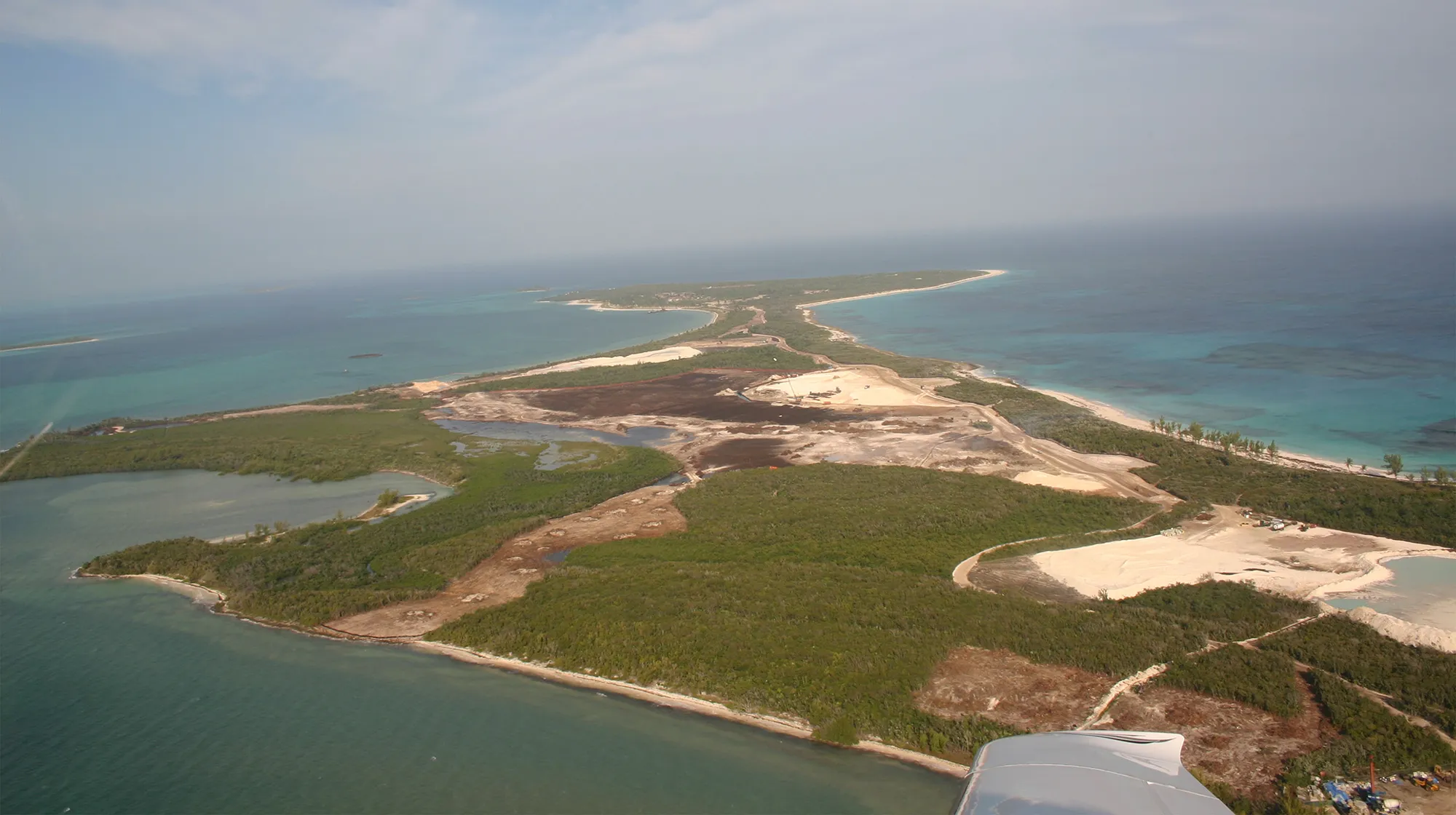
The Baker's Bay Environmental Management Plan (EMP) was the document meant to put the 2004 Environmental Impact Assessment's promises into practice: specific ecological goals, a monitoring schedule, and a defined chain for reporting what the monitoring found. It was developed by the University of Miami's Environmental Management Team, led by Dr. Kathleen Sullivan-Sealey, working with Baker's Bay Golf & Ocean Club. What follows draws on the EMP's own stated goals and its own description of how monitoring reports were supposed to be submitted — set alongside what the actual monitoring reports show, which is where this page's most consequential finding comes from.
What the EMP Was Meant to Do
The EIA's own Chapter 9 called for an Environmental Management Plan built around four components: "clearly articulated and measurable environmental goals"; "educational outreach programs and training material" for contractors, local communities, and regional environmental organizations; "clear management and project communications and reporting," including a published chain of command and an "incident reporting and management plan"; and "independent reporting and verification, with monitoring data available in a 'scorecard' format." The EMP that followed is organized around exactly that structure, with twelve supporting appendices covering everything from monitoring grid maps and buffer zone diagrams to plant and fish species inventories and an outline of the monthly report format itself.
The Ecological and Environmental Goals
The EMP states five primary ecological goals for the development, each framed as something measurable rather than aspirational (page 6): to maintain viable populations of over 80% of the existing plant species on the island; to maintain representation of all of the island's natural vegetation communities; to maintain water quality in coastal groundwater and near shore marine waters at pre-construction levels; to enhance wildlife habitat quality in the coastal zone, wetlands, and preserve areas, with measurable increases in targeted conservation species; and to maintain coastal stability, with measurable maintenance or restoration of beaches.
What Was Supposed to Be Monitored
The plan's Ecological Monitoring Program (Table 1, pages 10–12) breaks the monitoring work into four categories, each on its own schedule. Physical and chemical factors — water quality, sediments, pollutants — were to be checked quarterly, with meteorology tracked continuously through on-site weather stations. Terrestrial biotic factors (plant diversity, habitat condition, land conversion) were to be tracked on an ongoing basis during construction, then biannually afterward. Marine biotic factors — fish, coral, benthic communities, algae — were to be monitored biannually, on a seasonal basis. Socio-economic and outreach measures, including community surveys and business reviews, were to be conducted annually.
Built Around the Land, Not the Reef
Look at where the plan's pages go. Its terrestrial monitoring section runs seven pages (pp. 17–23). The section on marine life — coral, seagrass, fish and the seafloor together — runs two (pp. 24–25). The appendices are lopsided the same way: two plant inventories fill about 24 pages (pp. 53–76), while the reef animals, fish and seaweeds of Great Guana Cay get four (pp. 77–80). How the reef would actually be surveyed gets a single sentence — “Standard reef monitoring procedures will be implemented near shore” — with the methods deferred to “a separate protocol manual” that isn't part of the plan.
The goals tell the same story. Of the five, two are about land plants, one about beaches. The only goal that touches the sea is about water: keeping “water quality parameters in coastal groundwater and near shore marine waters at pre-construction levels.” None names the coral reef or the seagrass beds; mangroves appear only as “wetlands” inside a goal about wildlife habitat. Yet the developer's own EIA had already conceded that water-quality monitoring is “not necessary for the identification or prediction of ecological impacts” — that the water can test normal while reef and seagrass are lost.
Even where the plan does address coral, the yardstick is forgiving. On its Marine Status Report (Figure 14), a perfect score of 5 for hard-coral health still allows mucus, swollen polyps, discoloration or partial colony death in up to a quarter of the corals examined; a 4 allows the same in up to half. And no score, however low, stops anything. The plan's stated response to its worst ratings is that the team “will make mitigation recommendations.”
The people who wrote the plan were not coral reef specialists, and no coral reef specialist was on the team that carried it out (see what the monitoring reports didn't watch). The result is a document that looks thorough — tables, schedules, scoring rubrics, a dozen appendices — while giving the reef, the turtle grass and the mangroves a sliver of its attention.
How a Status Report Was Supposed to Work
The EMP is specific about where the monitoring results were supposed to go. Under its Status Report Approach, it states, at page 29: "Status Reports will be completed monthly and will be submitted to BBC staff and the B.E.S.T. Commission." Appendix 11 — listed in the plan's own table of contents as "Outline of monthly environmental report for BEST Commission" — exists specifically to standardize that report's format.
Two recipients are named in that sentence: BBC (Baker's Bay Club) staff, and the Bahamas Environment, Science and Technology Commission, the government body that had approved the underlying EIA. Whatever else changed in practice, the plan's own language treats government reporting as a monthly obligation, not something satisfied once at the start of construction and left there.
Where the Plan and the Practice Diverged
The set of monitoring reports examined in detail on this site's account of the actual Baker's Bay monitoring reports makes it possible to check the EMP's Status Report Approach against what happened. Of the twelve representative reports in that set, only the earliest — a March 2005 baseline — is addressed to the BEST Commission, the government body named in the EMP's own reporting language. Every other report in the set, spanning nearly two years, is addressed the same way: "To: Dr. Livingston Marshall," a Baker's Bay executive who went on to hold a leadership post at the development and, later, an ownership stake in its parent company.
That's consistent with half of what the EMP promised — reports evidently did reach "BBC staff," as the plan required — but it leaves the other named recipient, the BEST Commission, absent from eleven of the twelve reports this site has reviewed. Whether the government body that approved Guana Cay's EIA received the monthly reports the University of Miami's own monitoring team was producing, this batch of documents alone cannot say. What it does show is a reporting relationship that, in practice, ran almost entirely inside the company being monitored.
Incident Reporting
The EMP also sets out an incident reporting structure, described in its own table of contents as "Incident Report and Clear Reporting Responsibilities" (Section 2E), paired with a standardized "Baker's Bay Club Environmental Incident Report" form referenced in the plan's figures. This is the mechanism the EIA had earlier promised would handle "incidental occurrences" as they arose, documented "on a regular basis" and reported "to all necessary government agencies and stakeholders." The monitoring reports reviewed elsewhere on this site do include incident entries — a cut buttonwood tree, torn silt curtains, an oil leak into porous limestone — but, per the finding above, largely inside the same internal reporting channel rather than the government-facing one the EMP describes.
The plan also routes every incident through the developer first. Report forms “should be completed and sent to DOUG SHIPMAN, DLC” — Discovery Land Company’s vice president of development — who “should be the first point of contact for all incidents” and passes them to the monitoring team within 24 hours. Among the questions then asked is whether the incident even “warrant[s] a separate, formal report” to the government, and follow-ups go “directly to Doug Shipman” (Section 2E, pp. 42–43). An incident system that runs through the company causing the incidents is not independent oversight, whatever the plan calls it.
The Twelve Appendices
The EMP is a working document as much as a policy one: twelve appendices supply the operational detail behind its goals, including construction contact information, monitoring grid and buffer zone maps, monitoring protocol references, ecological impact references, and inventories of plant, epifaunal, fish, and macroalgae diversity on the property. Appendix 11, the monthly BEST Commission report outline discussed above, and an Integrated Pest Management Plan outline round out the set.
Read the Full Document
The complete Environmental Management Plan is available as a PDF: Baker's Bay Environmental Management Plan (PDF). For the assessment the EMP was built to carry out, see the Baker's Bay Environmental Impact Assessment; for the monitoring record examined against the EMP's own reporting language, see the Baker's Bay Monitoring Reports.